
There are teams that deliver strong results during difficult times, and teams that deliver strong results at the cost of employee exhaustion. On the surface, the difference can be hard to spot. Both meet their objectives, attend meetings, respond to messages, and solve problems.
The difference becomes apparent later, when people start making mistakes in tasks they previously handled with ease, when initiative fades, and when every new request is met with irritation. In many organizations, this deterioration is misinterpreted.
Managers say their teams need to become more resilient, even though the very way work is organized is draining people's resources. A team that endures stress is not necessarily a resilient team. It may simply be a team that cannot yet afford to stop.
A manager needs to understand not how much pressure people can withstand, but how to organize work so that the team maintains its ability to perform, learn, and recover.
1. Resilience starts with how you organize work
Imagine a team of ten people that needs to deliver an important project within a tight deadline. Two urgent requests come in from other departments. One team member goes on sick leave, and the client asks for additional changes. The manager tells everyone they need to pull together. The team works longer hours, postpones breaks, and stays late into the evening.
The project is delivered. The manager concludes that the team has demonstrated resilience. But what actually happened? The team compensated for problems with capacity and prioritization by putting in extra effort. If this situation keeps recurring, the cost will eventually become visible in declining work quality, absenteeism, conflicts, and employee turnover.
A manager who wants to build resilience must look beyond employee behavior and examine the way work is organized. How many objectives are being pursued simultaneously? How many interruptions occur throughout the day? Who can make decisions without going through multiple approval levels? Which activities can be put on hold when an emergency arises?
One practical principle is to never add a new priority without reassessing existing ones. If a project becomes urgent, explicitly establish what will be postponed, who will make the decisions, and which consequences the organization is prepared to accept.
You cannot expect people to manage pressure effectively if you, as their manager, constantly communicate that everything is urgent and nothing can be renegotiated. Team resilience begins with the managerial discipline to make choices, not with pressure to do more.
2. Micro-resilience lies in small Interventions before major problems arise
Resilience is often discussed in connection with major events: restructuring, losing a client, organizational changes, or periods of crisis. In reality, a team's ability to handle such situations develops during ordinary working days.
This is where micro-resilience comes in. It refers to short, repeated practices that help people regulate their effort, recognize difficulties, and return to an effective level of functioning after demanding situations.
For example, after a tense meeting with a client, a manager can give the team ten minutes to clarify what happened, what needs to be resolved, and what lies beyond their control. Without this pause, everyone may move straight to the next task, carrying frustration and uncertainty with them.
At the end of a busy week, the team can review not only what it delivered, but also what consumed a disproportionate amount of its time. It may discover that half of the delays resulted from late approvals, changing requirements, or incomplete information.
These short conversations turn experience into useful insights. Instead of asking people to become more resistant to the same problems, the manager can address the underlying causes that allow those problems to recur.
Micro-resilience also involves recognizing early warning signs. An employee who asks for more clarification than usual, becomes unusually quiet, or starts postponing decisions may need support rather than a lecture about attitude. Not every behavioral change indicates burnout, but it is worth exploring without making assumptions.
3. Healthy boundaries do not reduce performance. They make it sustainable
In some teams, constant availability has become an informal performance criterion. Those who respond to messages in the evening appear committed. Those who accept yet another task seem results-oriented. Those who say they have reached their capacity risk being perceived as insufficiently flexible. The problem is that these behaviors reward visible effort rather than necessarily rewarding the quality of results.
An employee may respond to messages until 9 p.m. and make poorer decisions the following day. A manager may attend every meeting and have no time left for the analysis their team needs.
Healthy boundaries do not mean refusing every request for additional effort. They mean that extra effort has a clear purpose, a defined duration, and a valid justification. A statement such as, "I can take on this project, but that means we need to postpone Friday's report. Which one takes priority?" changes the dynamics of the conversation. The employee is not refusing responsibility. They are making their available capacity visible and asking for a decision.
For managers, this is an important test. If people always say "Yes," it does not necessarily mean the workload is realistic. It may mean they do not feel safe saying anything else.
4. Recovery must be built into the schedule, not left as a recommendation
Many organizations talk about work-life balance but plan their activities as though people had constant energy and an unlimited capacity to concentrate.
Recovery is treated as an individual responsibility. Employees are encouraged to rest, exercise, and manage their stress, while their calendars remain packed with meetings, overlapping deadlines, and unexpected requests.
A manager cannot control every source of stress in someone's life. However, they can avoid creating unnecessary stress through the way work is organized.
Start by examining your team's calendar. How many meetings could have been replaced with written updates? How many meetings are scheduled during periods when people need uninterrupted time to focus? How much time is available between two demanding activities? How many tasks are assigned without clearly defining what successful completion looks like?
Recovery is not just about taking vacations or longer breaks. It also means alternating between different types of effort, reducing interruptions, and allowing people to finish one activity before starting three others.
After an intense period, the team may need time to catch up on outstanding work. If the manager immediately fills the newly available time with another project, the organization loses an opportunity to recover and learn.
A useful practice is to schedule regular reviews of workload, not just results. These reviews should assess whether the team can maintain its current pace without sacrificing quality, collaboration, or its ability to solve new problems.
5. Build a Team That Can Raise Concerns Early
A resilient team is not one in which people never experience difficulties. It is one in which difficulties can be raised early enough for the team to respond. How a manager reacts to bad news makes an enormous difference.
If an employee says a deadline cannot be met and the first response is, "Why didn't you organize your work better?", next time they may wait until the problem can no longer be hidden. If a colleague raises a risk and is labeled negative, others will learn to remain silent.
Instead, the manager can ask: "What is preventing us from meeting the deadline? What can we change now? What decision do you need from me?"
These questions do not eliminate accountability. They make it more concrete. They shift the conversation away from blame and toward causes, options, and actions.
For this approach to work, managers must be consistent. It is not enough to invite people to speak openly during a meeting and then informally penalize them for raising concerns.
It is also useful to distinguish between a mistake resulting from a reasonable experiment, a problem caused by a flawed process, and repeated negligence. Each requires a different managerial response. Furthermore, the team needs to know what happens after a problem is reported. Collective resilience grows when people can ask for help, negotiate priorities, and learn from difficulties without wasting energy protecting their image.
Managers shape team dynamics
A team does not become resilient simply because its manager asks people to be stronger. It becomes better equipped to handle difficulties when it has clear priorities, time and space to focus, respected boundaries, and opportunities to recover after demanding periods. These conditions do not eliminate business pressure. They eliminate some of the unnecessary pressure that organizations create for themselves. And that difference matters.
Managers cannot control every market change, every client demand, or every unexpected situation. However, they can decide whether their team will operate in a permanent state of urgency, whether people will feel confident enough to raise concerns, and whether lessons learned during difficult periods will lead to changes in how work gets done.
The next time you notice your team putting in more and more effort to achieve the same results, do not start by asking them to become more resilient. First, examine the system you have built. Perhaps your people do not need to endure more. Perhaps they need better conditions to perform well, including when things get difficult.
* * *
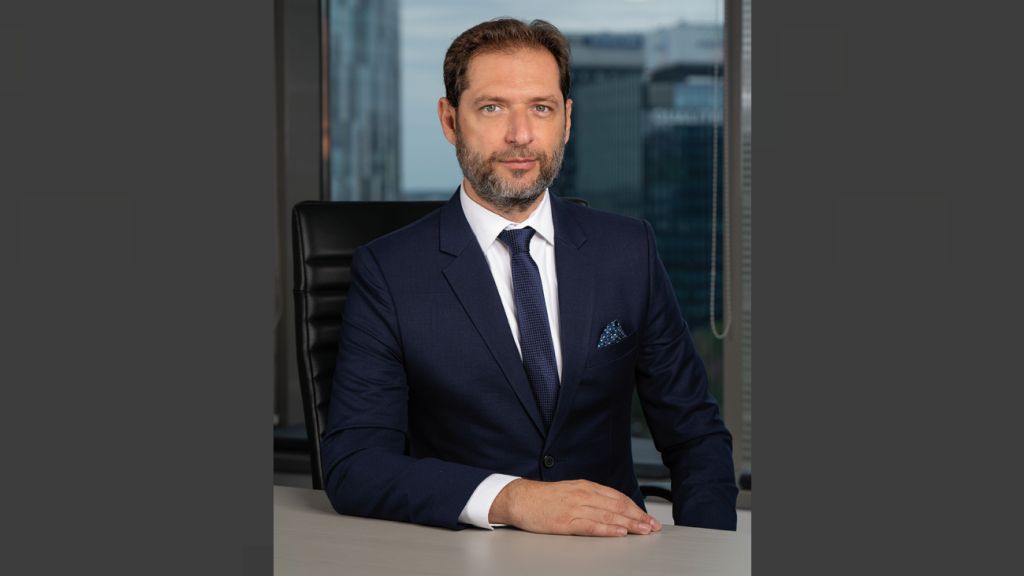
About Constantin Magdalina
Constantin Magdalina has 15 years of professional experience, during which he worked for multinational companies, both in the country and abroad. Constantin has a Master's degree in Marketing and Communication at the Bucharest Academy of Economic Studies. He is LeanSix Sigma and ITIL (IT Information Library®) certified, which facilitates a good understanding of processes and transformations within organizations. On the other hand, the certification obtained from the Chartered Institute of Marketing completes his business expertise. In the more than 4 years of activity within a Big 4 company, he initiated and coordinated studies that analyzed aspects related to the business environment in Romania. Among them are the economic growth forecasts of companies, knowledge management, the buying experience in the era of digital consumers, the use of mobile devices or the customer-centricity of companies in Romania. He is the author of numerous articles on topics related to innovation, streamlining business processes, digital transformation, emerging trends and technologies. He is invited as a speaker at numerous events and business conferences.