Q: Raiffeisen Bank has positioned itself as a key player in Corporate and SME banking. How do you define the bank’s strategic priorities in a market undergoing continuous digital and economic shifts?
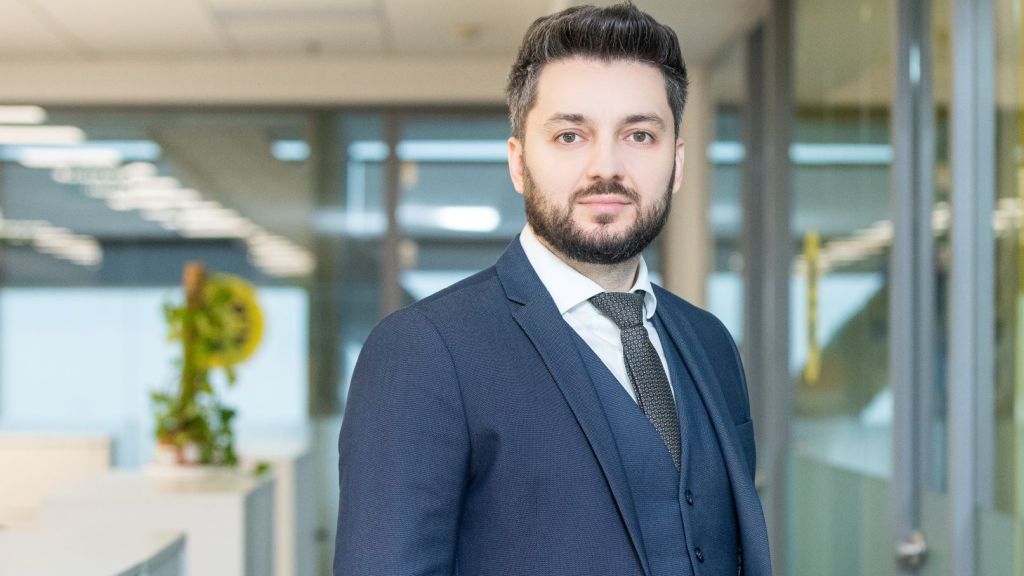
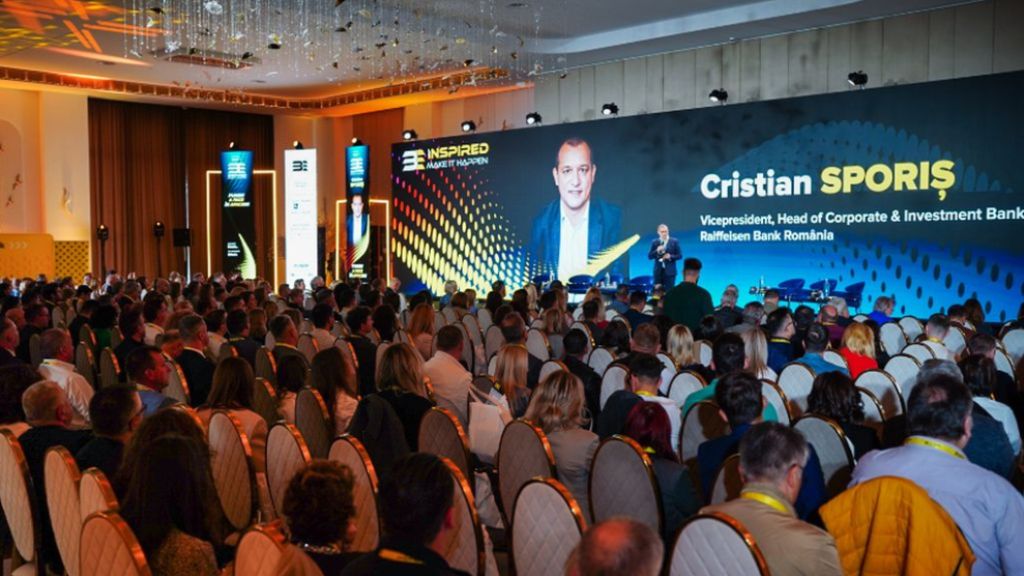
Mr. CRISTIAN SPORIS: Raiffeisen Bank Romania’s strategic priorities are built on three fundamental pillars: proximity, expertise, and innovation. In a market characterized by rapid change, we maintain our focus on understanding the specific needs of each client’s segment. We’re investing heavily in digital infrastructure while preserving the relationship banking model that has always differentiated us. Our priority is to combine the efficiency of technology with the insight that comes from deep market knowledge and long-term client relationships.
At Raiffeisen Bank, we want to partner our entrepreneurs throughout their business journey, not only with financing, but also with advisory. That is why we have built initiatives that support every stage of a business – from the first ideas to international expansion.
For more than 8 years, through factory by Raiffeisen Bank program, we have been laying the foundations for start-ups in Romania and managed to finance over 650 entrepreneurs with a total amount of 35 million euros.
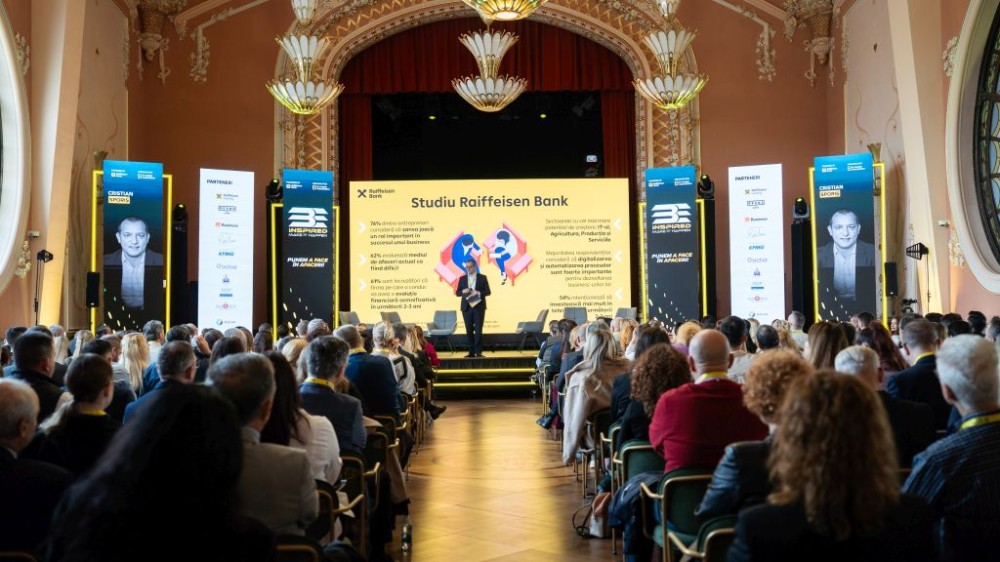
Also, together with the B-Leader Association and Doing Business.ro, we organized a series of regional conferences, dedicated to Romanian entrepreneurs with a turnover between 1 and 50 million euros, in which we offer a part of our know-how to help them develop their businesses faster and be more competitive. Overall, 1200 entrepreneurs participated in the events organized in Timisoara, Craiova, Iasi and Constanta.
We’re also focusing on sector specialization, developing dedicated expertise in key industries like manufacturing, agriculture, energy, and technology, which allows us to provide truly relevant solutions rather than generic products.
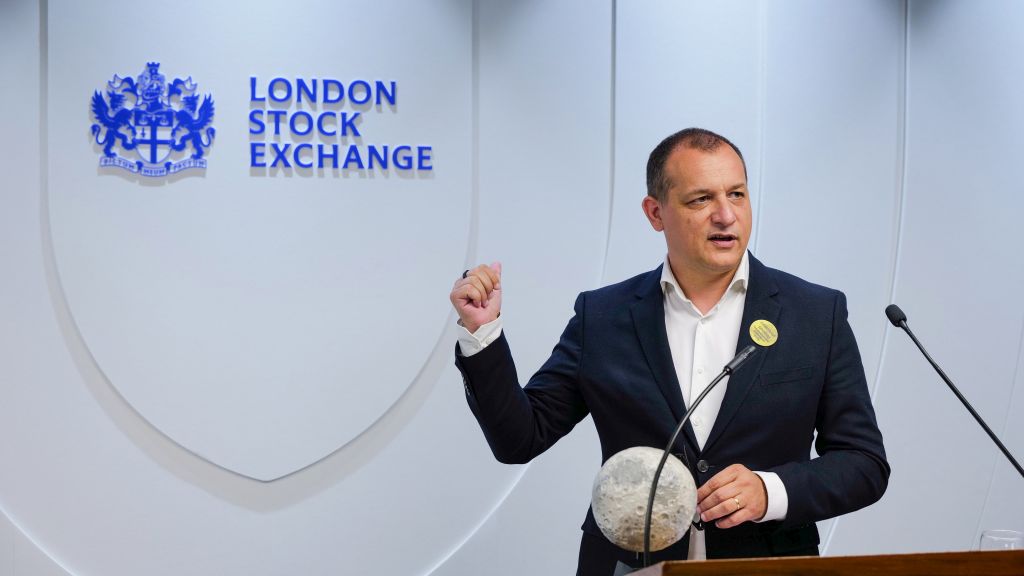
From corporate perspective, one of Raiffeisen Bank’s priorities is also to help mature Romanian companies to grow further by helping them find new markets to expand into. Thus, we have gone beyond simply financing local growth - we are now focusing on helping companies expand beyond the country’s borders. This was also the idea behind initiatives such as MoonShotX, program developed together with InnovX.
After the first year we managed to scale 5 Romanian companies abroad (4 in the UK and 1 in the USA). For the second edition we have 21 companies that we help define their scaling plans, and then, with 10 of them we will go to international scaling sessions, in the UK, US, Austria and for the first time in Japan.
Last but not least, for the large corporate segment of clients, through our investment banking and M&A department, we help in the consolidation/expansion process by finding them the right targets.
Q: Economic volatility and high inflation have reshaped corporate financing models. What changes have you observed in borrowing behavior among companies, and how has the bank adapted its products and risk appetite?
Mr. CRISTIAN SPORIS: The past few years have fundamentally changed how companies approach financing. We’ve seen a clear shift toward more conservative capital structures, with businesses prioritizing liquidity management and working capital optimization over aggressive expansion.
On our side, we’ve refined our risk assessment models to account for new volatility patterns, placing greater emphasis on business model resilience, cash flow predictability, and management quality. We’ve also expanded our advisory capabilities, helping clients navigate currency risk, interest rate hedging, and scenario planning. Our risk appetite hasn’t diminished, but it has become more sophisticated—we’re more selective about structural risks while remaining supportive of well-managed companies with sound fundamentals.
Q: As the economy enters a new cycle, how do you assess the resilience of Romanian companies across sectors such as manufacturing, agriculture, energy, services, and technology?
Mr. CRISTIAN SPORIS: Romanian companies have shown resilience in recent years. The manufacturing sector, especially automotive and components, stands out due to supply chain diversification and automation, ensuring stability and growth potential.
Agriculture remains strategic, with modernization driven by investments in technology, irrigation, and storage. And we as a bank are actively involved in financing food processing companies, as an extension of the agriculture sector, so that we, as a country, can reduce the commercial deficit on the food side.
The energy sector has also witnessed significant progress, but further modernization of grid infrastructure is essential. Renewable energy production stands at the forefront of our transition, playing a crucial role in achieving Romania’s decarbonization targets. By investing in renewable energy and storage production we are not only enhancing competitiveness across all sectors but also ensuring that businesses and communities benefit from greater access to clean, affordable, and sustainable energy.
The services sector, particularly IT and business services, benefits from Romania’s strong talent pool and cost advantages. Technology companies excel in exports and innovation.
Resilient companies focus on efficiency, quality, and differentiation, turning each cycle into an opportunity to strengthen their competitive position.
Q: Digital transformation impacts not only retail banking but also the corporate segment. How do you approach the modernization of corporate services?
Mr. CRISTIAN SPORIS: Digital transformation in corporate banking is not just about apps and convenience - it’s about integration, intelligence, and operational efficiency. We’re focusing on seamless integration between our systems and clients’ ERP platforms, enabling real-time financial visibility. We’re deploying analytics to provide predictive insights on cash flow and market opportunities.
However, for corporate clients and in general all our clients, human interaction remains essential. Complex transactions, strategic decisions, risk management, these require expertise and judgment that technology enhances but doesn’t replace.
Our approach is to digitize the routine and transactional, freeing our relationship managers to focus on advisory, problem-solving, and strategic partnership. That’s where real value is created.
Q: Raiffeisen Bank is actively involved in business development and accelerating programs for Romanian companies. Which initiatives have had the strongest impact? How does Raiffeisen support entrepreneurs through educational, mentorship, or accelerator programs?
Mr. CRISTIAN SPORIS: At Raiffeisen Bank, we believe in the power of Romanian entrepreneurs to turn ideas into reality. That’s why we have built initiatives that support every stage of a business - from the first ideas to international expansion.
But in 2024 we raised the stakes: MoonShotX. A unique program through which Romanian companies with a turnover between 5 and 50 million euros can spread their wings and step into international markets.
MoonShotX is probably our most ambitious initiative, and what I’ve seen gives me hope not just for the program’s future, but for this country’s future. I believe the moment has come for us to change the situation where Romanian entrepreneurial companies focus only on the domestic market. Yes, it’s harder at first to enter other markets, but it’s an investment that must be made. Expansion takes years, not overnight. Consider this: 30 years ago, Western multinationals that wanted to enter Eastern Europe did so through Austria, through Vienna as a hub. Now perhaps it’s time for Romanian entrepreneurial companies to make the journey in reverse.
Q: Corporate clients often demand agility and personalized service. What internal changes - organizational, cultural, or technological - were necessary to meet these expectations?
Mr. CRISTIAN SPORIS: Meeting modern corporate expectations requires fundamental changes across all dimensions. Organizationally, we’ve moved toward more agile structures with empowered teams that can make faster decisions. We’ve reduced hierarchical layers and created cross-functional squads that bring together relationship managers, product specialists, risk experts, and operations staff to serve specific client segments or solve complex challenges. Culturally, we’ve fostered an entrepreneurial mindset within the bank—encouraging calculated risk-taking, rapid experimentation, and learning from failures. Technologically, we’ve modernized our core systems to enable faster product configuration, automated approval of workflows for standard transactions, and real-time reporting. We’ve also implemented collaborative platforms that enhance internal communication and knowledge sharing. The goal is to create an organization that’s as dynamic and forward-thinking as the clients we serve.
Q: The relationship between banks and clients is evolving from transactional to advisory. How does Raiffeisen differentiate itself in terms of consultancy, risk management, and long-term partner mindset?
Mr. CRISTIAN SPORIS: We’ve built specialized teams with genuine industry expertise - people who understand the operational realities, market dynamics, and strategic challenges of the sectors they serve. This allows us to engage in substantive conversations about business strategy, not just financial products. In risk management, we go beyond traditional credit assessment to help clients identify and mitigate operational, market, and strategic risks. We provide scenario analysis, stress testing, and strategic planning support. Our treasury advisory helps companies optimize their financial structure, manage currency and interest rate exposure, and improve capital efficiency. The long-term partner mindset means we’re invested in our clients’ success across business cycles - we support them during expansion phases but also stand by them during challenging periods, working collaboratively on restructuring or refinancing when needed. This approach requires patience and a longer-term perspective, but it creates loyalty and mutual value that transcends pricing competition.
Q: Sustainability and green financing are more than a trend - they are becoming mandatory. What role will ESG lending play in Raiffeisen’s portfolio over the next 3-5 years, and which sectors are best positioned to leverage it?
Mr. CRISTIAN SPORIS: Raiffeisen Bank Romania assumed its role as a facilitator to green economy transition. Our long-term objective is to generate positive social and environmental impact, both through the way we operate as a bank and by mobilizing resources for projects aimed at sustainable growth and climate change mitigation.
Raiffeisen Bank had the first green bond issues in 2021. And by the end of 2024, we have issued approximately 1 billion euros in green and sustainable bonds.
Within 3-5 years, we expect sustainability considerations to be integrated into all credit decisions and client relationships. We’re developing comprehensive green financing frameworks covering renewable energy, energy efficiency, sustainable agriculture, circular economic initiatives, and green buildings.
The regulatory environment, in particular the EU taxonomy and reporting requirements, creates compliance pressure, but also a competitive advantage for companies that act early. And we see more and more companies turning this pressure into a competitive advantage.
As for sectors with potential, I would mention here the area of renewable energy, energy efficiency, sustainable agriculture and pollution prevention, sectors that Raiffeisen Bank Romania supports and which are essential for Romania’s long-term competitiveness.
Q: As a senior leader within Raiffeisen Bank, how do you balance strategic vision with day-to-day decision making, and what principles guide your leadership approach in times of uncertainty or rapid change?
Mr. CRISTIAN SPORIS: Balancing strategic vision with operational reality requires disciplined prioritization and clear communication. I maintain a framework where strategic objectives provide direction, but we remain flexible in execution, adapting tactics as circumstances evolve. My leadership principles are rooted in transparency, empowerment, and resilience.
I believe in openly sharing both opportunities and challenges with my team - people perform better when they understand the context and feel they are being entrusted with the big picture. Empowerment means giving autonomy and support to talented people, not micromanaging. I also believe in maintaining perspective - banking is ultimately about relationships and trust, fundamental principles that do not change regardless of market conditions. Ultimately, I try to model the behavior I expect: continuous learning, openness to challenges, and staying calm under pressure.
You can also find the full interview in the document below: