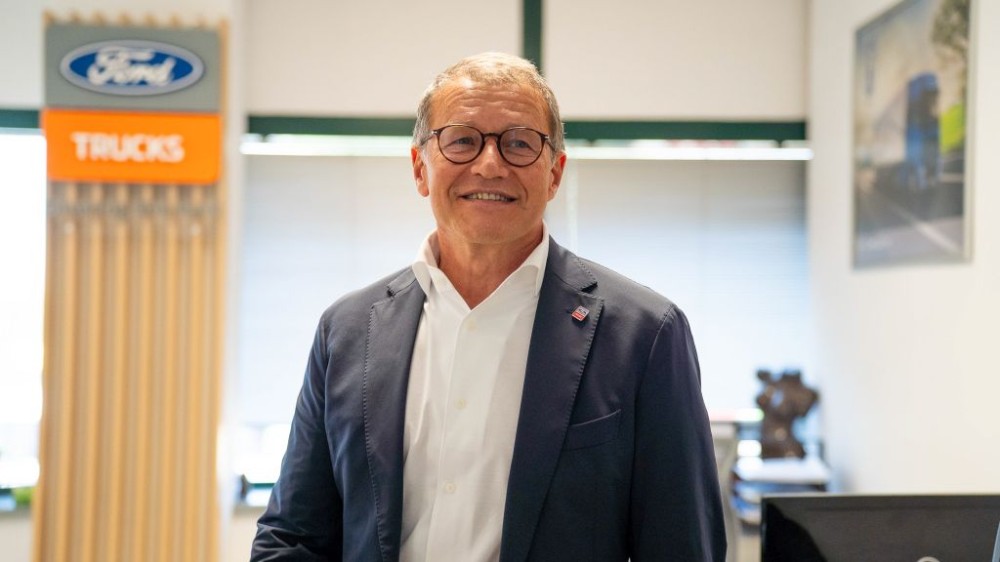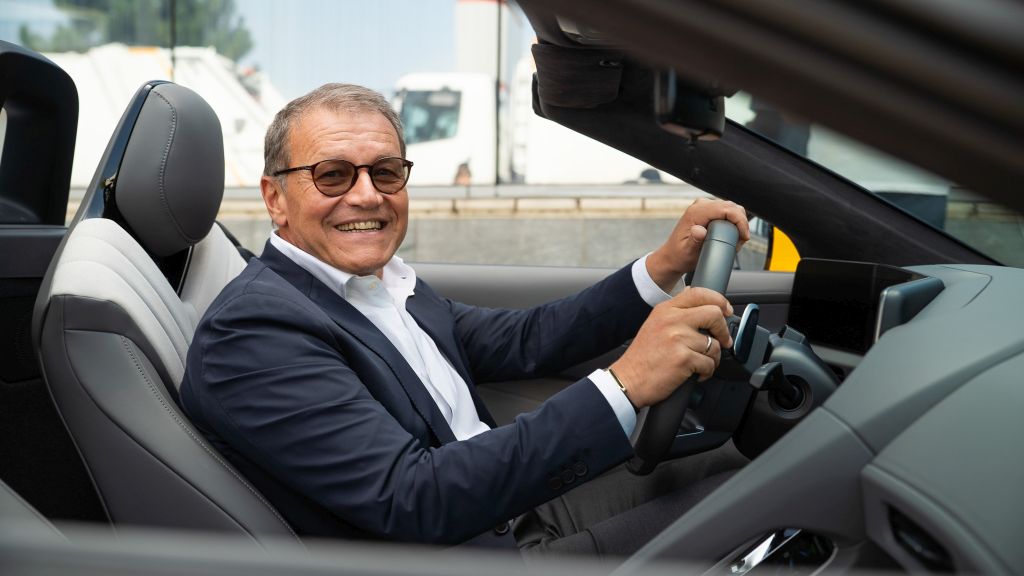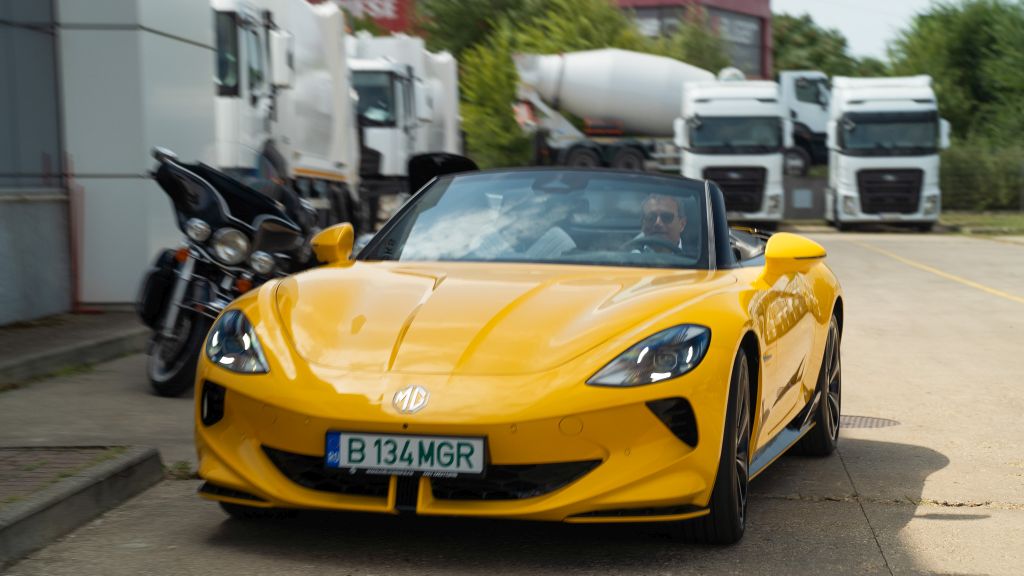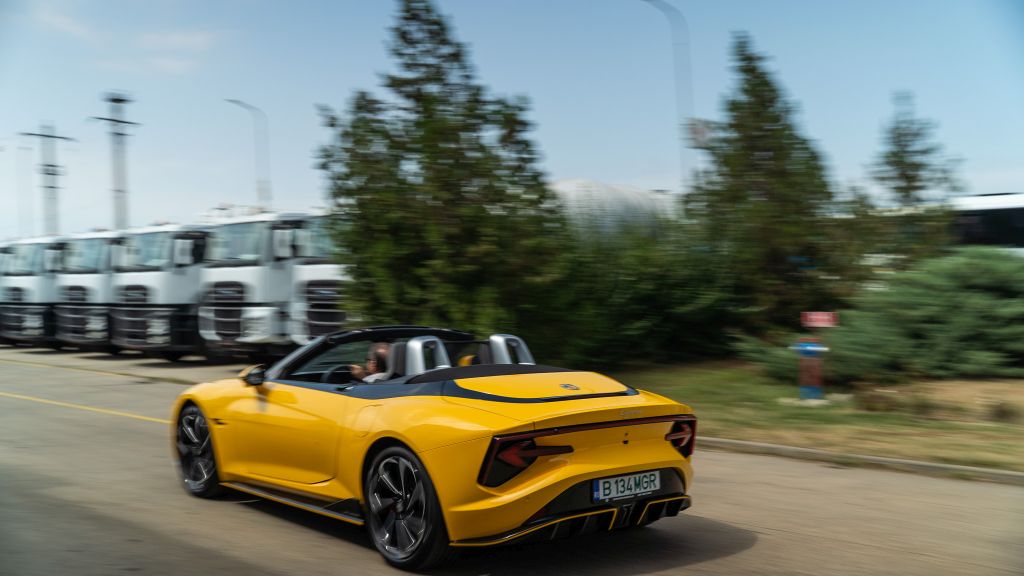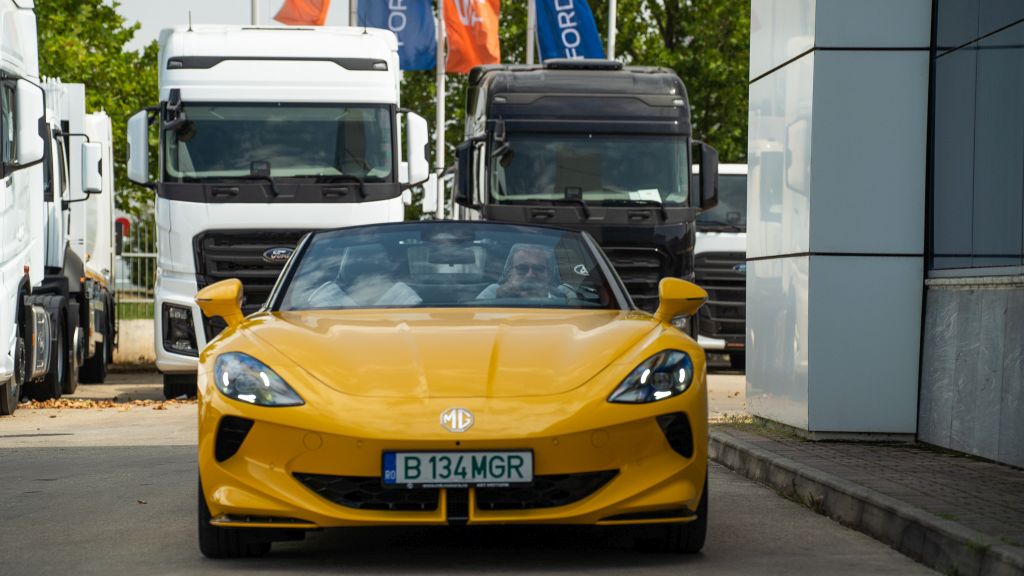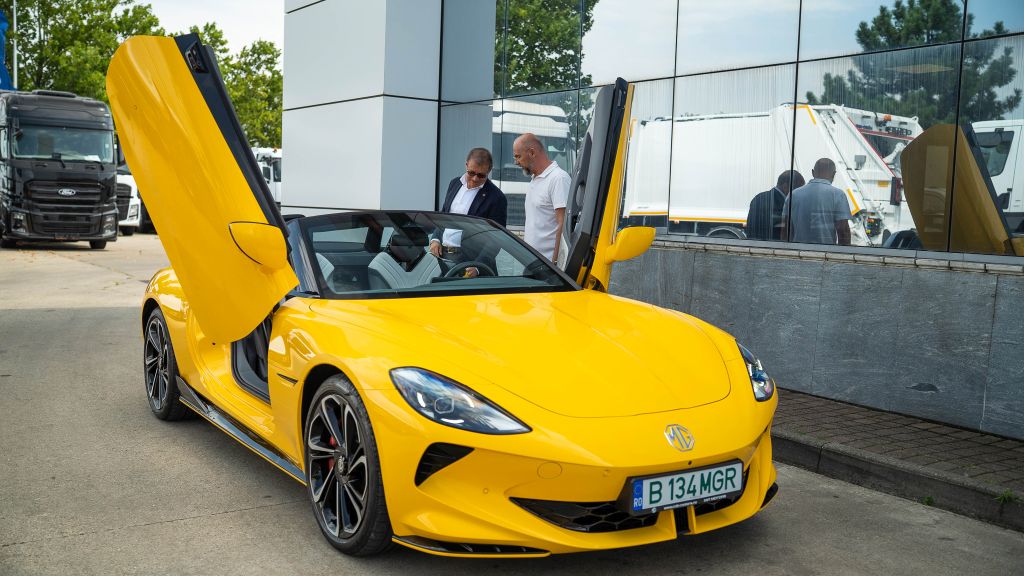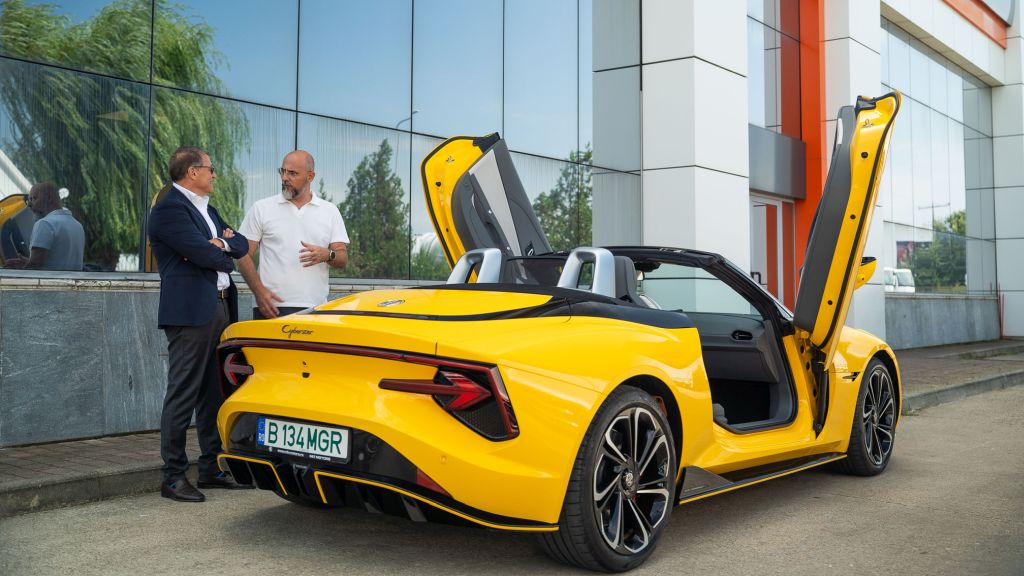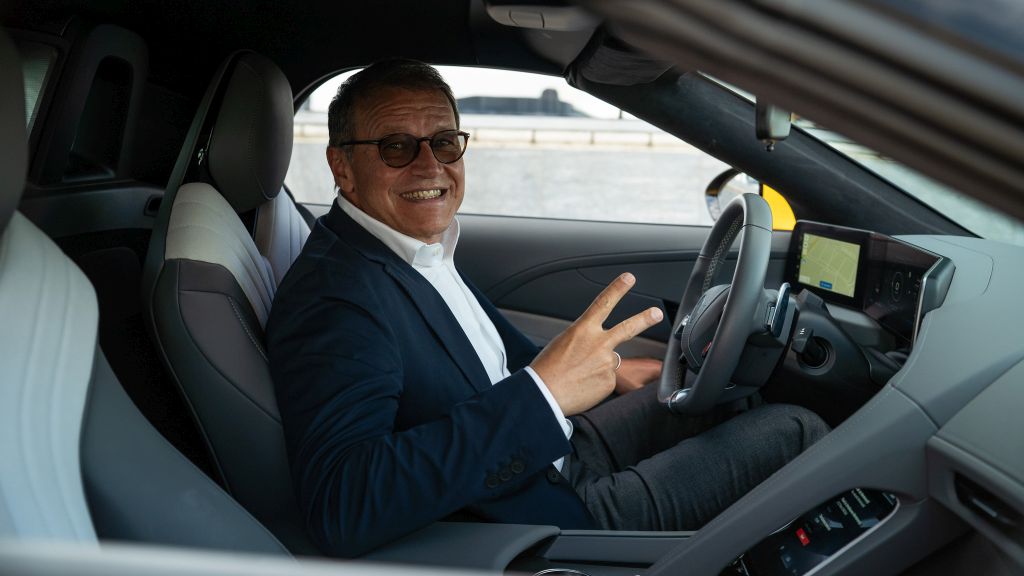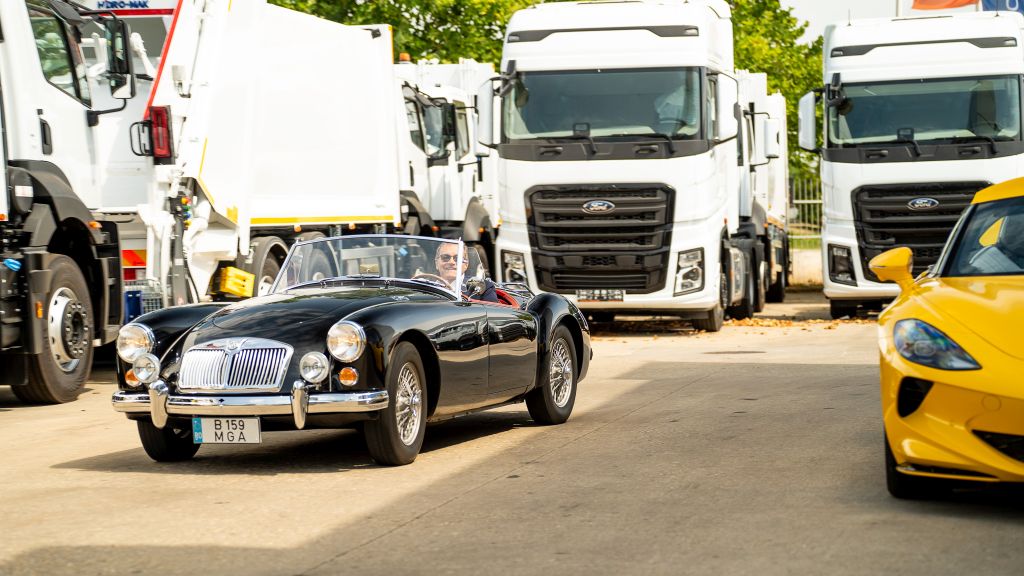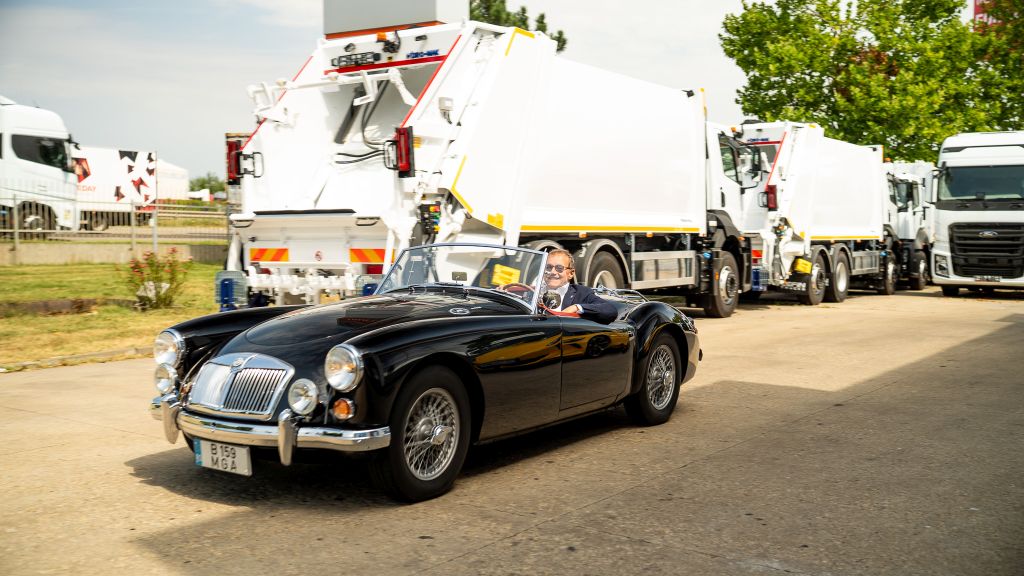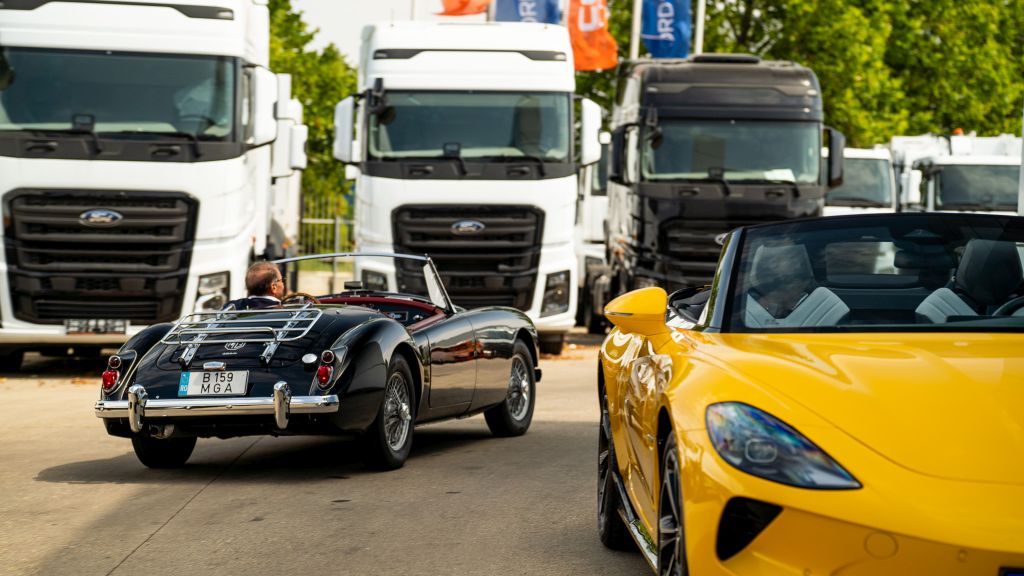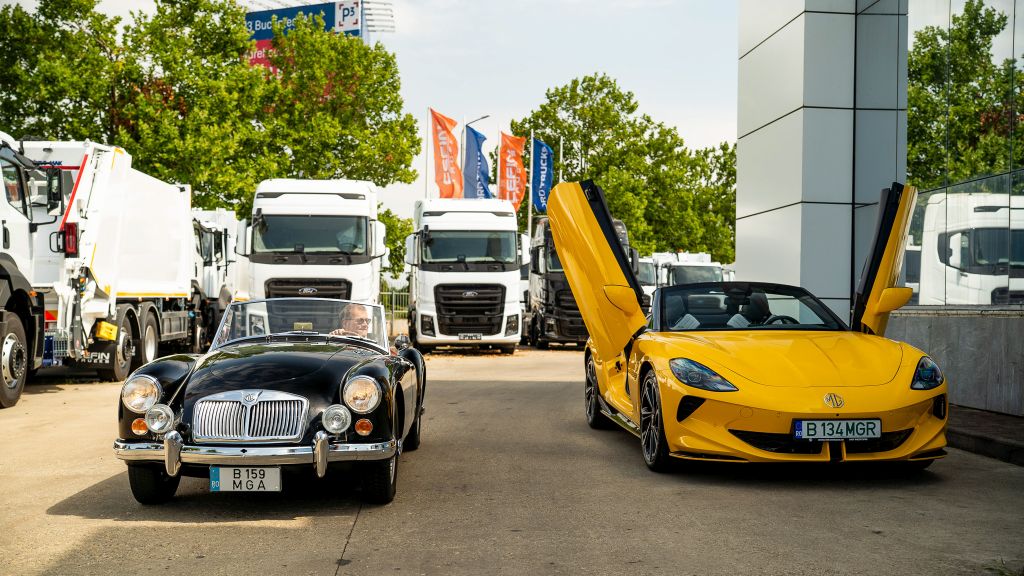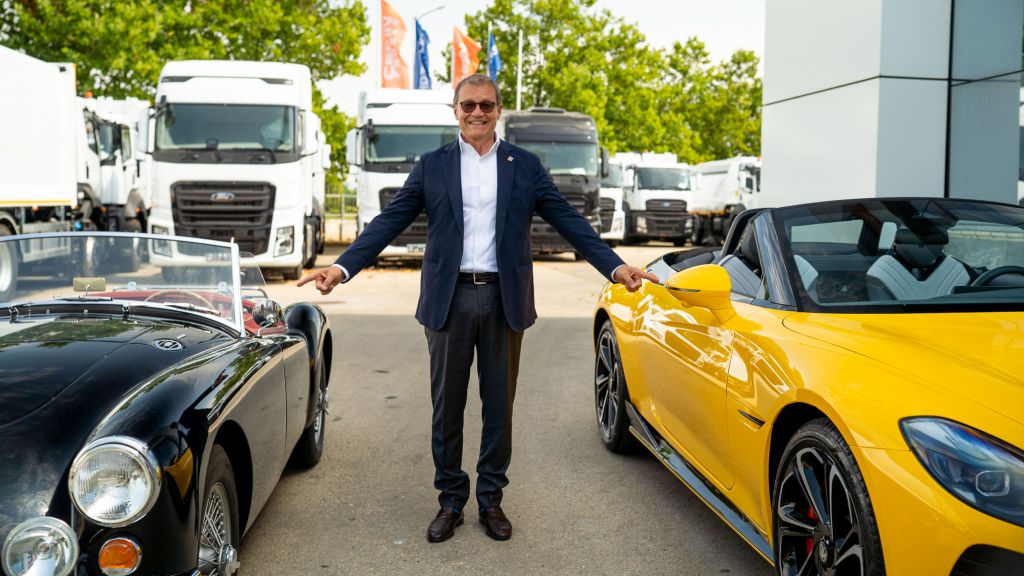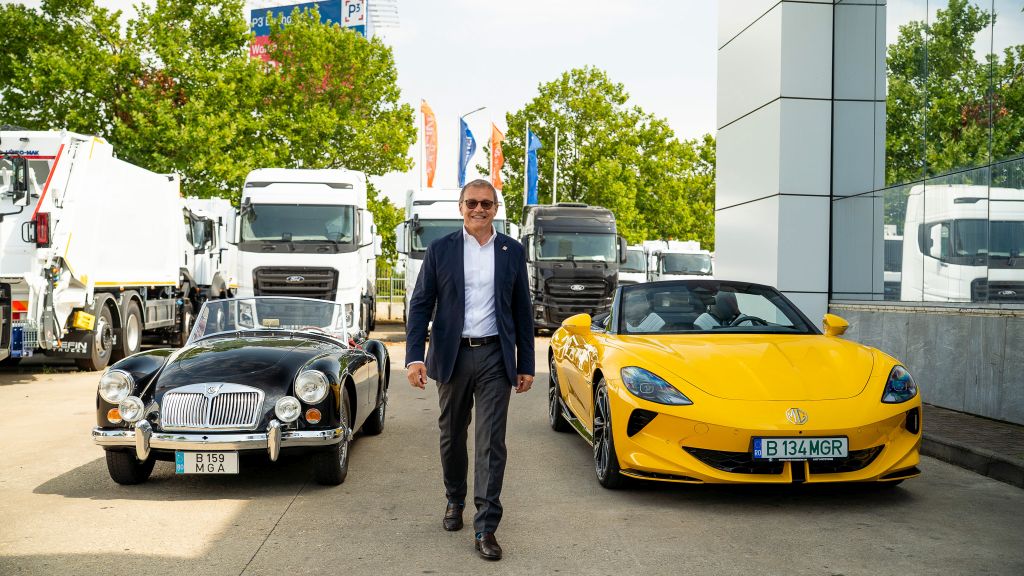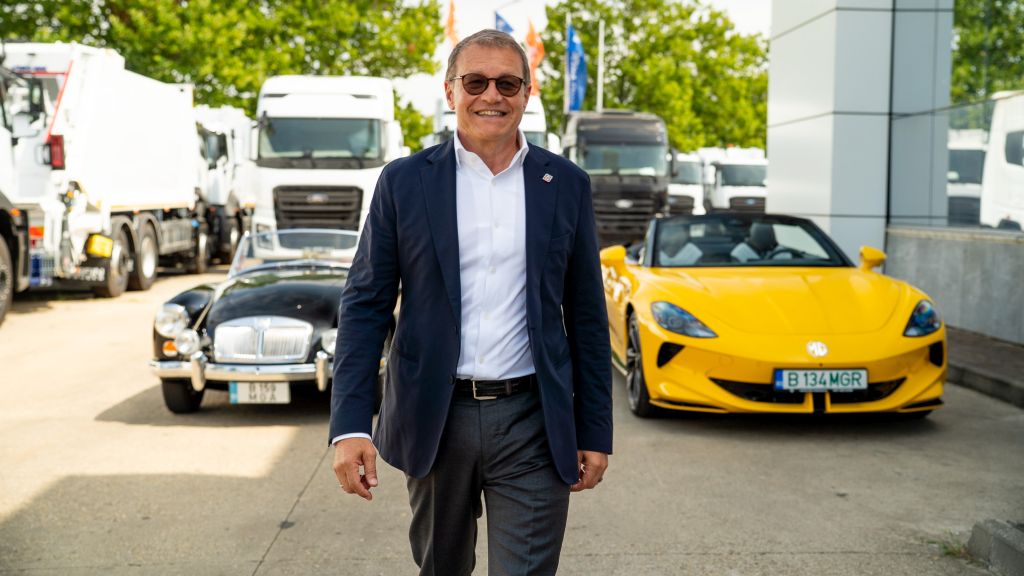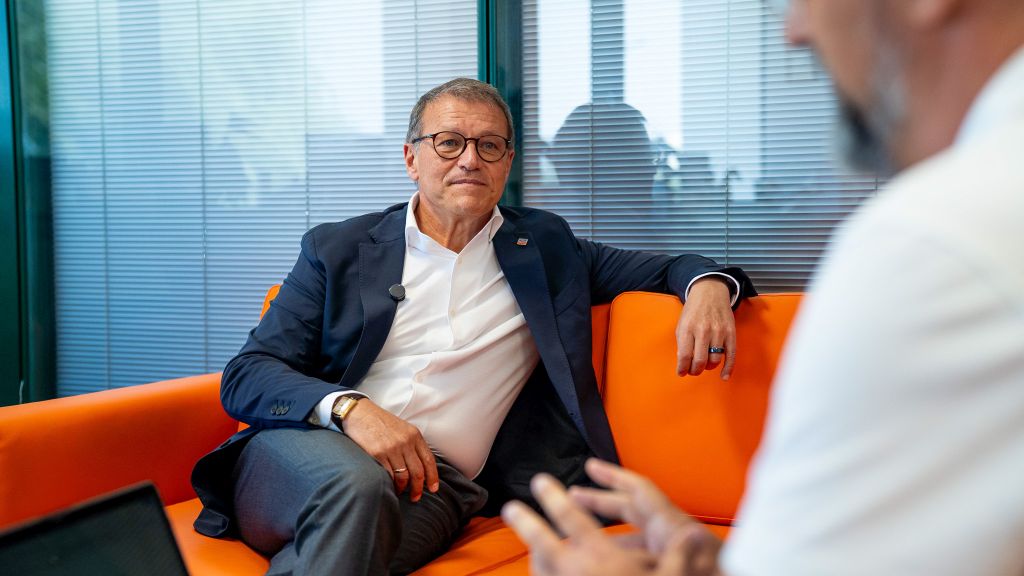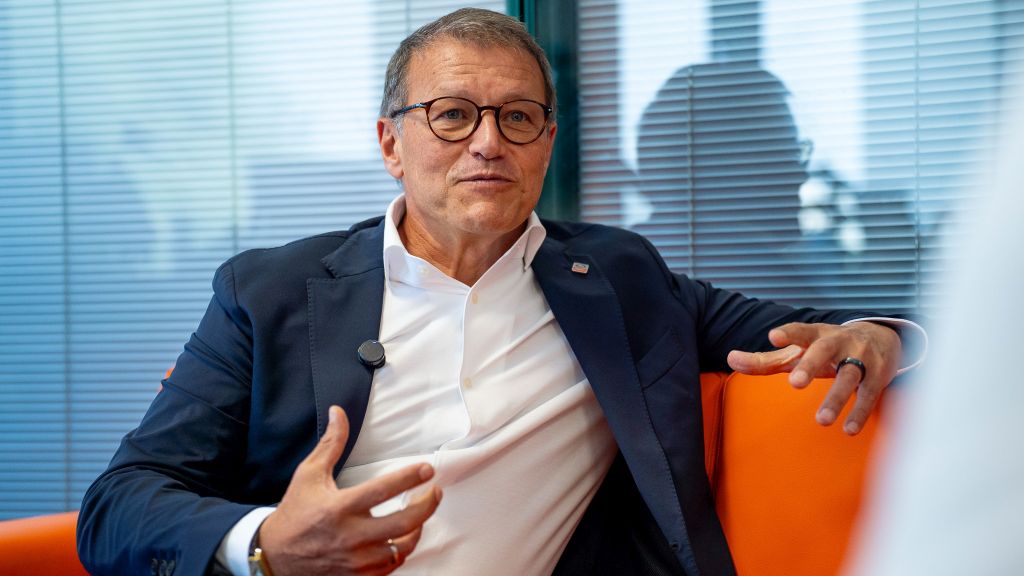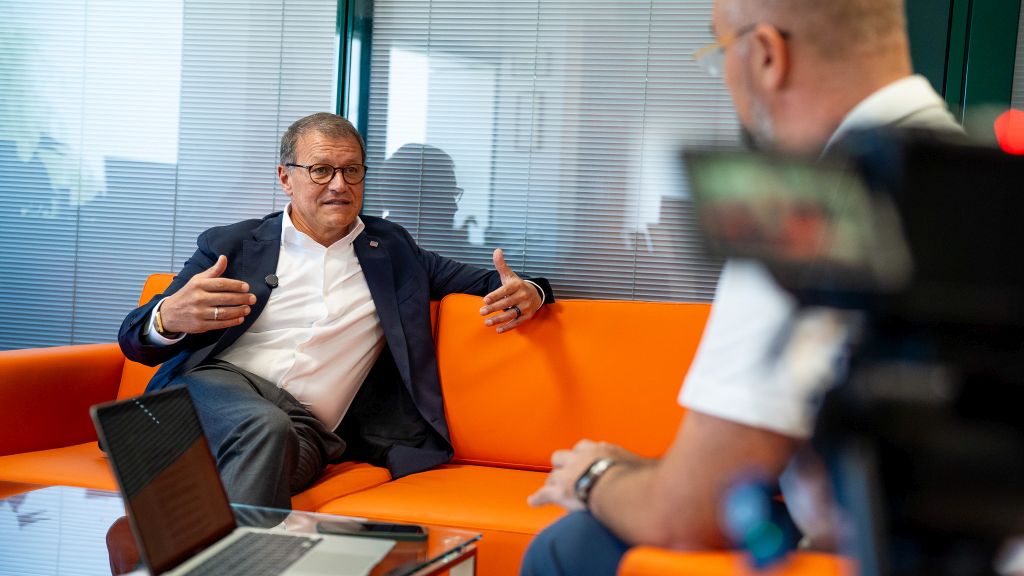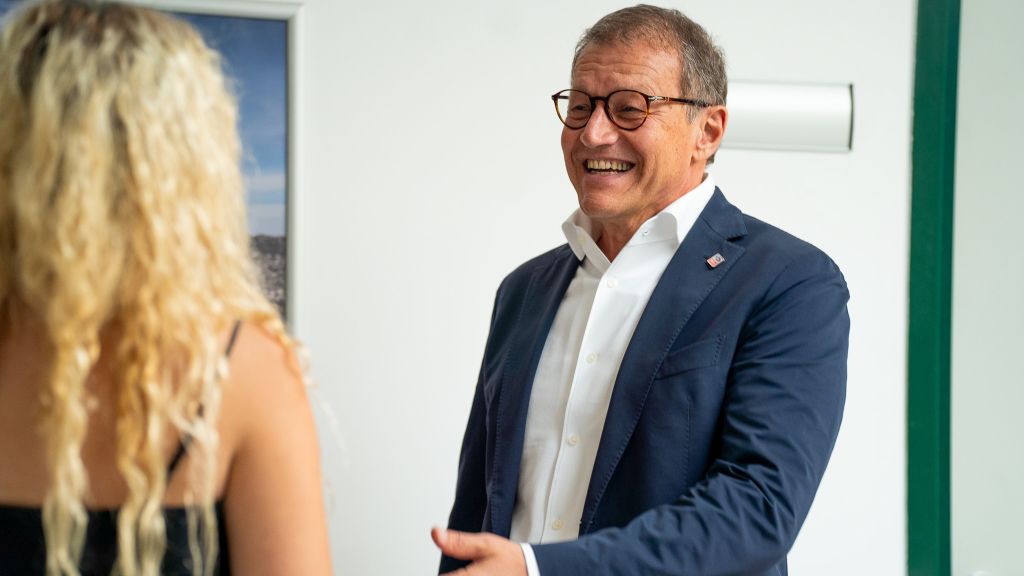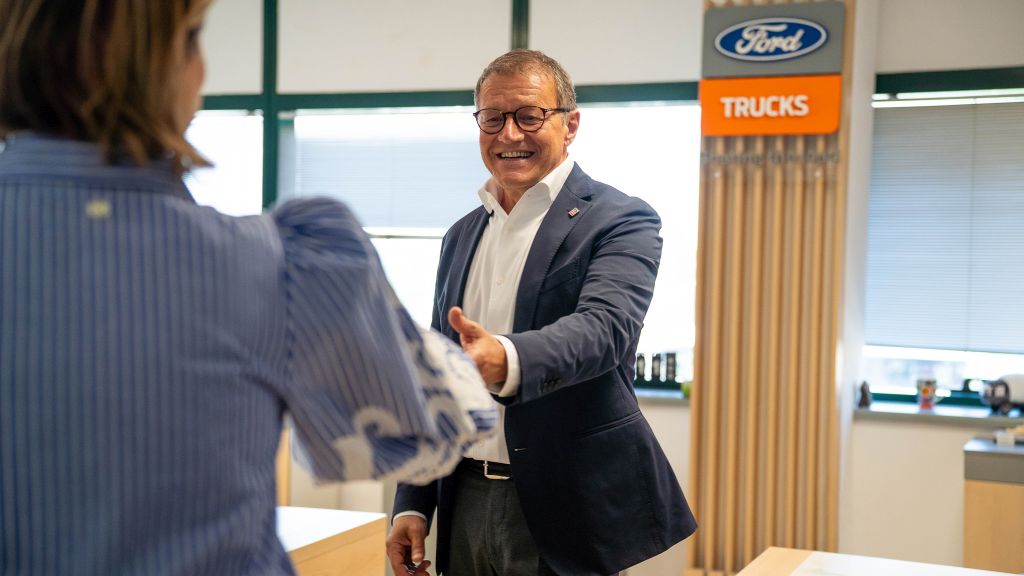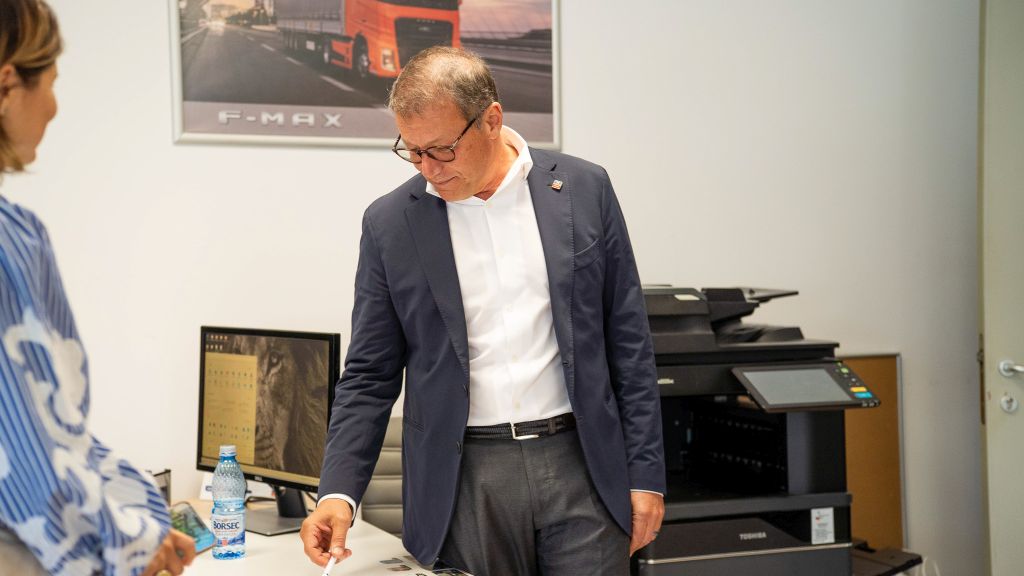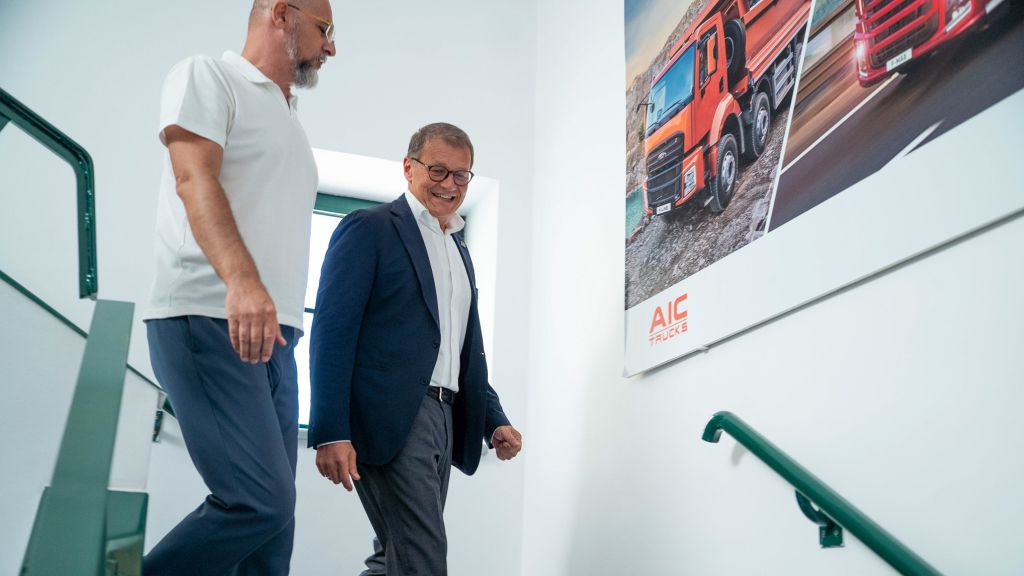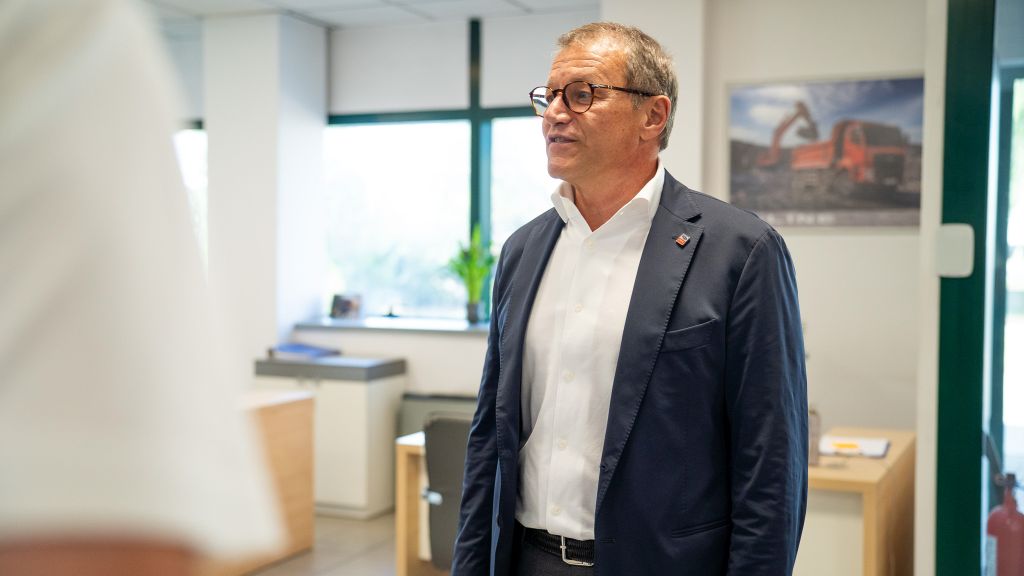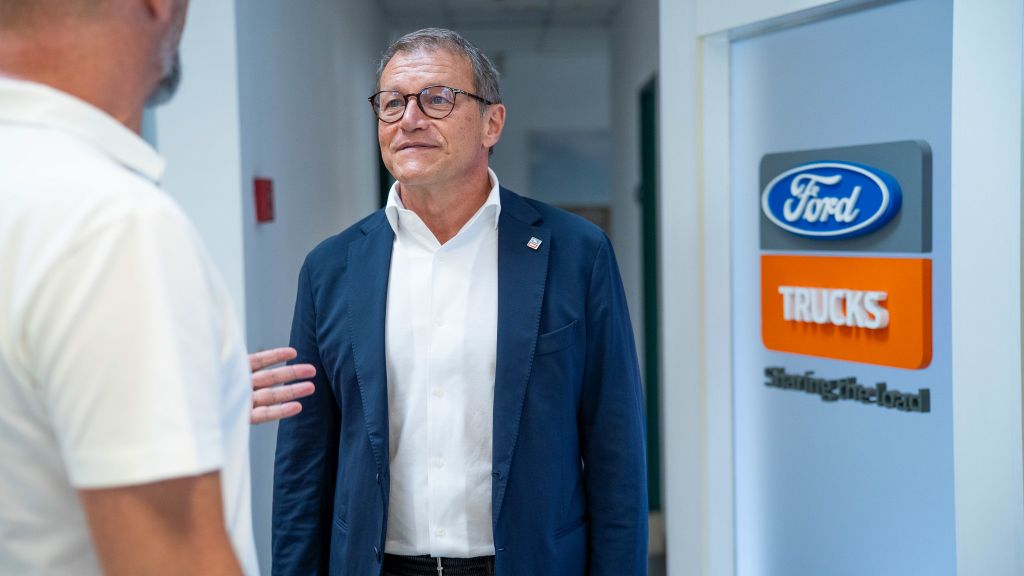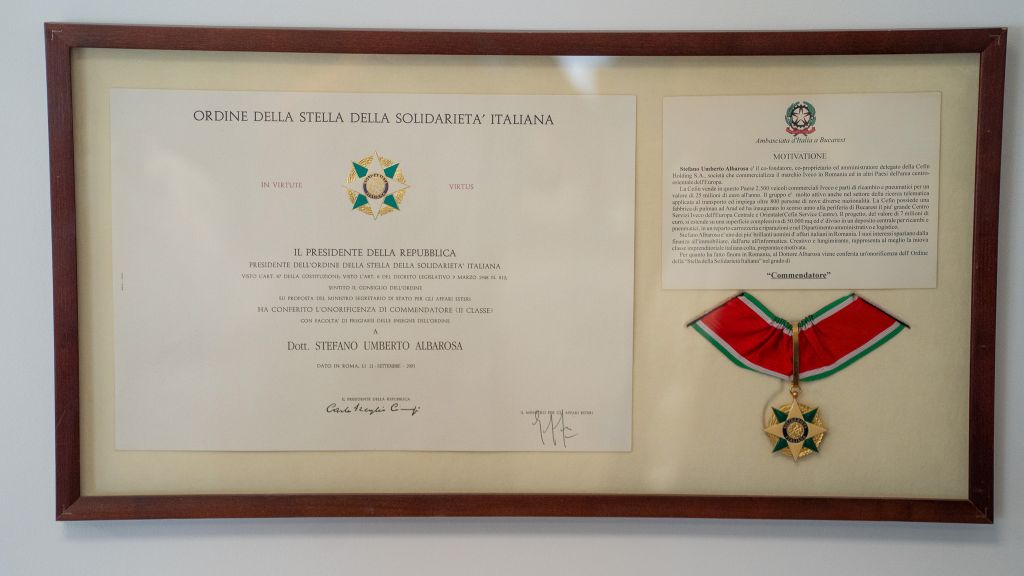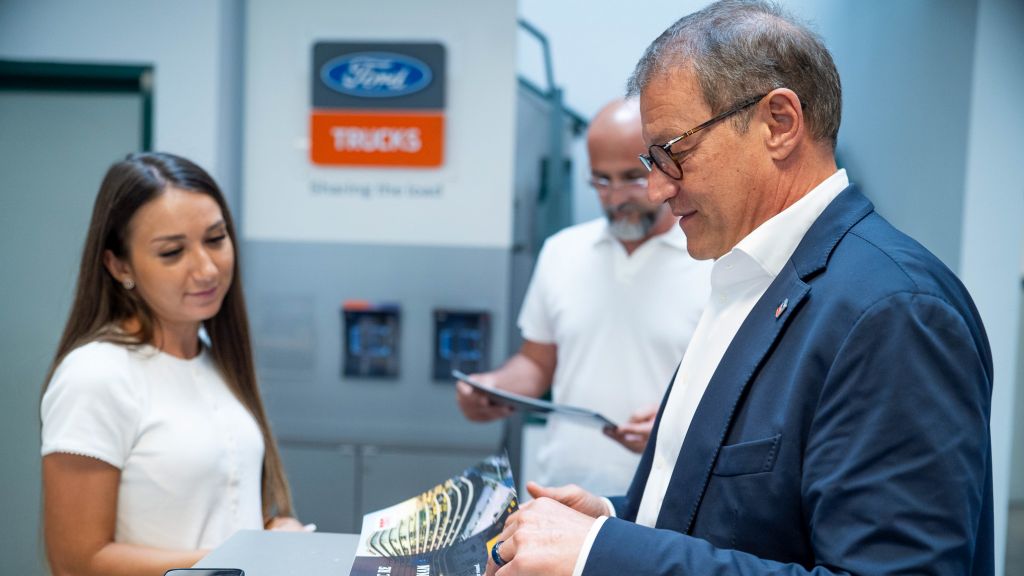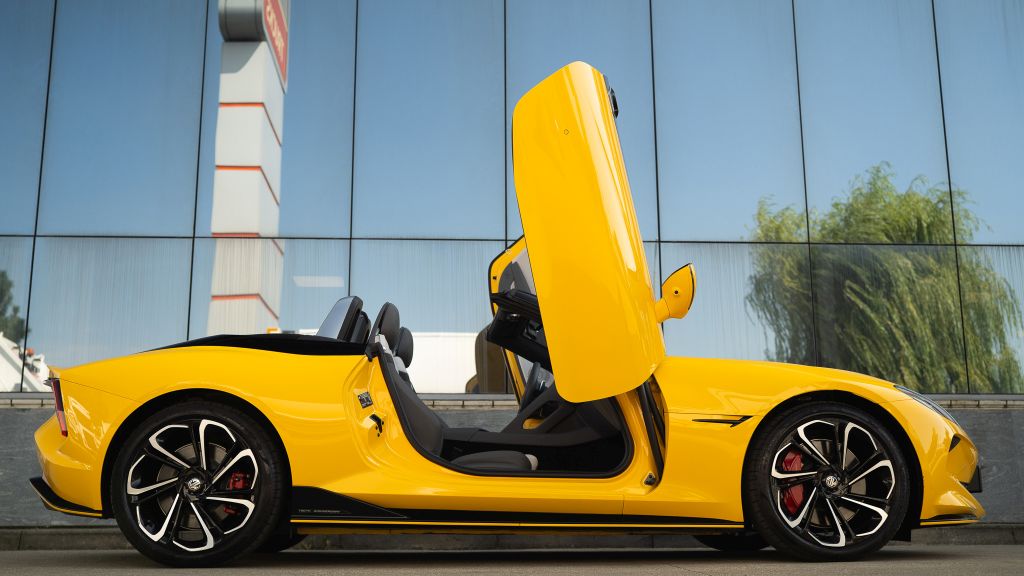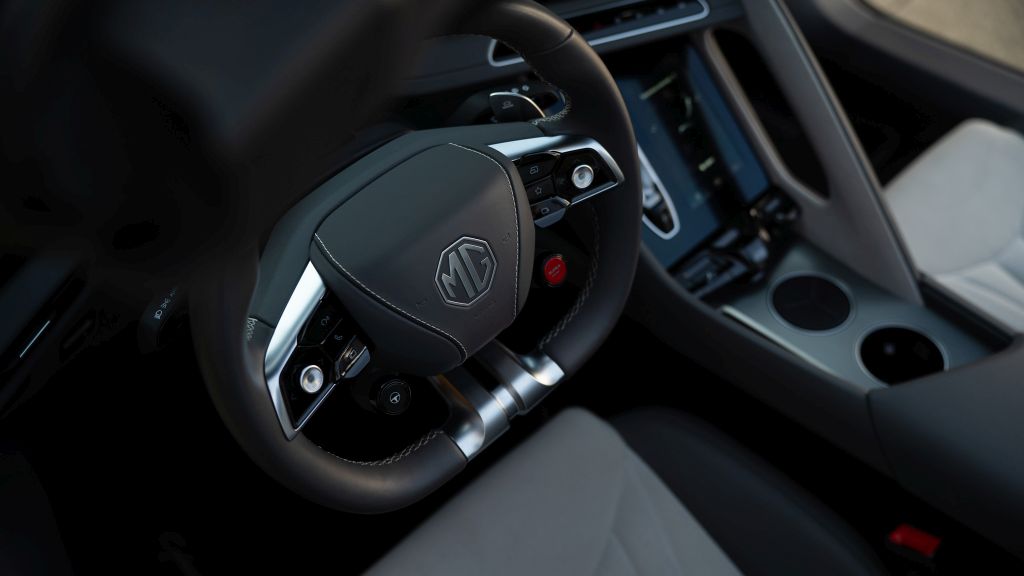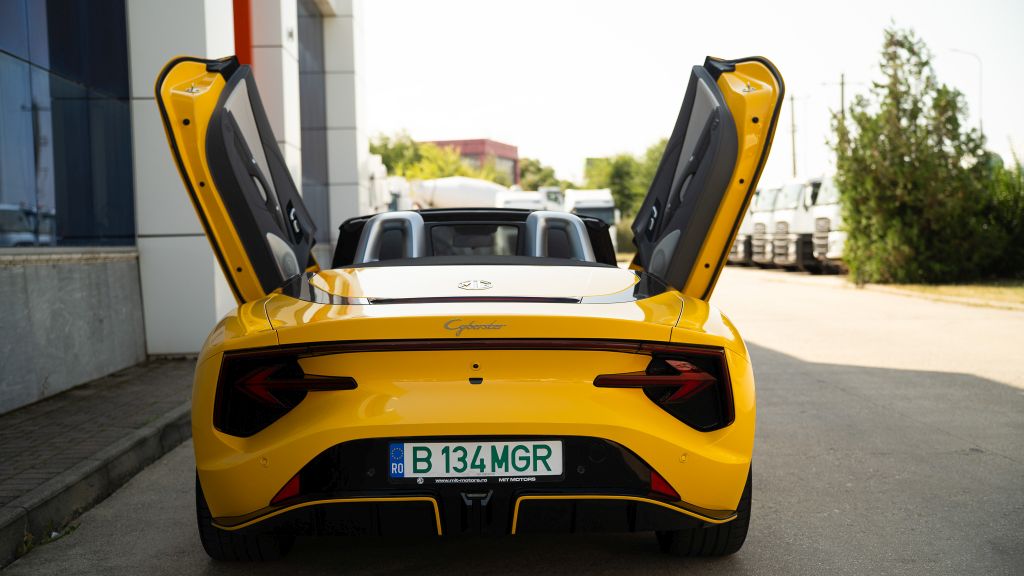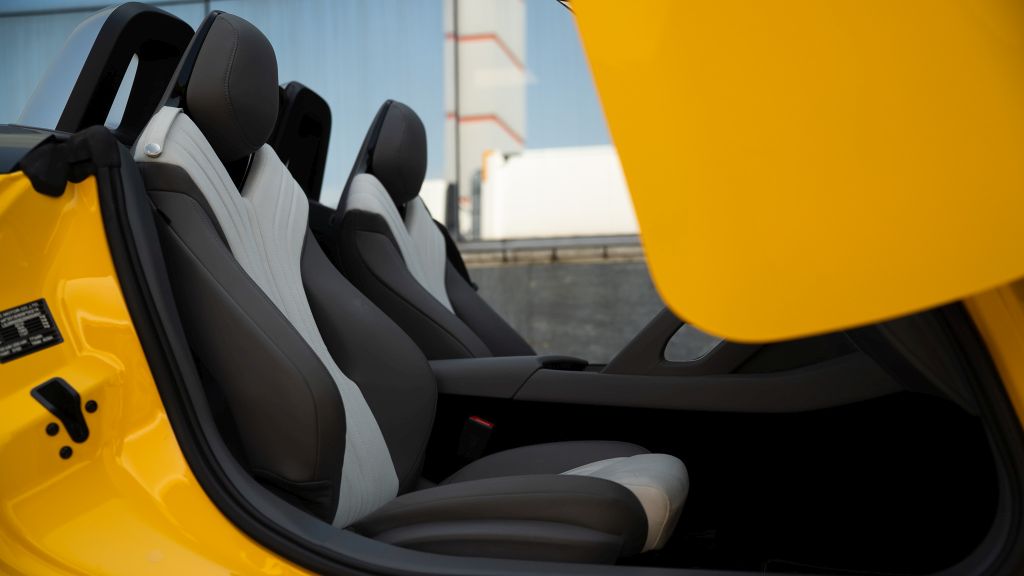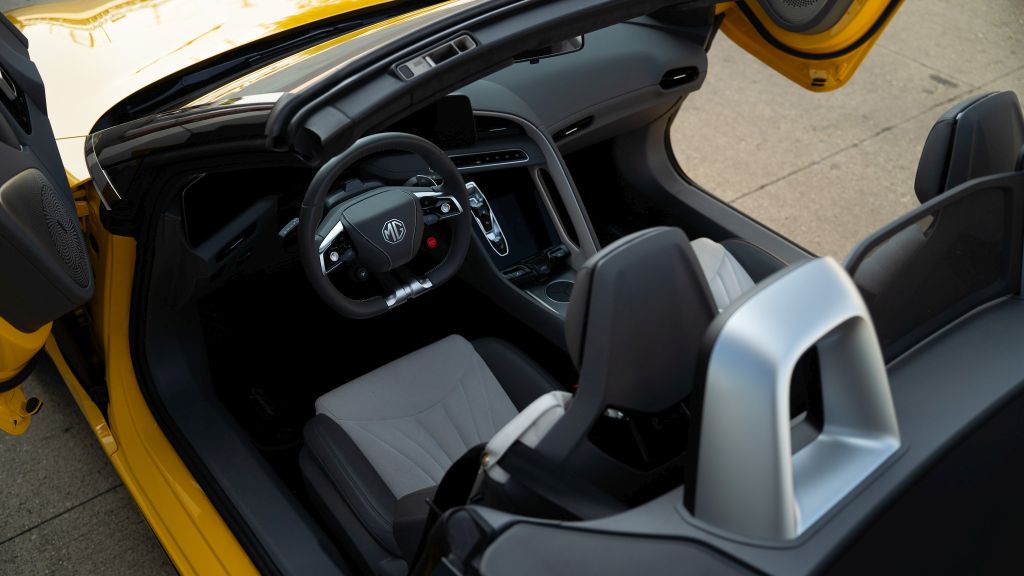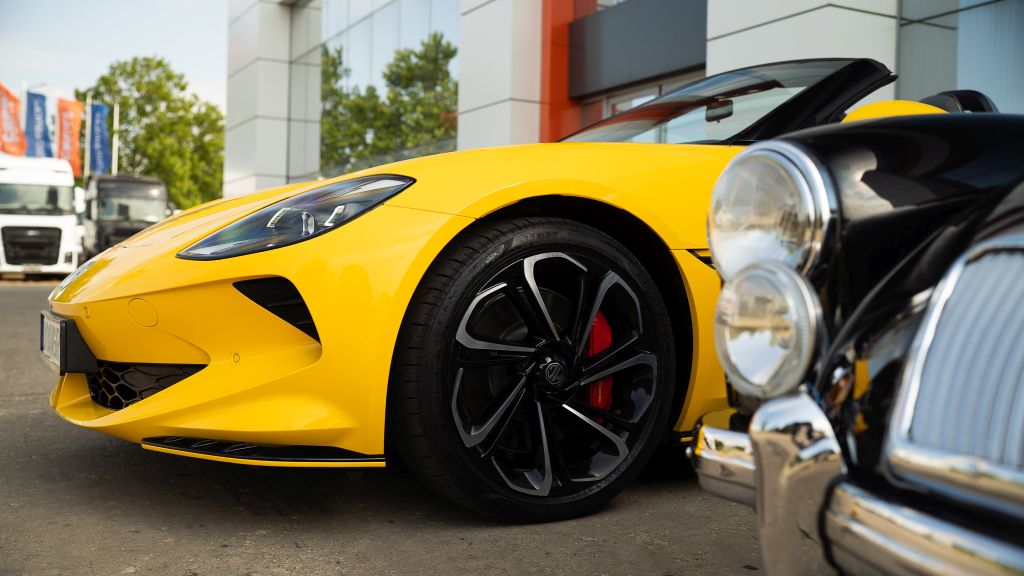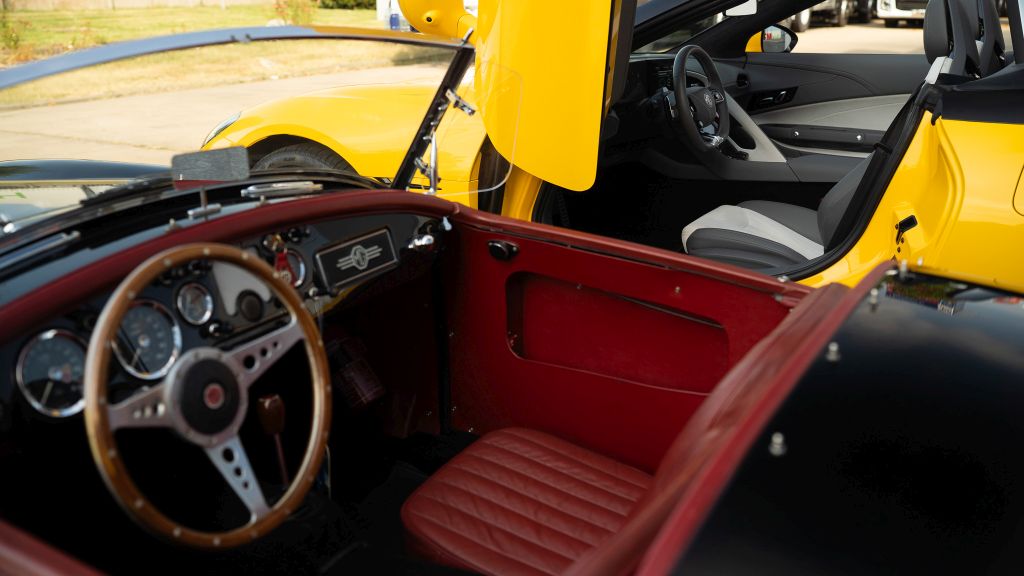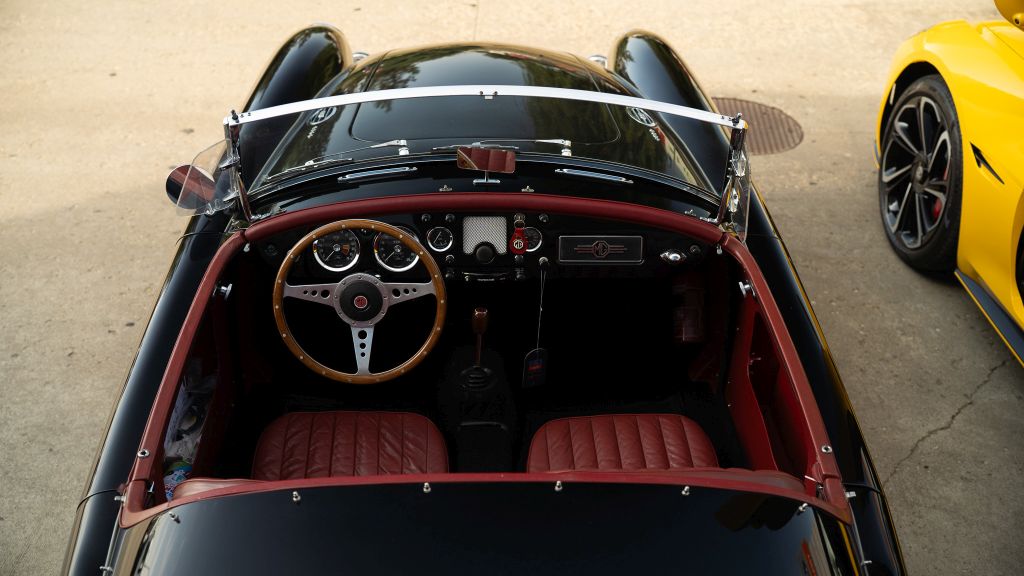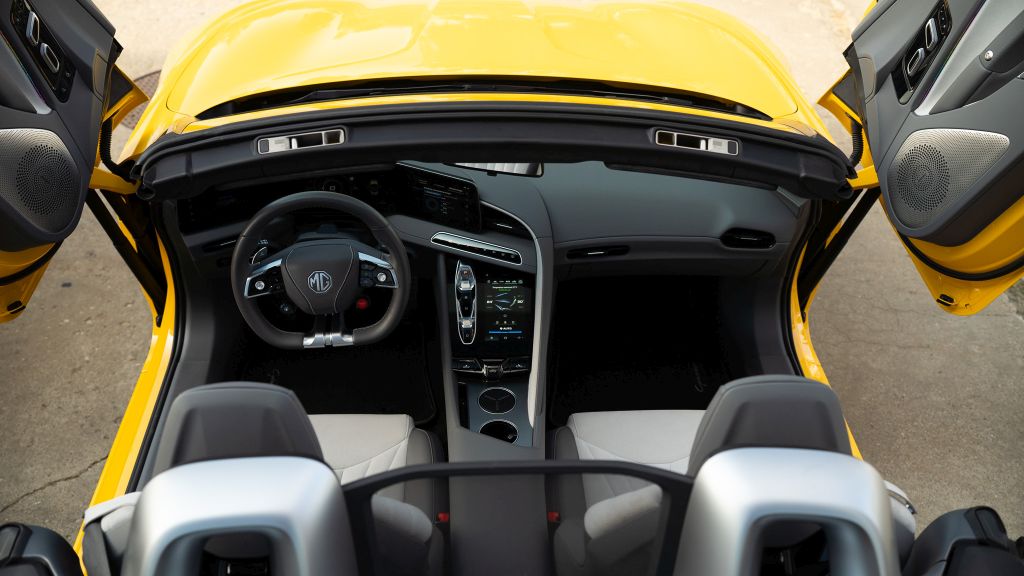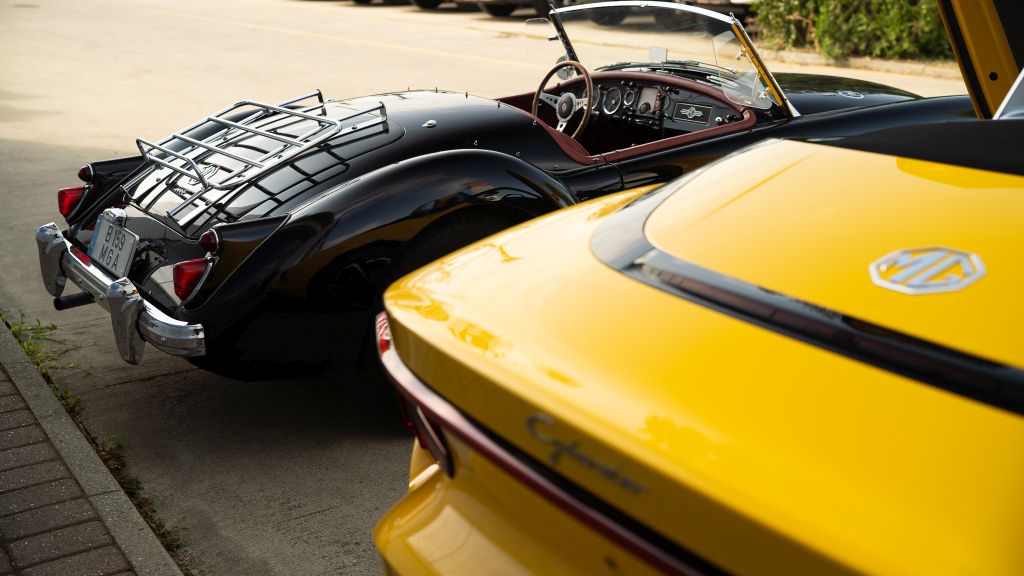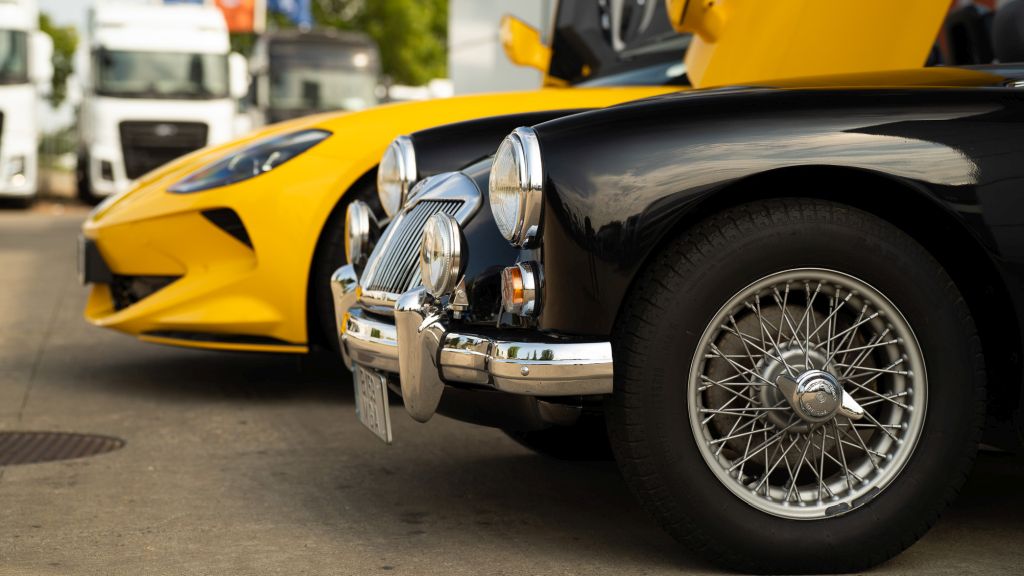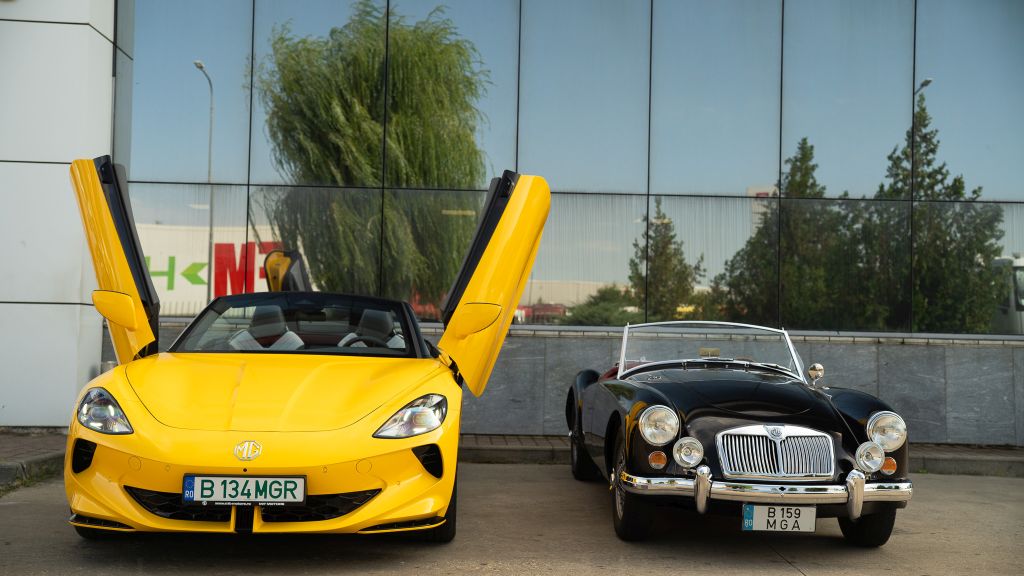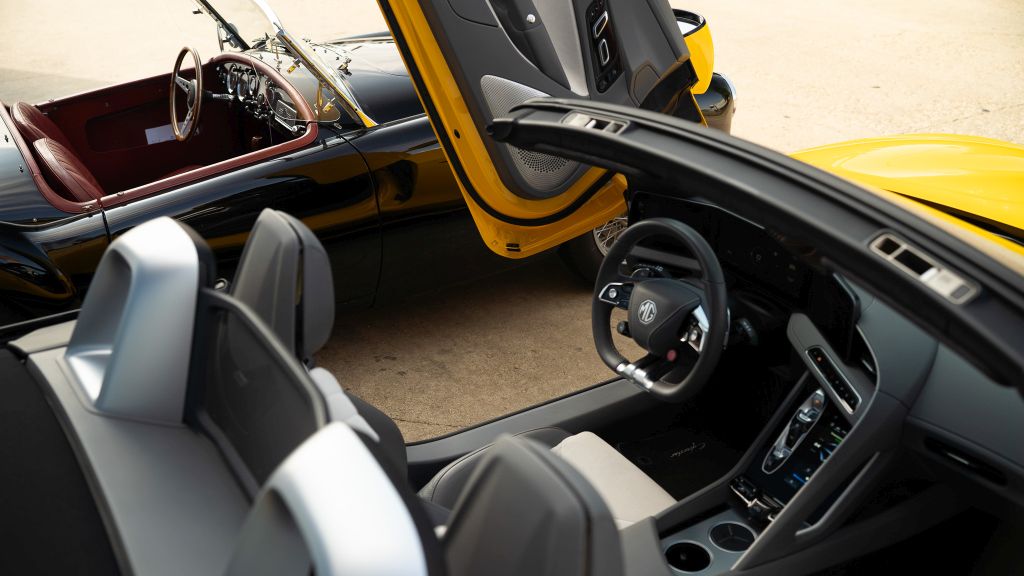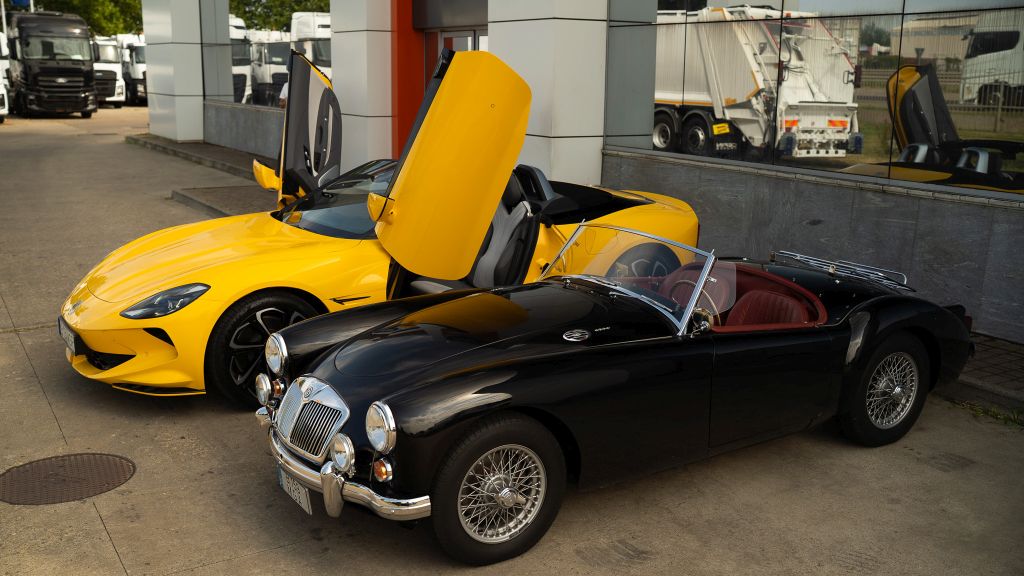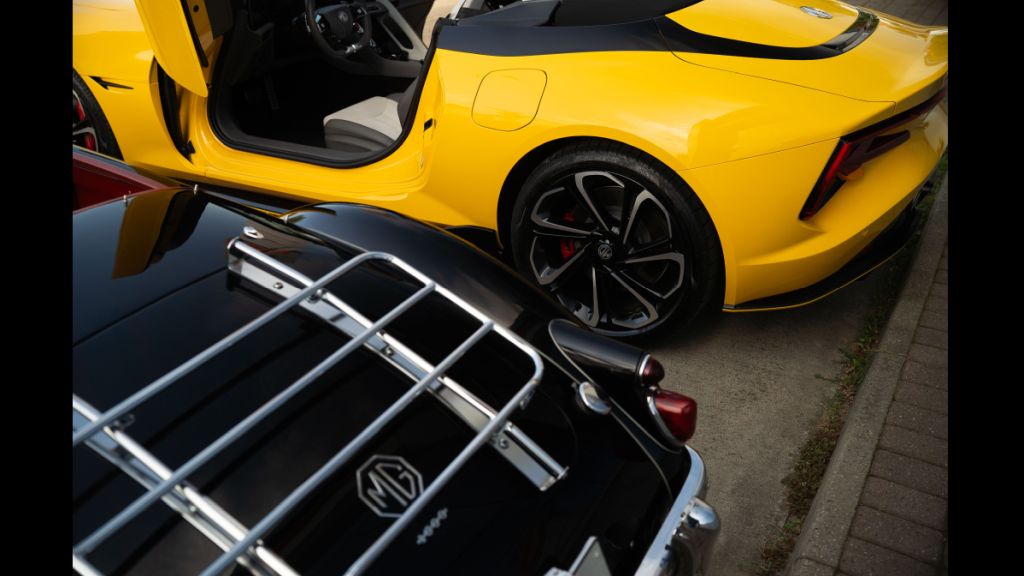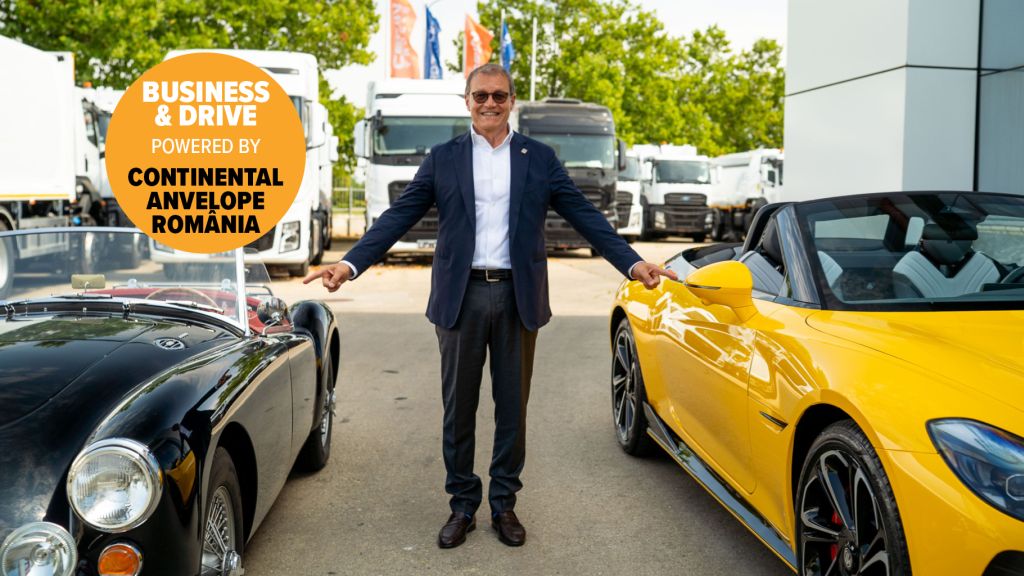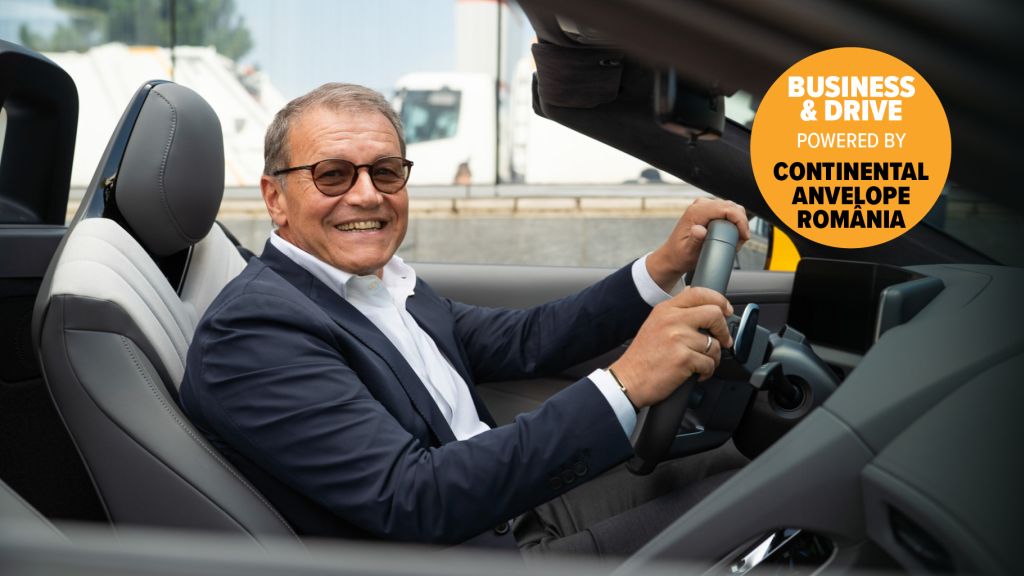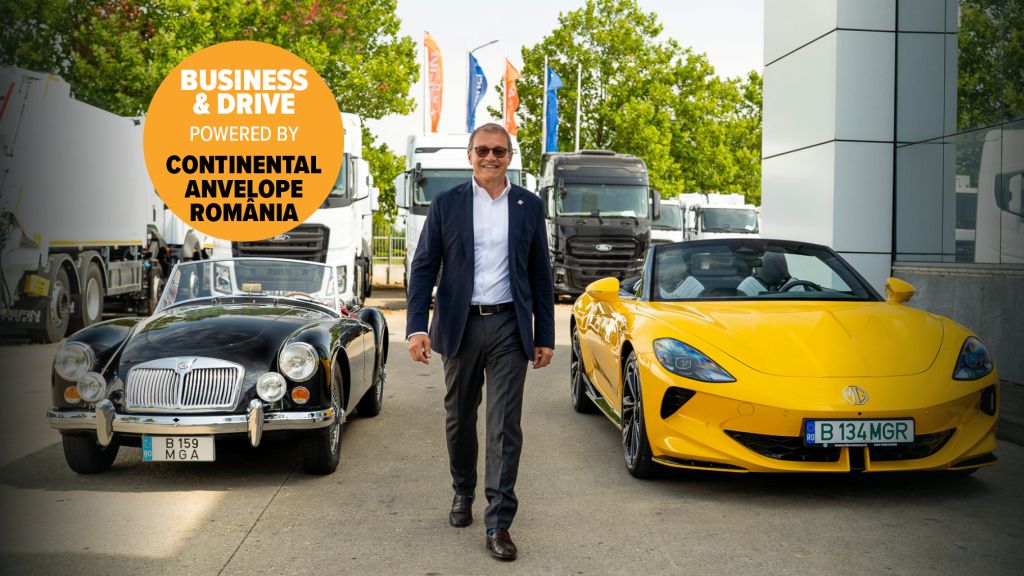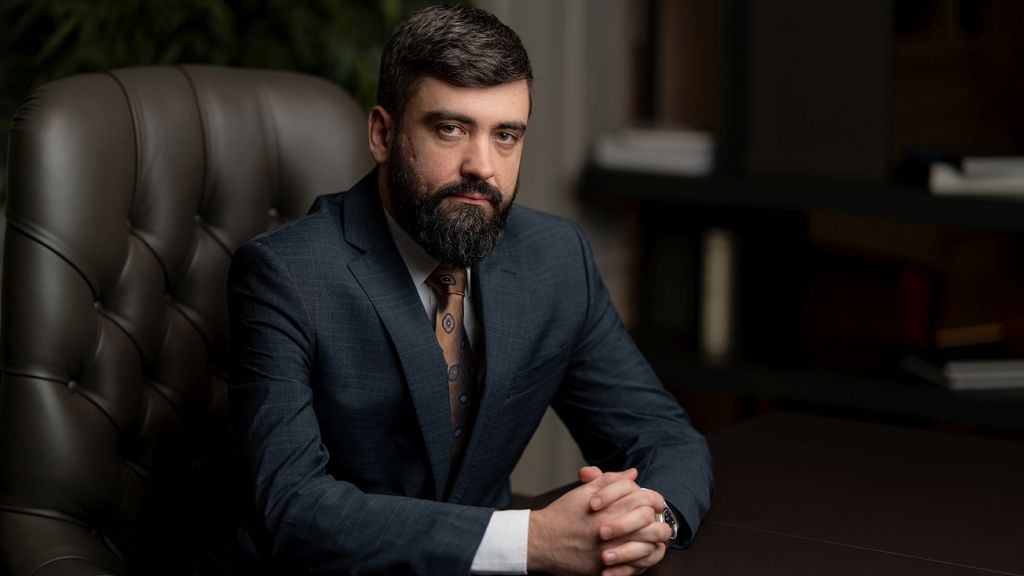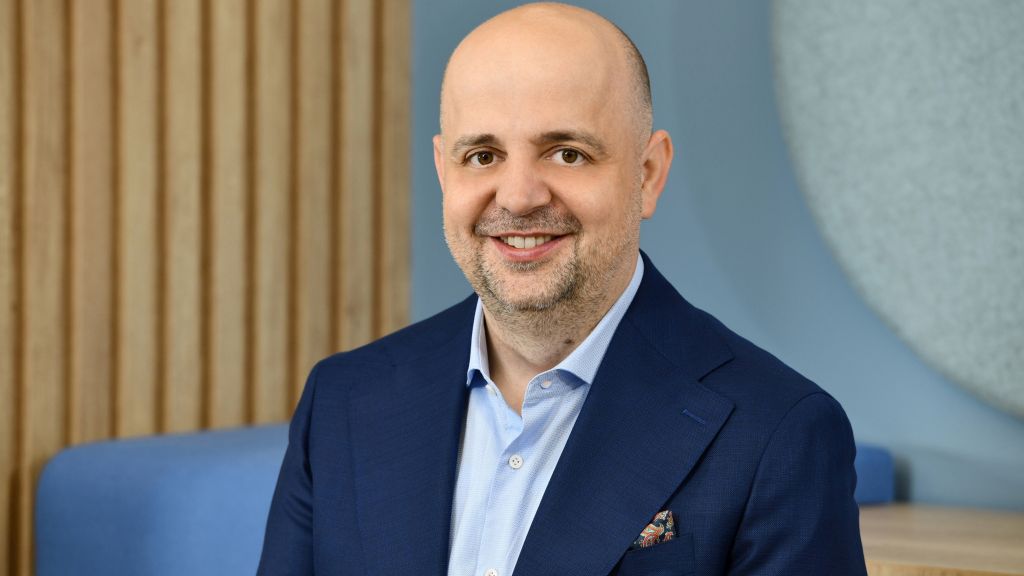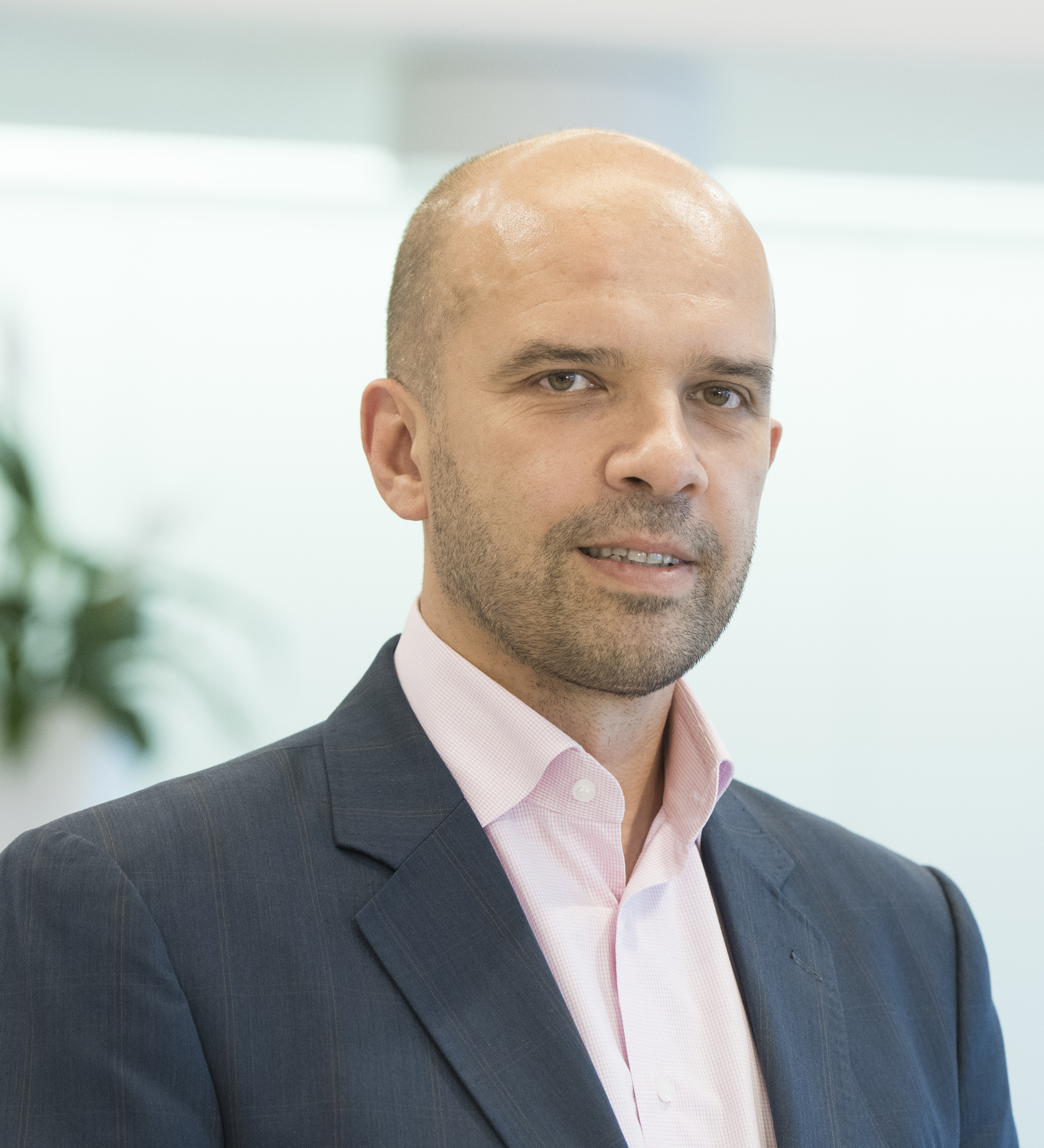
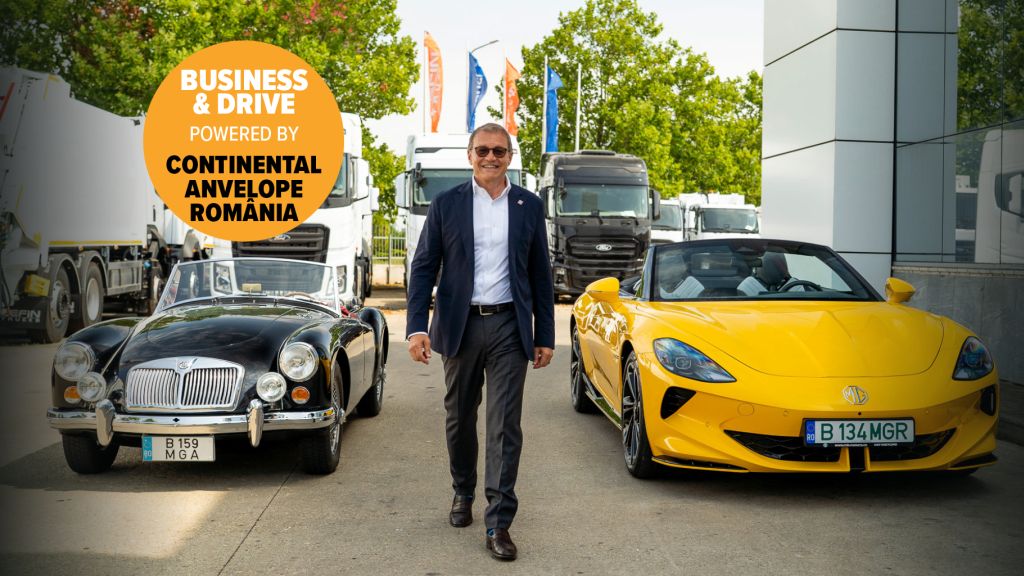
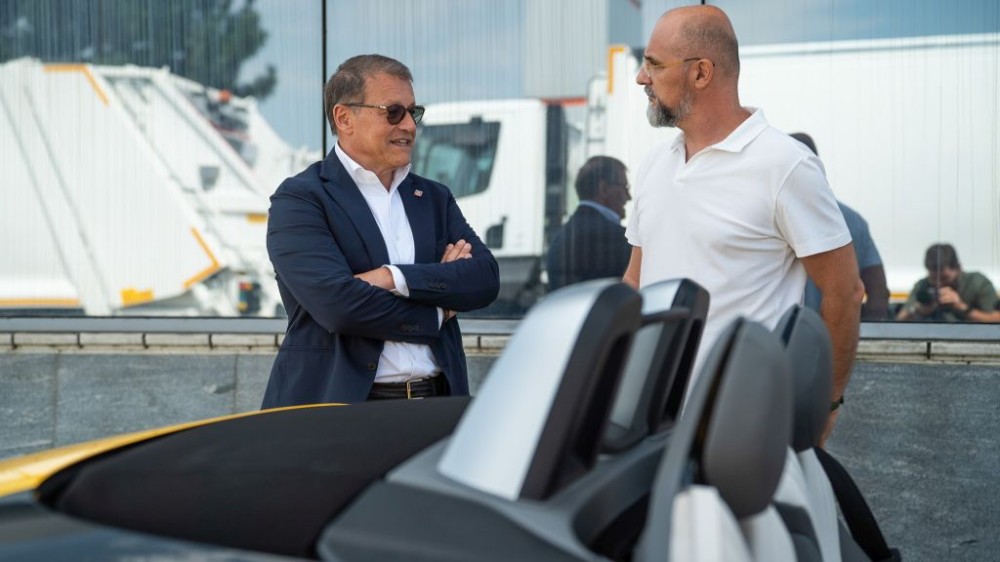
Based in Romania and an entrepreneur for more than three decades, Stefano Albarosa talks about his journey from Iveco to building a family group, the crises that changed his approach to business, and the opportunities he still sees here. The interview reveals a man driven by curiosity, independence, and a passion for being on the move: a pilot and an enthusiast of classic cars, motorcycles, and sailing. Beyond figures and projects, Albarosa places family at the heart of a life well lived. In this new Business & Drive interview, presented by Continental Anvelope Romania, the car once again played an important role. This time, we had an MG Cyberster provided by MG Romania.
Toader Ilie: How do you feel these days: Stefano the Italian or Stefano the Romanian? Is there still a boundary between those two identities?
Stefano Albarosa: Not really, but I don’t think there ever was, because Romanian and Italian mentalities are not very different. I come from southern Italy, and I think it is even more apparent there. In terms of mentality, we southerners have less in common with Germans than with Romanians. We share the same values: a family-centred society, and we care deeply about our friends. I don’t think adapting is a problem for an Italian coming to Romania or a Romanian going to Italy. I know many Italians who came to Romania to start businesses and stayed. You stay here because you feel comfortable. In 2013, I moved to Romania; my primary residence is here.
Toader Ilie: Your background includes finance, operations, and technology. It seems you were a good fit for what you do now right from the start. Did you choose this field while you were still studying? Did you know what lay ahead?
Stefano Albarosa: I studied business administration and finance, followed by a master’s degree in international finance. My plan was to work in a bank, but when the time came to start my career, I considered the opportunities offered by Europe’s new economic frontiers—we are talking about 1989–1990. All the discussions about Eastern Europe were very exciting. For us, as young Western Europeans at the time, it was something completely unknown. From our perspective, the history of this part of the world seemed to stop somewhere around the end of the Second World War.
Back then, if you asked, say, ten Europeans where Budapest and Bucharest were, they couldn’t even point to them on a map. Between university and my master’s degree, I did a six-month internship at Iveco. When I finished my master’s, I was invited to work for Iveco and accepted an assignment in Eastern Europe. I spent five years in Hungary, and during the last two years my remit expanded to Romania and Bulgaria. My job was to identify potential partners who wanted to become Iveco dealers and support them through their first steps. As I gained experience, I became tempted to move beyond being an Iveco employee and become an entrepreneur. Originally, my youthful dream was to become a pilot. In fact, I am a pilot—I have a pilot’s licence—but not for fighter jets, as I had imagined…
Toader Ilie: Do you fly your own plane?
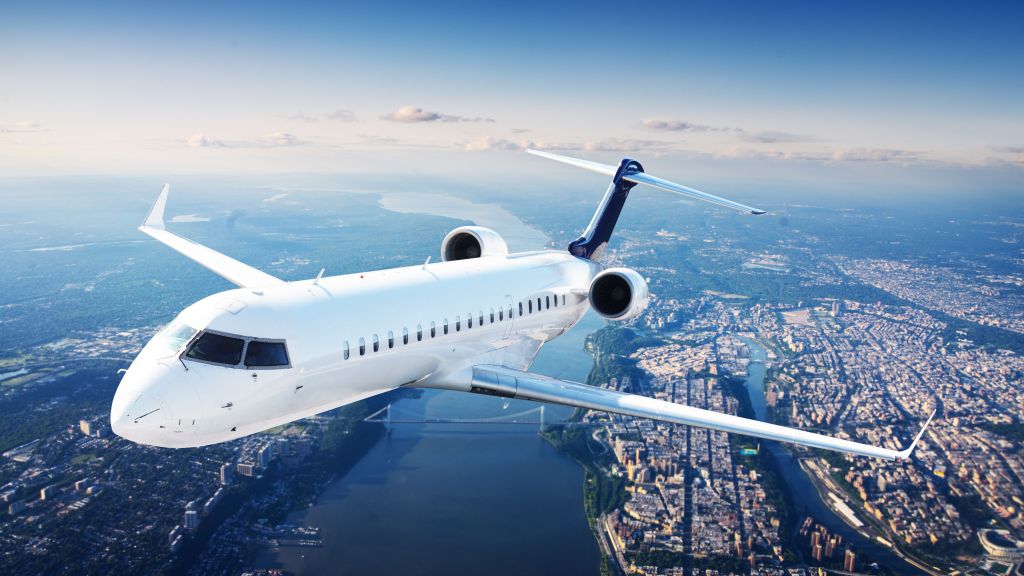
Stefano Albarosa: Yes, yes. It is a very enjoyable combination, because it brings together my passion for flying and my daily work. We have nine branches in Romania, and my plane can also land on grass airfields. It is a small aircraft, but it allows me to get to our regional offices quickly to meet clients or hold meetings. One day, for example, I had breakfast at home, flew to Cluj, then from Cluj to Odorheiu Secuiesc, and from there to Brașov. I had meetings in all three cities and was home before dinner. It couldn’t be more efficient.
Toader Ilie: Your automotive career began at Iveco, doing business with very large companies. When did you decide to become an entrepreneur and leave the corporate environment?
Stefano Albarosa: It was in 1995, after five years as an Iveco employee. In my last year, I was responsible for three markets: Hungary, Romania, and Bulgaria. Their dynamics shaped my vision, and I saw an opportunity. I realised that in these countries, even with very limited starting capital, you could still expand and achieve strong growth. I am an ambitious person by nature. I really enjoy creating things based on my own vision. When you work for a multinational, you benefit from its considerable strength, but there are also many structural limitations. For example, you might manage to persuade a client to go along with your idea, yet find it harder to persuade your own management to commit to that direction.
Time has shown me that it was the right choice. In practice, I have been an entrepreneur since 1995, together with my family—I am not alone; my brothers are alongside me too. This field has brought me great satisfaction and many achievements that felt like moments of glory.
But I have also had very difficult times, especially after the financial crisis of 2008. The years from 2008 to 2012 were certainly not the happiest of my professional life.
I believe in what our grandparents used to tell us about starting out: don’t overextend yourself, grow sustainably, and always remain in a kind of harmony with the environment in which you operate. That will soften the impact of harder times. All of that is true, and you come to understand it when you face reality.
Toader Ilie: Now, after almost 30 years of doing business here, how do you look back on the road you have travelled? How do you see Romania today compared with Romania back then?
Stefano Albarosa: Well, the country is much more developed today, of course. In the meantime, a business environment has emerged that understands business much better. For those who started back then, looking back brings two defining features into focus. First, it was clear that almost all companies with a strong asset base were state-owned. Second, despite their potential and resources, there was a lack of experience and strategy. At the same time, very dynamic and capable entrepreneurs were beginning to emerge, but they had no financial backing and no experience.
Almost everywhere, you faced this balancing act between investing effort with confidence in the future and having to take significant risks without benchmarks or guidance in the business landscape. Yet, somewhat paradoxically, returns were much better—surprisingly good—once things got moving, compared with today. What always mattered a great deal was effective communication, with attention to sensitive issues. Perhaps the cultural similarities between Italy and Romania also played a part in my case.
I also take satisfaction in having managed to bring many investors to Romania and help make things more dynamic. I am not talking only about the automotive sector, but also renewable energy and real estate.
We brought in investment funds that entered Romania with our involvement. Today, CTP is the largest investor in real estate and logistics. They made their first transaction in Romania through us. Yes, we knew how to attract substantial investment funds to Romania. Between 1996 and 2006, we developed a leasing business that reached €400 million before it was taken over by Iveco.
Our real estate activities reached volumes of nearly €300 million. We remain active in this field through international partners who trusted us. Through us, they gained confidence in Romania and invested here in renewable energy projects with genuine prospects.
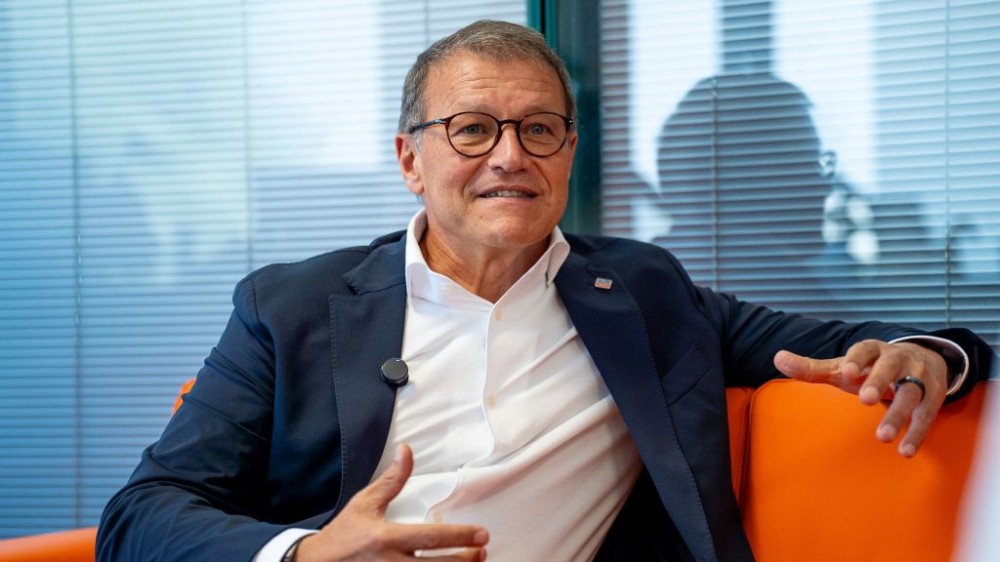
Toader Ilie: Since you said you run this business with your family, is anyone at home interested in following the path you started, or is everyone drawn to other things unrelated to your business?
Stefano Albarosa: There are three brothers in my family. We have always been very, very close, and before 2000 none of us had been an entrepreneur. We all came together here by different routes. My younger brother spent ten years working in banking in America, at J.P. Morgan. My older brother was an army officer, and I followed this path with Iveco and trucks in Eastern Europe. In 2002, we decided to work together and created a holding company. Each of us is responsible for a different activity.
Although each of us handles something different, our activities are integrated into this family holding company. When we made that move, we wanted it to mean something for us as a family: to keep us together, despite our differences, and make it easier to deal with whatever situations might arise. In any such situation, the others could step in and provide support. In fact, it proved to be a very good decision when crises came. There were times when the automotive business could not have continued without support from the other two activities.
It is important to be able to rely on diversification; that was the thinking behind our decision. As for the children, there are ten in our extended family. I have four, and my brothers have three each. From the outset, we considered how to manage their entry into the family business in a way that would be fair to everyone.
The solution came from advice given by the people who help us manage the holding company. We decided to let all the children pursue their chosen careers outside the family businesses for ten years. After ten years, they can join our businesses if they wish. That way, they will certainly bring fresh experience and new ideas. And when they want to join, we will have a very clear understanding of the level they have reached professionally.
For now, none of them is involved in our businesses. The first two of the ten children have already spent more than ten years on their own, and they are doing very well in their respective fields. But deep down, I hope that one of them will eventually join us.
Toader Ilie: Looking at Cefin from the outside now, after so many years at the company you built, what makes you proud of where it stands today?
Stefano Albarosa: I believe Cefin (AIC TRUCKS) is now a very solid company with a clear role in the market. Its business is much more diversified today. We buy and sell used vehicles—a very active part of Cefin Trucks—and our portfolio includes various brands such as Ford Trucks, Iveco, Otokar, and Piaggio. In other words, we have tried to build a business structure that allows us to be resilient.
There were difficult times when we could find no solution other than selling some of our businesses. We sold the spare parts business, the Ferrari importer, a bus factory in Arad, and the entire tyre distribution division. What makes us happy today is that, despite having been sold, these businesses still exist and are doing well. In almost every case, they are run by managers we worked with ourselves. I find that deeply satisfying: creating something that can stand the test of time, even when you are no longer there.
Toader Ilie: When did your passion for cars begin? What was the first car that sparked a real passion? I know you later moved on to motorcycles and planes and so on, but where did it all start?
Stefano Albarosa: I think our generation caught the last years of genuine enthusiasm for driving. I say “our generation” because I have seen how my children prefer driver assistance systems; they are not as passionate about driving. When I was 14 or 15, my first dream was to get a driving licence and drive my own car. It offered a degree of freedom you simply didn’t have without one. That was where the dream of breaking free from the limits of mobility began.
The car I bought back then remains the only new car I have ever bought in my life. It was an Alfa Spider convertible. I remember receiving my first salary from Iveco. Without opening the envelope, I went to an Alfa Romeo dealer and left it there. I said, “This is my deposit for the car!” Back then, you had to start paying towards that car a year in advance. I told them I would come in every month and leave some money, but my order was firm.
That was when the passion was born, because the dream was tangible—it was right there in the showroom window. I got my driving licence three days after turning 18. Six months before your eighteenth birthday, you were entitled to a kind of provisional licence that allowed you to drive accompanied by someone who held a driving licence.
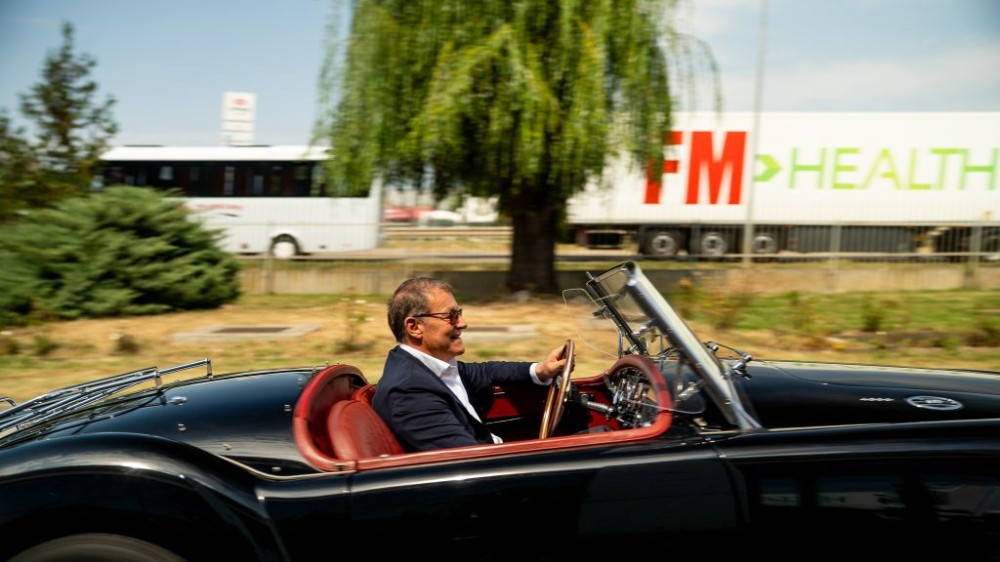
That effort gave rise to the passion, and it developed from there. I have always liked classic cars. In fact, all the cars in my collection are from the 1950s and 1960s. Of course, they don’t perform like today’s cars and cannot be compared with them in many respects, but I believe they offer the true satisfaction of driving a car.
Toader Ilie: At the weekend, when Stefano is no longer a CEO or an entrepreneur and leaves it all behind, how do you spend your time? What are your interests?
Stefano Albarosa: My weekends go between two extremes. On a relaxing weekend, my wife and I really enjoy spending time together. And we laugh and joke a lot.
At the other extreme, I really enjoy more dynamic sports: motocross and enduro, freeride skiing, electric mountain biking, flying, and exercise. So once or twice a month, we have different plans.
Toader Ilie: Do your children share your passion for cars, even though mobility looks completely different for today’s generation?
Stefano Albarosa: Mobility is no longer a pleasure; it is simply a service. A need you take care of. We have four children, all living abroad, and three of them have driving licences. My youngest daughter, who is 26, does not. At 26, I had already had my driving licence for seven years and travelled extensively around Europe by car. Driving doesn’t stir any particular emotion in them.
Toader Ilie: Tell me your all-time favourite cars.
Stefano Albarosa: That is an easier question. As an Italian, it probably won’t surprise you that Ferrari is at the top of my list. My favourite Ferrari is the Daytona. It is a superb car. I had the pleasure of driving one at Silverstone.
It was an absolutely phenomenal feeling… Especially when you consider when that car was made, the performance it offered at the time, and what other cars were doing in those years, it was clear that Mr Ferrari was 300 steps ahead of everyone else in the field. It is a perfect combination of beauty, performance, and well-engineered technology.
Another car that impressed me a great deal was Tesla. I had the pleasure of driving a Tesla in the United States with a “Full Self-Driving” system. On the first trip, I stayed close to the steering wheel in case of an emergency. Then I got used to it, and the ease with which you adapt is frightening. Autonomous travel is becoming something that can be applied on a large scale; much of the necessary technology already exists, and we really will forget how to drive very quickly. Traffic will indeed be much safer, because it is clear that, statistically, artificial intelligence makes far fewer mistakes than we humans do. This will be a radical change with many implications.
In our sector, for example, I think about freight transport. Once you overcome all the human limitations of the driver, efficiency will be maximised, and there will be no risks. A driver needs rest time and has days when they do not go out on the road, so automating trucks would make a huge difference. Think about it: under those conditions, productivity would double. What I mean is that trucks would no longer cover 120,000–130,000 kilometres a year, but 200,000–250,000. I believe the same will eventually happen with private cars. At some point in the future, I think anyone who wants to drive will have to go to a circuit. Humans will no longer be allowed to drive on public roads, because you would be dangerous as the only uncontrolled element in the system. All these technical changes in the automotive sector will improve not only safety but also efficiency, and the increase in efficiency will be surprising.
Toader Ilie: So you have mentioned Ferrari and Tesla—Italian and American cars.
Another brand I really like is Lamborghini, because I admire the person behind it. Lamborghini managed to stand out in a sector dominated by established players. On one side were German luxury cars; on the other were high-performance cars such as Ferrari and Lotus. Lamborghini managed to create an absolutely brilliant product niche: a super-high-performance car that you can use every day. Once again, it proves that those with the courage to do things differently make the most of the best opportunities. In other words, you will never discover America unless you have the courage to leave the shore behind.
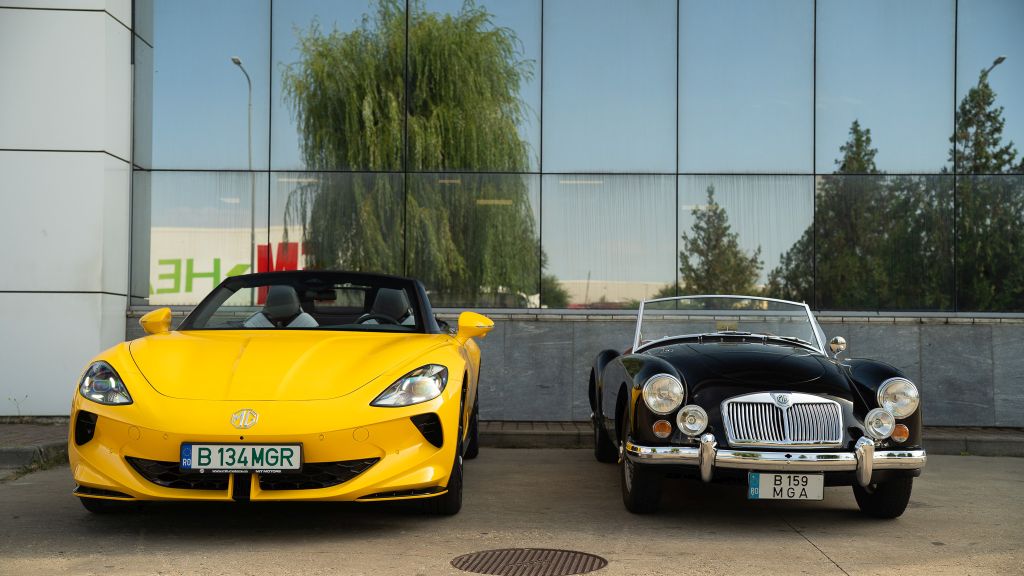
Toader Ilie: Is the MGA 1600 one of those cars you love and would never part with?
Stefano Albarosa: I will love the MGA forever, because it was a project that took a very long time to complete. This MGA truly was a labour of love. I wanted to restore it completely, from the ground up. It was in a deplorable condition when I bought it. I think the MGA is a thoroughly honest car in its own way. It may not deliver the highest driving performance, but it gives you a very pleasant, very familiar feeling. It offers, so to speak, more aesthetic pleasure than practical satisfaction.
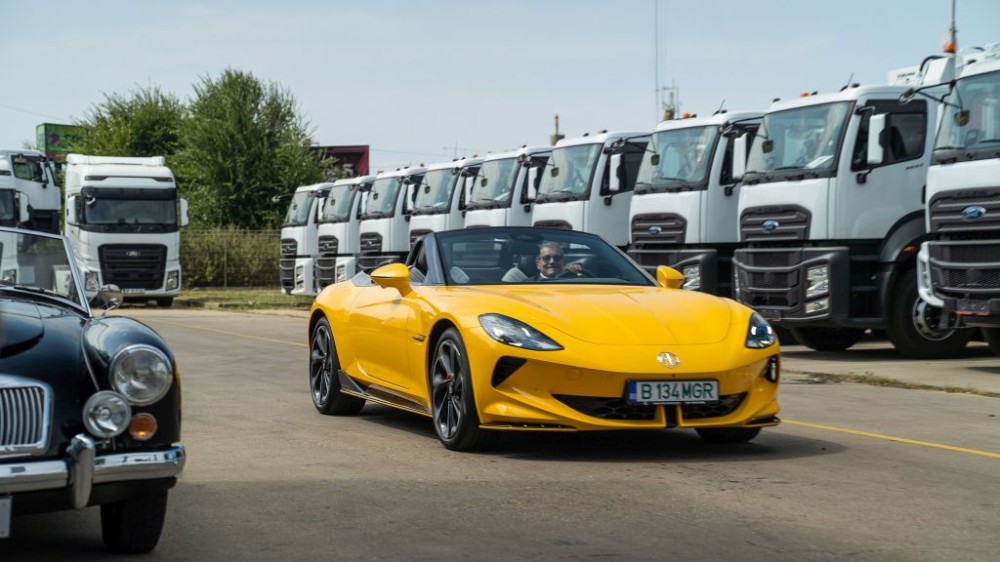
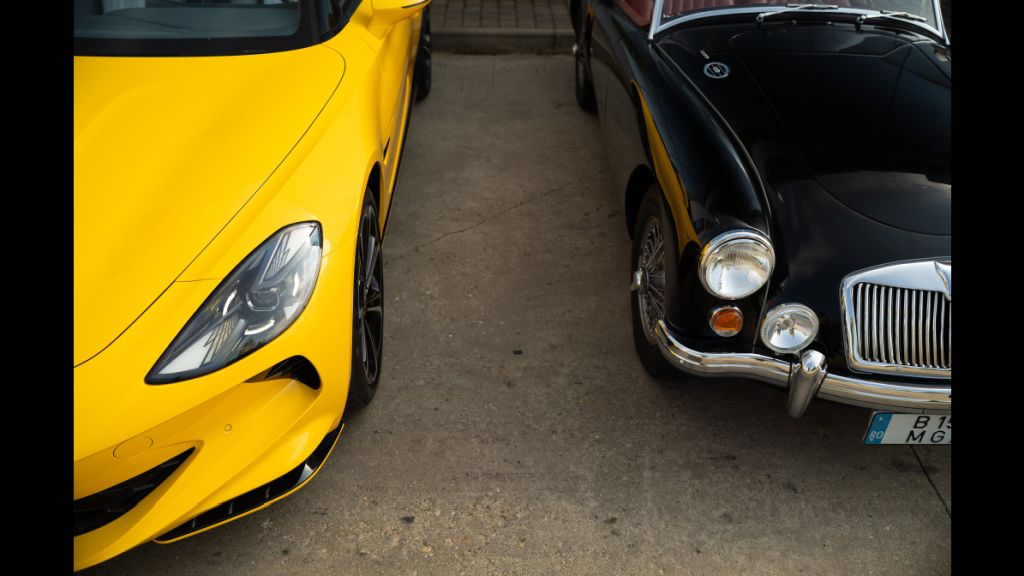
Toader Ilie: In a way, it is a toy for the child in you who is always tinkering with something, isn’t it? How did you find the new electric interpretation, the MG Cyberster, compared with your own car?
Stefano Albarosa: I was very surprised. Electric cars have clearly moved beyond the stage when they were oddities, with concerns about where to charge them and so on. My wife drives a Ford Mustang Mach-E, and we really enjoy it. In fact, it is less hassle than a petrol car. They really are the future, if you ask me.
As soon as I got into the MG Cyberster, I thought: what if we added one to the family fleet? It made a very good impression. And it is interesting getting into a sports car like this: you press the accelerator, and there is no engine noise, yet you still feel the power. That is something we will have to get used to.
Toader Ilie: What advice would you give an entrepreneur starting out today, say in transport, who wants to succeed?
Stefano Albarosa: There is one piece of advice I like to give, because it is the most important thing you need: never give up! When you are convinced that this is what you want to do in life, the activity into which you want to put all your energy—whether it is transport or anything else—never give up.
Difficult times will always come, and as the English say, there is no such thing as a free lunch. You have to work. I believe you cannot truly be an entrepreneur until you realise that what you do is entirely your own responsibility.
When someone gives you something, when you gain something, or when something comes your way because of favourable circumstances, always think about what would happen if it did not come your way again. That is what my concept of freedom comes down to: you are free when you are independent, and everything you have is something you have built yourself.
Toader Ilie: One last thought from you: what does a life well lived mean to Stefano today? It sounds a little like the Italian phrase “la vita e bella”.
Stefano Albarosa: These are the questions I am afraid of, because they mean the person asking thinks you have lived a long life and gained perspective. I think you need to look in the mirror sometimes, know how to smile, be satisfied with what you manage to do, and not harbour envy, resentment or grievances. In that respect, I consider myself very lucky, because I forget things easily. When someone or something upsets me, I move past it and get on with my own affairs. The past does not weigh on me in any way.
When I come across people I don’t like, I simply move on. And I think that is the right answer. You need to stand on your own two feet. I have also been lucky, I admit: I was fortunate enough to receive a very good education, and for that I must thank my family. I was also very lucky to find the right wife. She helped me enormously through difficult times—the times when people usually run away from you—and I think that is a very important lesson. Have someone beside you who truly cares about you, and, of course, take care of her too. When you know you are not alone, you also gain the pleasure of sharing your life with someone. That is a great achievement.
Toader Ilie: Is there anything, in business or in life, that is still on your list and that you haven’t had the chance to do yet?
Stefano Albarosa: One of my passions is sailing. I am not particularly fond of motorboats. You need an engine to enter and leave the harbour. One of my dreams is to sail around the world. There is a long way to go before that happens, starting with convincing my wife. I have already persuaded her to join me on the boat, and she really enjoys it. She also has a passion for cooking, which is a wonderful complement to our sailing trips. Although she works as the general manager of a major company in Romania, she also loves cooking. That gives me confidence that we will make that journey around the world, because I have someone to share it with and it will be a complete experience.
Toader Ilie: Does she also fly with you?
Stefano Albarosa: That is a very painful question, because she is the only person in our family who does not fly with me. Of course, it is because she is afraid of flying.