
Traditionally, wealth management has been associated with competencies such as investing, financial planning, taxation, and asset protection.
Practical experience, however, shows that long-term financial performance cannot be explained solely by access to information, expertise, or financial products.
Two individuals with similar resources can achieve radically different outcomes. The difference is often determined by how they think about money, how they perceive risk, how they manage uncertainty, and how they make financial decisions under pressure.
For this reason, the psychology of money is increasingly being recognized as one of the most important frontiers in contemporary wealth management.
Psychology operates beyond numbers and returns
A person’s relationship with money develops throughout their life, shaped by their upbringing, personal experiences, cultural models, and social context. From a behavioral perspective, financial decisions are rarely entirely rational.
In practice, private investors are influenced by factors such as the fear of loss, overconfidence, a need for security, attachment to specific assets, or the tendency to follow the behavior of the majority.
These psychological mechanisms can have a greater impact on investment outcomes than short-term market fluctuations. Consequently, financial success depends not only on what we know about money, but also on how we think about wealth, or the lack thereof.
Nevertheless, there are several key elements that distinguish impulsive reactions from mature financial decisions. These include:
• emotional self-control during periods of volatility
• the ability to maintain a long-term perspective
• the discipline to follow an investment plan, even when markets fluctuate
• an openness to continuous learning and to correcting one’s own mistakes
• the ability to separate "noise" from relevant information.
These elements contribute to building balanced financial behavior and can influence long-term outcomes just as much as the choice of a specific financial product or the attempt to anticipate market movements.
Financial mindset as a competitive advantage
Experts in behavioral finance have demonstrated that people interpret the same economic reality in different ways. Some private investors perceive volatility as a threat, while others view it as an opportunity. Some prioritize capital preservation, while others seek accelerated wealth accumulation.
Underlying these differences is what we might call a "financial mindset", the set of beliefs, values, and habits that shape an individual’s relationship with money. This mindset determines one’s level of investment discipline, capacity to delay immediate gratification, risk tolerance, and the way economic opportunities are evaluated.
A healthy financial mindset is reflected in concrete behaviors, not just in intentions. For instance, a person with strong financial literacy does not base their decisions on fleeting emotions and views market fluctuations as a normal part of the wealth-accumulation process.
Instead of pursuing quick gains, it emphasizes long-term objectives, diversification, and discipline, recognizing that financial prosperity is the result of consistent, well-founded decisions repeated over time.
From this perspective, wealth is not merely the outcome of financial decisions, but also the expression of a specific psychological makeup.
Financial challenges and the paradox of prosperity
A frequently observed phenomenon among high-net-worth individuals is that financial challenges do not disappear with the accumulation of wealth; rather, they evolve.
As resources grow, new concerns emerge, ranging from capital protection and risk management to responsibilities toward future generations and maintaining a balance between consumption and wealth preservation. In many cases, the difficulties stem not from a lack of resources, but from the complexity of the decisions that must be made.
This is why wealth management today places increasing emphasis on the human dimension. Understanding investor behavior has become just as important as analyzing the assets they hold.
Financial education and self-awareness
Financial education is often associated with acquiring knowledge about investments, economics, or financial markets. In reality, a high level of financial literacy also entails the ability to understand one’s own psychological mechanisms.
Self-awareness helps investors identify the cognitive biases that influence their decisions, avoid excessive emotional reactions, and maintain consistency in their long-term strategies. Thus, financial maturity becomes a blend of technical competence and behavioral intelligence.
In this context, one of the most significant shifts in approach is moving from the exclusive management of assets toward understanding the individual who makes decisions regarding those assets.
A new paradigm in wealth management
As financial markets become more sophisticated and access to information becomes easier, competitive advantage is no longer determined solely by financial knowledge. Instead, the differentiator is increasingly one’s ability to manage emotions, uncertainty, and complexity.
The psychology of money is thus emerging as an essential discipline for the future of wealth management, as it provides a framework for understanding how individuals build, preserve, and utilize capital.
For instance, unconscious beliefs about money are often formed during childhood through observation and experience. While some people internalize the idea that money provides absolute security, others associate it with power or freedom. These mental patterns influence financial decisions far more profoundly than formal economic knowledge.
Psychology also addresses the concept of "hedonic adaptation". That is the tendency for people to return relatively quickly to their baseline level of satisfaction following significant increases in income or wealth. This phenomenon explains why the accumulation of capital does not automatically lead to a proportional increase in one’s sense of prosperity.
Such concepts suggest that one’s relationship with money is less a matter of financial mathematics and more a matter of perceptions, beliefs, and psychological adaptation.
Valoria at the Wealth & Investment Forum 2026
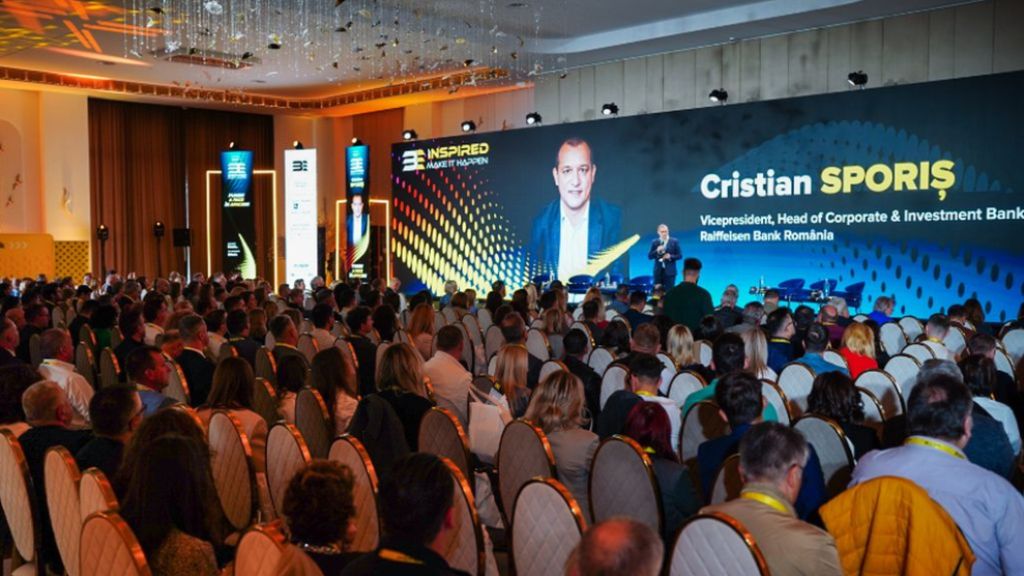
We are pleased that the Wealth & Investment Forum 2026 is taking place this year on 22 October in Bucharest. The event brings together international experts in wealth management, investments, economic strategy, and behavioral finance.
Taking the stage at the Face Convention Center will be:
• Morgan Housel, an expert in behavioral finance and the history of investing. He is the author of the bestsellers *The Psychology of Money*, *Same as Ever*, and *The Art of Spending Money*.
• Jim O’Neill, a member of the House of Lords. He serves as Chairman of Northern Gritstone, a private investment firm dedicated to supporting and developing start-up businesses.
• Merrin Somerset Webb, a senior editor at Bloomberg Opinion. She also contributes to the *Financial Times*, *Saga Magazine*, and Scotland’s *Sunday Post*, writing on wealth, investments, and personal finance.
• Javier Estrada, a professor of finance at IESE Business School in Barcelona. He is also a partner and financial consultant at Sports Global Consulting Investments.
As a Supporting Partner of the forum, Valoria advocates for the development of a financial mindset and promotes key insights into financial behaviors and the creation of sustainable, long-term prosperity.
Only until 20 October, at the end of the day, we are offering an additional 25% discount off the price displayed on the event website for the company's top management, using the code VAL25-WIF: https://wealthinvestment.ro/
About Valoria
Valoria is a consulting, training, and executive coaching company. Through our services, we help entrepreneurs to grow their business and make success concrete and predictable. Companies turn to us for marketing, human resources and sales consulting. We often respond to requests for training or coaching of management teams. Competence, trust, innovation and passion are the values we uphold in everything we do. We build long-term partnerships and collaborations, because we offer guaranteed results and the best quality, at the right price. Find out more at: www.valoria.ro.