
Almost every company faces the same paradox. Managers insist that their organizations must become more agile, faster, and more results-oriented. At the same time, their calendars are overwhelmed by meetings. Hours are spent in conference rooms or on video calls, participating in rituals that rarely create as much value as they consume.
The most common reaction is straightforward: "We have too many meetings." But that only scratches the surface. Organizations are not slow because people meet too often. They are slow because meetings have become a substitute for decision-making.
In many companies, meetings have replaced accountability. When a problem arises, another meeting is scheduled. When an opportunity emerges, another meeting is scheduled. When no one knows what to do next, yet another meeting is added to the calendar.
This creates the illusion of progress. People exchange ideas, present slides, debate different viewpoints, and leave feeling productive. In reality, the organization has not moved forward at all.
In today's economy, competitive advantage is no longer determined solely by strategy or technology. It also depends on how quickly a company turns conversations into decisions and decisions into action. That is where the real transformation of meetings begins.
Meetings do not just consume time
There is a significant difference between the duration of a meeting and its actual cost. A one-hour meeting with ten participants costs far more than the hour allocated on the calendar.
It also includes the cost of context switching, interrupting high-value work, and, in many cases, scheduling another meeting because the first one failed to produce a decision. That is why the right question is not how long a meeting lasts, but how much clarity it creates.
An effective meeting reduces uncertainty. Participants leave knowing who is responsible for what, by when, and how success will be measured. A poor meeting produces the opposite effect. People leave with different interpretations of the same conversation, and within hours the emails or internal messages begin. "Just to clarify..." That phrase is often the clearest indication that the meeting failed to achieve its purpose.
High-performing companies treat clarity as a strategic asset. They understand that the speed of decision-making depends not only on the competence of their people, but also on the quality of the conversations they have.
Viewed this way, a meeting is no longer just another calendar event. It becomes the mechanism through which an organization aligns its thinking.
Every meeting needs a strategy
Many meetings begin with the same question: "What are we discussing today?" If that question is asked during the first few minutes, the meeting has already failed before it truly begins.
Every meeting should be designed around the desired outcome, not around a list of topics. There is a fundamental difference between an agenda built around subjects and one built around decisions.
Instead of writing "Budget," write "Decision on next quarter's budget." Instead of "Marketing," write "Selection of the priority campaign."
The change may seem minor, but it fundamentally alters the dynamics of the meeting. Participants understand that the objective is not to exchange opinions, but to reach a concrete outcome.
It is equally important to determine who actually needs to attend. In many organizations, invitations are sent preemptively. People are included "just in case." In reality, every additional participant increases the complexity of the discussion and slows down decision-making.
A well-designed meeting includes only those who directly contribute to the outcome. Everyone else can be informed afterward.
The next step is to establish the rules of engagement. Who facilitates the discussion? Who records the decisions? How are disagreements handled? Without clear rules, meetings tend to be dominated by those who speak the most, rather than those who contribute the strongest arguments.
The rhythm of meetings shapes organizational culture
A company's meeting calendar reveals far more about its culture than its mission statement. If executives routinely schedule long meetings without clear objectives, employees quickly accept that as the normal way of working. If meetings are short, well prepared, and decision-oriented, managers across the organization begin to adopt the same behavior.
Frequency matters just as much as duration. Not every meeting should serve the same purpose. Some are designed for operational coordination and may last only fifteen minutes. Others focus on solving complex problems and require more time.
Some meetings are intended for learning and reflection, while others exist exclusively to make decisions. Problems arise when all of these objectives are combined into a single meeting.
Effective managers create predictable operating rhythms. Teams know when they will discuss weekly priorities, review performance, remove obstacles, and plan ahead. This structured approach reduces the need for spontaneous meetings caused by the absence of a consistent framework.
There is another important benefit. Clear structure builds trust. When people know they will have dedicated opportunities to address specific issues, they no longer feel compelled to turn every meeting into a discussion about everything. As a result, conversations become more focused and significantly more productive.
A good meeting ends with action, not impressions
Many meetings end surprisingly vaguely. Participants close their laptops, exchange a few final comments, and leave without anyone explicitly summarizing the conclusions. That is precisely when the true cost of the meeting begins.
Each participant reconstructs the conversation differently. Each remembers different priorities. Each leaves with a different interpretation of what was agreed. Within days, misunderstandings emerge, deadlines slip, and new questions appear.
An effective meeting does not end when the allocated time expires. It ends only when four simple questions have clear answers.
1. What did we decide?
2. Who is responsible for each action?
3. What is the deadline?
4. How will progress be measured?
These four questions transform conversation into a mechanism for decision-making and execution.
Another essential practice is evaluating the meeting itself. Very few teams regularly assess the quality of their meetings. Yet one simple question at the end can drive meaningful improvement: Was this the best possible use of our time? If the answer is no, what should we change next time? This mindset strengthens organizational discipline and sends a powerful message. Even meetings are subject to continuous improvement.
Over time, people begin to see meetings differently. Not as administrative obligations, but as tools that enable teams to think together and accelerate results.
Meetings do not have to be perfect. They simply need to create more clarity than confusion. That is the difference between organizations that talk about change and those that actually deliver it. Every company has processes, systems, and technology. Yet almost every important decision begins with a conversation. Ultimately, the quality of those conversations determines the quality of execution.
The organizations that will succeed in the future are not those that schedule more meetings, nor those that eliminate them altogether. They are the ones that transform every meeting into a mechanism for alignment.
When information moves instantly, the value of a meeting no longer lies in sharing information. Digital tools can accomplish that far more efficiently. The real value emerges when people build a shared understanding, make decisions, and commit to clear accountability.
Clarity is the resource that reduces conflict, accelerates execution, and strengthens trust across teams. That is why leaders should ask themselves one question after every meeting: “Do people leave this meeting with greater clarity about what they need to do than they had before they walked in?”
* * *
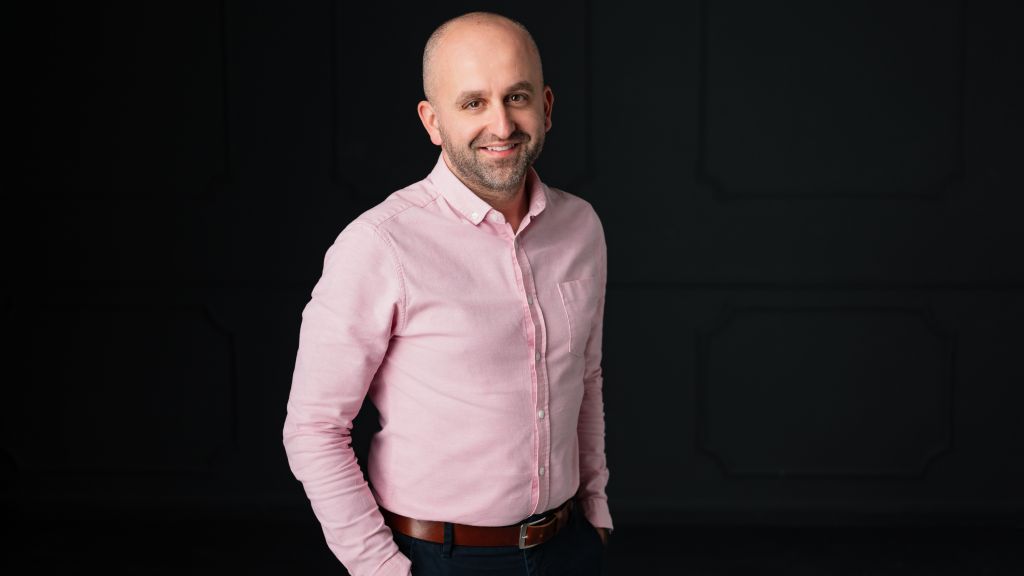
About Constantin Magdalina
Constantin Magdalina has 15 years of professional experience, during which he worked for multinational companies, both in the country and abroad. Constantin has a Master's degree in Marketing and Communication at the Bucharest Academy of Economic Studies. He is LeanSix Sigma and ITIL (IT Information Library®) certified, which facilitates a good understanding of processes and transformations within organizations. On the other hand, the certification obtained from the Chartered Institute of Marketing completes his business expertise. In the more than 4 years of activity within a Big 4 company, he initiated and coordinated studies that analyzed aspects related to the business environment in Romania. Among them are the economic growth forecasts of companies, knowledge management, the buying experience in the era of digital consumers, the use of mobile devices or the customer-centricity of companies in Romania. He is the author of numerous articles on topics related to innovation, streamlining business processes, digital transformation, emerging trends and technologies. He is invited as a speaker at numerous events and business conferences.