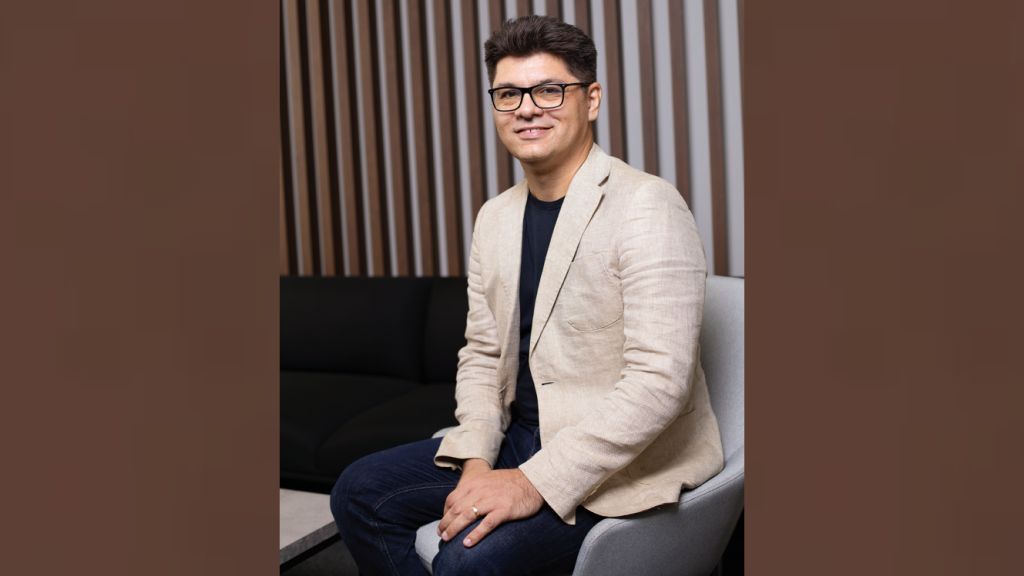
Q: Alumil Romania operates in a highly competitive construction ecosystem. What distinguishes your strategic approach in today’s market?
Mr. MARIUS IONITA: Our strategy is built around technical excellence, strategic partnerships, and long-term value creation. Rather than competing primarily on price, we differentiate through engineering depth, certified product performance, and comprehensive project support.
This means that every Alumil system is backed by rigorous testing, documented performance data, and dedicated technical consultancy. We work closely with architects from the concept phase, provide fabricators with detailed fabrication guidance, and support installers to ensure full system integrity. By integrating design, engineering, and execution, we reduce project risks and help stakeholders achieve predictable outcomes: structurally, thermally, acoustically, and aesthetically.
Ultimately, our competitive advantage lies in delivering certainty in a complex construction environment. Investors, designers, and builders choose Alumil not just for the product itself, but for the confidence that the final building envelope will perform as expected for decades.
Q: The office and residential segments are experiencing different dynamics. Which verticals do you see as the strongest drivers of growth for premium facade and window systems in Romania?
Mr. MARIUS IONITA: Over the past two years, our main inPremium residential continues to be one of the most dynamic segments in Romania, as end-users place increasing value on thermal comfort, acoustic protection, design quality, and durability. Developers are becoming more selective in their material choices, recognizing that facade systems significantly influence the long-term perception and value of a project. This shift is driving sustained demand for large sliding surfaces, and high-insulation window systems.
In parallel, we see robust expansion in several non-residential verticals. Logistics and industrial facilities are moving toward higher specifications, especially for administrative areas and controlled-environment spaces. Hospitality and mixed-use developments prioritize architectural identity and energy performance, making advanced curtain-wall and facade systems essential. Meanwhile, medical and educational infrastructure is benefiting from increased public and private investment, with strict requirements for safety, accessibility, and sustainability.
Across all these segments, the market is converging toward high-performance, low-energy, and architecturally expressive solutions. The demand for large glazed areas, and high thermal performance aligns perfectly with Alumil’s product portfolio and our capacity to provide both standardized solutions and project-specific engineering support.
Q: Energy efficiency standards and nearly-zero-energy buildings are shaping design requirements. How do you balance thermal performance, sound insulation, security, and design flexibility?
Mr. MARIUS IONITA: We follow a holistic philosophy, because modern buildings demand far more than just good insulation. Each new Alumil system is conceived by evaluating the full spectrum of performance criteria: thermal transmittance, airtightness, acoustic reduction, security, durability, and visual character. The challenge is not simply to optimize one parameter, but to balance them intelligently so the final system performs consistently in real-world conditions.
To achieve this, we rely on our Research and Development Department. After the design phase, every product family undergoes extensive prototype testing in accredited laboratories to validate thermal values, air - water - wind performance, and security classifications. This methodology ensures that our systems meet or exceed EU energy directives, nZEB or Passive House directives, without compromising design freedom.
The result is a portfolio of solutions that are slim, elegant, and highly customizable, yet deliver robust performance for demanding projects. Architects benefit from aesthetic flexibility, investors benefit from stronger market proposition, and end-users enjoy greater comfort and safety, all enabled by our integrated approach.
Q: BIM, digital libraries, simulation tools, and virtual configurators are gaining adoption. How is Alumil integrating digital tools into the architectural and engineering workflow?
Mr. MARIUS IONITA: Digitalization is at the core of our innovation roadmap, because modern construction requires speed, accuracy, and seamless collaboration between all project stakeholders. Alumil offers a comprehensive suite of digital tools: BIM objects, structural calculation software, performance simulation modules, and interactive configurators, which support architects and engineers from the earliest phases of design. These tools help reduce design time, eliminate coordination errors, optimize material usage, and ensure clear communication between all involved parties in a project.
In recent years, we expanded our digital ecosystem with three major platforms:
Connect App – a central hub that offers our partners access to technical documentation, product updates, manuals, certifications, and digital tools in a single structured environment. It enables faster decision-making and ensures that all partners are working with the latest data and specifications.
Build – our latest calculation platform, which supports fabricators with precise system configuration, bill of materials generation, cost estimations, and fabrication details. Build increases accuracy in production and helps companies optimize workflows and lead times.
MyWindows, on the other hand, is a fast and intuitive platform that connects end-customers directly with our partner network. Users can explore available options and request an offer instantly, while partners receive the request in real time and can respond quickly with a tailored proposal. This streamlines the quotation process, reduces waiting times, and creates a smoother, more transparent customer journey.
Together, these digital tools create a connected ecosystem that enhances the entire project journey, from initial concept and design verification to fabrication, installation, and customer decision-making. Digitalization is not just an addition to our product portfolio; it is a strategic pillar that elevates quality, efficiency, and collaboration across the construction value chain.
Q: Sustainability is becoming a decisive factor in material selection. How do recycled aluminium and green production processes influence your product strategy?
Mr. MARIUS IONITA: Sustainability is not a separate initiative for us, it is fully embedded in the way we design and produce our systems. Over the past years, Alumil has invested significantly in clean production technologies and recycling, ensuring that every stage of the aluminium lifecycle is optimized for environmental performance. Our recycling facilities enable us to recover and reprocess aluminium with a fraction of the energy required for primary production, while our energy-efficient extrusion lines and automated anodizing process reduce emissions and resource consumption. A major part of our strategy is to develop products with high recycled content and low embodied carbon, providing architects and investors with materials that support green certifications such as LEED and BREEAM. All our production units operate under ISO-certified environmental and energy management systems, and we continue to invest in technologies that reduce water usage, and overall environmental footprint.
These efforts allow us to offer systems that maintain exceptional performance while significantly reducing environmental impact. For us, sustainability is no longer simply a market expectation; it represents a core dimension of innovation, regulatory alignment, and corporate responsibility. It is a long-term commitment that guides how we design products, operate our factories, and collaborate with partners across the value chain.
Q: The organization’s culture directly influences product quality, innovation, and customer satisfaction. Which leadership principles guide your team in a technical industry?
Mr. MARIUS IONITA: We foster a culture built on transparency, accountability, and continuous improvement, because these values are essential in an industry where precision and long-term performance cannot be compromised. Our products are part of buildings that may stand for 50 years or more, so the mindset behind them must be equally solid. This is why we invest heavily in developing expertise at every level of the organization, from engineering and production to customer service and project support.
My leadership approach is based on empowering people and enabling collaboration. I believe that when teams are trusted with responsibility and given the right tools, they naturally rise to a higher standard. Cross-functional collaboration is particularly important for us: engineering works closely with sales, logistics with fabrication experts, and customer support with quality assurance. This interconnected way of working drives innovation, accelerates problem-solving, and strengthens our ability to respond to complex project requirements.
At the same time, we want people to feel inspired to experiment, propose improvements, and invest in their own learning. Innovation does not come from rigid structures, it comes from individuals who are curious and motivated to challenge conventional thinking. For me, leadership means creating the right environment, one where people feel supported, respected, and motivated to deliver excellence, not because they must, but because they genuinely care about the value they create.
Q: Workforce capability—especially highly skilled installers and fabricators—is critical to system performance. How do you support the professionalization and certification of your partner network?
Mr. MARIUS IONITA: Workforce capability is a decisive factor in our industry, because even the most advanced system relies on precise installation and skilled fabrication to deliver its certified results. For this reason, we invest significantly in the professionalization, training, and long-term development of our partner network.
Our approach combines both technical education and practical, hands-on support. We offer ongoing programs that include fabrication workshops, installation training, certification courses, and detailed product seminars. These are conducted by our technical experts, who share best practices, demonstrate correct assembly procedures, and help partners understand the reasoning behind each engineering detail.
Ultimately, our goal is to build a strong ecosystem of qualified professionals who can deliver the level of performance that Alumil systems are designed for. By raising standards across fabrication, installation, and customer interaction, we not only support our partners’ growth but also ensure that end-users experience the full value and reliability of our solutions.
Q: What advice would you give to young engineers and architects seeking to specialize in facade and building-envelope technology?
Mr. MARIUS IONITA: Be curious, stay close to the technical details, and learn how materials behave in real-life applications. Facade engineering requires a blend of structural logic, thermal science, design sensibility, and practical installation knowledge. My advice is to invest in lifelong learning, collaborate with experienced practitioners, and remain open to new technologies that are reshaping the built environment. The future belongs to people and companies capable of integrating innovation, responsibility, and flawless execution.
You can also find the full interview in the document below: