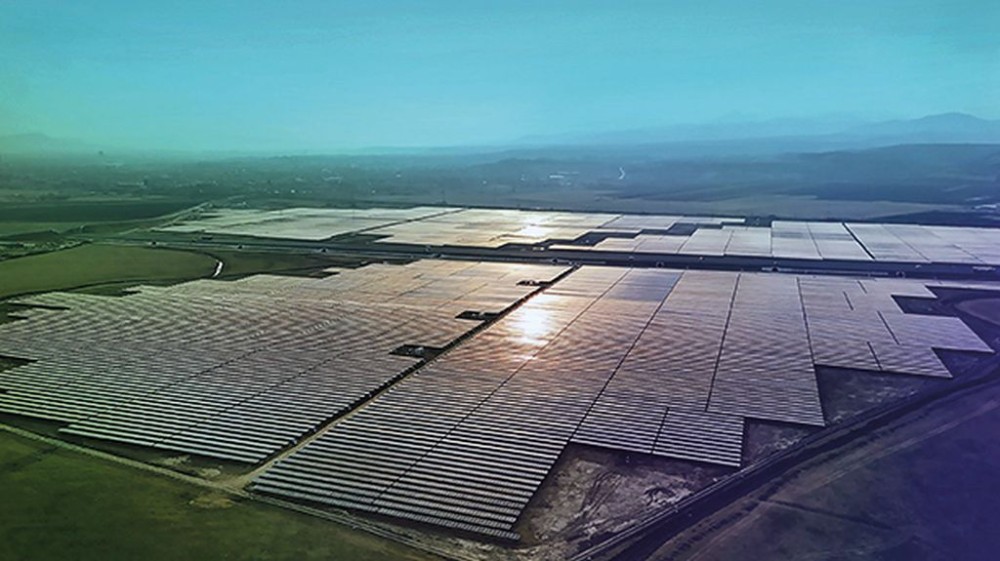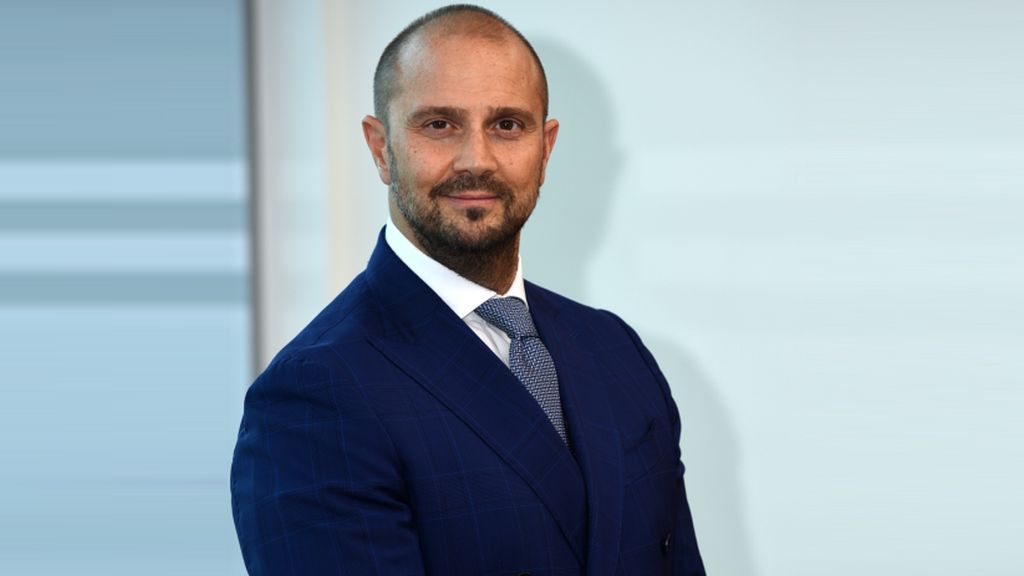
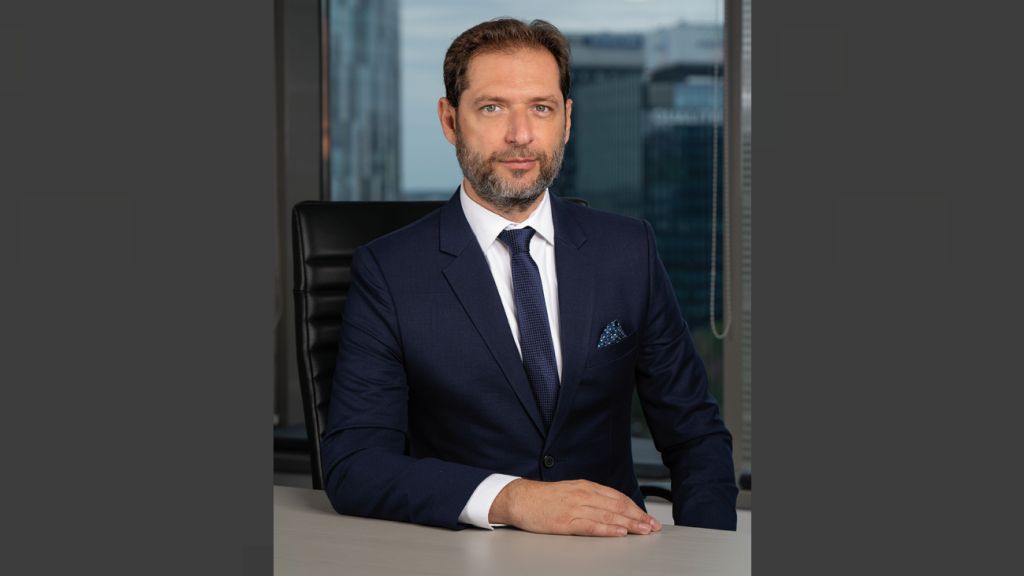
ENEVO Group has emerged as an integrated player in Romania and in Europe’s rapidly evolving energy landscape, combining engineering, critical infrastructure and advanced digitalization within a single operating model. In an interview with Razvan Copoiu, Deputy CEO of ENEVO Group, we discuss how this end-to-end approach has supported accelerated growth, underpinned by hundreds of projects delivered across 12 countries, a diversified portfolio of services and sustained investment in proprietary technology. From automation and energy management systems to cybersecurity solutions for critical infrastructure, ENEVO Group outlines a clear vision of an energy sector where performance, resilience and intelligence are as essential as sustainability.
Q: ENEVO Group is positioned at the intersection of energy infrastructure, automation, and industrial optimization. How do you define the company’s unique value proposition in this rapidly evolving landscape?
Mr. RAZVAN COPOIU: ENEVO Group’s value proposition is defined by integration, execution and optimization across critical energy infrastructure, operating as a true one-stop shop for complex energy and industrial projects.
We bring together power engineering, automation and digital intelligence within a single delivery model that spans the entire lifecycle of energy assets — from grid connection and power plants to dispatch, monitoring, storage and cybersecurity. This comprehensive approach enables clients to convert individual investments into cohesive, resilient and future-ready systems.
In an energy landscape shaped by transition, grid constraints and market volatility, integrated solutions are essential. ENEVO aligns renewable generation, storage, automation and cybersecurity into unified architectures, delivered by multidisciplinary teams with deep expertise in engineering, software, OT automation and complete construction works.
Q: Your company has reported a triple digit increase in turnover in recent years. What were the key strategic levers - organic growth, service diversification, new market segments, or geographic expansion - that contributed most to this performance?
Mr. RAZVAN COPOIU: The growth we recorded is the result of a multiple combination of strategic levers, applied in a disciplined and scalable way.
The primary driver has been organic growth, built on expanding the scope and complexity of projects delivered for existing and new clients. As the energy transition accelerated, demand increased for integrated solutions — and our one-stop-shop model allowed us to take on larger, more complex mandates across engineering, automation, grid integration and digitalization.
At the same time, we pursued services diversification by moving beyond traditional EPC activities into higher-value segments such as dispatch and energy management systems, automation software and industrial cybersecurity. These capabilities strengthened client relationships, increased project depth and improved recurring revenue potential.
Geographic expansion also played a meaningful role. We leveraged our technical base in Romania to scale operations internationally, particularly in markets where energy infrastructure development is accelerating and engineering expertise is in high demand. This balanced our portfolio and reduced exposure to individual market cycles.
Overall, the performance reflects a strategy focused on capability building, execution excellence and selective international approach, rather than market opportunistic growth.
Q: From your perspective, which operational elements were most critical to sustaining this growth trajectory?
Mr. RAZVAN COPOIU: Sustaining this growth required a strong focus on scalability and operational discipline.
The most critical element was people, and more precise, the organizational capacity. We invested early in building multidisciplinary teams and in scaling our engineering, automation and software capabilities in parallel. This allowed us to absorb rapid growth while maintaining delivery quality and technical depth.
A second key factor was standardization of processes and project governance. As project size and geographic spread increased, we strengthened internal controls, project management frameworks and quality assurance systems to ensure consistency across markets and business lines.
Equally important was technology enablement. We developed internal digital tools and platforms for project management, financial monitoring and operational support, which improved efficiency, shortened delivery timelines and enhanced collaboration between teams.
Finally, a strong emphasis on execution excellence and client trust ensured continuity. Reliable delivery on complex projects created repetitive business with the satisfied customers, establishing long-term partnerships, and providing a stable foundation for sustained growth.
Q: ENEVO Group is involved in large infrastructure projects. What are the main challenges in managing complex, multi-stakeholder engineering initiatives, and how do you ensure on-time delivery?
Mr. RAZVAN COPOIU: Large infrastructure projects are defined by technical complexity, multiple stakeholders and tight interdependencies, all of which require rigorous coordination.
The main challenge lies in aligning diverse interests and timelines — investors, utilities, regulators, suppliers and contractors — while managing evolving technical and regulatory requirements. In parallel, energy projects often involve critical interfaces between civil works, electrical systems and substations, automation, software and grid operators, where delays in one area can cascade across the entire project.
We address this through strong front-end planning and governance. Projects start with a clear technical architecture, well-defined interfaces and realistic scheduling, agreed with all stakeholders from the outset. This significantly reduces execution risk later on.
During delivery, we rely on integrated project teams and real-time oversight. Engineering, procurement, automation and commissioning work under a single project management structure, supported by digital tools that track progress, risks and dependencies in real time.
Finally, our focus on accountability and execution culture ensures on-time delivery. Clear ownership at every project stage, rapid decision-making and proactive risk management allow us to anticipate issues early and keep complex projects on schedule.
Q: The shift toward energy efficiency and sustainability is accelerating across Europe. Which trends are currently driving the highest demand for your consulting and engineering services?
Mr. RAZVAN COPOIU: Several converging trends are driving significant demand for ENEVO Group’s consulting and engineering services across Europe:
1. Energy transition and renewable integration — The rapid deployment of solar, wind and hybrid energy assets is creating demand for engineering, grid connection, storage and automation expertise. Clients are looking for partners who can design and integrate renewable projects that perform reliably within existing grids.
2. Energy storage and flexibility solutions — As variable renewables scale, battery energy storage systems (BESS) and flexibility services are becoming essential. We see high demand for engineering, controls integration and system optimization that enable storage to stabilize grids and maximize asset value.
3. Digitalization and smart grid technologies — Utilities and large energy consumers are accelerating investment in digital control systems, SCADA/DMS platforms, sensors and advanced analytics. These solutions support real-time decision-making, predictive maintenance and asset optimization.
4. Industrial cybersecurity — With increasing connectivity of operational technology (OT) and control systems, the need to protect critical infrastructure has become a strategic priority. Demand is growing for cybersecurity solutions tailored to energy and industrial environments, including risk assessment, secure architecture and ongoing monitoring.
5. Regulatory and compliance pressures — European directives on energy efficiency, grid codes, cybersecurity (e.g. NIS2) and environment care are prompting companies to seek expert guidance to meet evolving regulatory requirements while maintaining operational performance.
These trends reinforce the need for holistic, technically grounded solutions — which is where our combined engineering, automation and digital capabilities deliver the greatest value.
Q: The Romanian energy market has undergone significant regulatory changes in the last few years. Which aspects of the regulatory framework still require improvement to stimulate investment and innovation?
Mr. RAZVAN COPOIU: This is a long debated topic. Personally I don’t believe the solution lies in adding more regulation. What Romania needs is a clear distinction between the areas that must remain regulated – namely distribution and transmission - and those that should operate competitively, such as generation, supply, and trading. These competitive segments should be deregulated but properly supervised, with timely intervention when market abuse or dominant positions are identified.
A useful lesson from recent years is the sequencing of reforms. Final consumer prices were liberalized while parts of the wholesale market remained effectively frozen, with limited medium and long-term liquidity. The regulator has mentioned mechanisms such as the Market Maker model, but the corresponding implementation framework has yet to be fully established.
The principle is simple: a functional, liquid wholesale market must precede full retail liberalization. Once trading is robust across all time horizons, competition at the consumer level becomes both fair and beneficial.
Romania is not far from this goal. With a well-structured roadmap, greater predictability, and consistent application of the rules already envisioned, the regulatory framework can evolve into one that truly encourages investment, innovation, and long-term confidence in the energy sector.
Q: How is automation and AI influencing energy asset management, from predictive maintenance to real-time monitoring and data-driven decision-making?
Mr. RAZVAN COPOIU: Automation and artificial intelligence are not simply tools we add to existing energy systems. They are transforming the very logic of how we design, operate, and maintain them. What we’re witnessing now is the shift from reactive maintenance and static supervision to a living, learning infrastructure, one that continuously interprets its own data, anticipates failures before they happen, and optimizes performance in real time.
We are entering a new technological epoch. If Industry 4.0 was defined by the widespread adoption of PLCs, advanced automation, and digital connectivity, we can say that we are witnessing the next inflection point: Industry 5.0, where AI becomes a native component of industrial architectures, augmenting control systems, optimizing processes in real time, and enabling cyber-physical systems to operate with unprecedented autonomy and resilience.
Speaking about ENEVO Group, here this transformation is bringing us to a new level, where predictive analytics, digital twins, and AI-driven decision engines will become standard components of our architecture. Through high-frequency data acquisition from thousands of field sensors - covering electrical, thermal, and mechanical parameters - we will build a digital replica of each asset. That will allow our teams to detect anomalies long before they become failures and to prescribe precise interventions that minimize downtime and cost. It’s a major leap from the old paradigm of scheduled maintenance toward a prescriptive, self-adapting operation.
Q: ENEVO Group is operating in an increasingly competitive environment. What differentiates your engineering philosophy and implementation approach from other regional players?
Mr. RAZVAN COPOIU: What truly differentiates ENEVO Group’s engineering philosophy is that we don’t see automation and AI as standalone “add-ons”. We build them into the DNA of our systems from day one, uniting together: engineering design, OT cybersecurity, and advanced analytics within a single architecture. While many regional players integrate separate components - outsourcing automation, then adding “AI” dashboards later - our approach is holistic and vertically integrated. The ENEVO way. The same teams that design our SCADA and EMS systems also gives support the Sentry.OT team at the predictive models and cybersecurity layers. That coherence makes a fundamental difference: data is contextualized, models learn faster, and security is embedded, not patched.
The result is what we call edge-to-cloud observability: a real-time digital ecosystem that connects field devices, control rooms, and cloud analytics in a secure, closed loop. Each decision - from inverter derating to BESS dispatch or reactive power control - is based on live operational data, financial impact, and risk profiles.
In the end, it’s where engineering meets economics.
Our systems will not just tell you that an inverter is overheating; they will tell us why, what that means in lost MWh, and even in potential penalty avoidance, or in deferred CAPEX.
Artificial intelligence also enhances how operators interact with assets. Through ENEVO Group’s proprietary SentryOT platform, AI acts as an operational co-pilot - surfacing root causes, drafting incident reports, retrieving technical documentation, and providing recommended actions, all while maintaining a strict human-in-the-loop governance. Every action remains explainable, traceable, and cyber-secure.
But beyond technology, there’s a cultural philosophy behind our work: engineering that connects people and data, not replaces them. We believe in empowering operators with intelligent systems that augment their decisions, rather than automate them away. In an industry increasingly defined by complexity, transparency and trust are the true differentiators.
As ENEVO Group moves toward the 1+GW milestone of renewable assets integrated and managed, the company’s ambition is clear - to redefine what “digital EPC” means in the energy transition.
Our goal is not just to build energy infrastructure, but to make it adaptive and resilient. Because the future of energy isn’t just renewable - it’s intelligent.
Q: As Deputy CEO, which leadership principles guide your approach to developing multidisciplinary teams and fostering innovation in a technical environment?
Mr. RAZVAN COPOIU: My leadership approach is aligned with ENEVO’s founders-led vision built by the two owners of the company, Cristian Pirvulescu and Radu Brasoveanu, and shaped by a growth mindset that combines entrepreneurial initiative with the discipline required to operate at scale in complex, technical environments.
First, technical credibility and clarity of purpose. In a fast-growing organization, speed matters, but it is always anchored in sound engineering judgment. I focus on setting a clear direction, empowering teams to act decisively, and ensuring that innovation remains closely connected to operational and technical realities.
Second, ownership and accountability. ENEVO promotes a strong sense of ownership across the organization — teams and individuals are treated as owners of their projects. We trust our engineers, developers and project managers to take initiative, make decisions and assume responsibility for outcomes, within a clear governance framework.
Third, collaboration across disciplines. This culture thrives at the intersection of power engineering, automation, software and operations. We actively encourage cross-functional teams, open technical debate and fast feedback loops, allowing ideas to move quickly from concept to implementation.
Finally, continuous learning and team development. We invest in people who are curious, adaptable and motivated to grow alongside the company. By combining hands-on learning, exposure to complex international projects and a culture that values experimentation, we foster innovation that is practical, scalable and commercially relevant.
Q: Looking 5–7 years ahead, which major forces will reshape Romania’s energy services market - legislation, technology, financing models, or client behavior?
Mr. RAZVAN COPOIU: There will be multiple factors that will reshape Romania’s energy services market over the next 5–7 years. Its evolution will depend on a balanced interplay between legislation, access to financing, technological maturity, and the real needs of consumers. This is a market that must respond not only to customer behavior, but above all to their need for efficiency, sustainability, and economic predictability.
A relevant example is energy efficiency, an area where Romania has tremendous potential that remains only partially leveraged. The demand is clearly there, yet project implementation has often been limited by regulatory gaps and by the absence of stable financing mechanisms. For instance, the definition and regulation of ESCO-type companies arrived late and remain incomplete, which has discouraged investment in this segment.
I believe that in the coming years we will see a rebalancing. After a period focused almost exclusively on stimulating consumption, Romania now has the opportunity to redirect its efforts toward local production, technological innovation, and operational efficiency - areas that can generate real added value and strengthen the competitiveness of the economy.
Technology, automation, and digitalization will naturally accelerate this transition. And the companies capable of integrating these dimensions - regulation, financing, technology, and a deep understanding of customer needs - will be the ones that truly shape the future of Romania’s energy services market.
And ENEVO Group will definitely contribute to that.