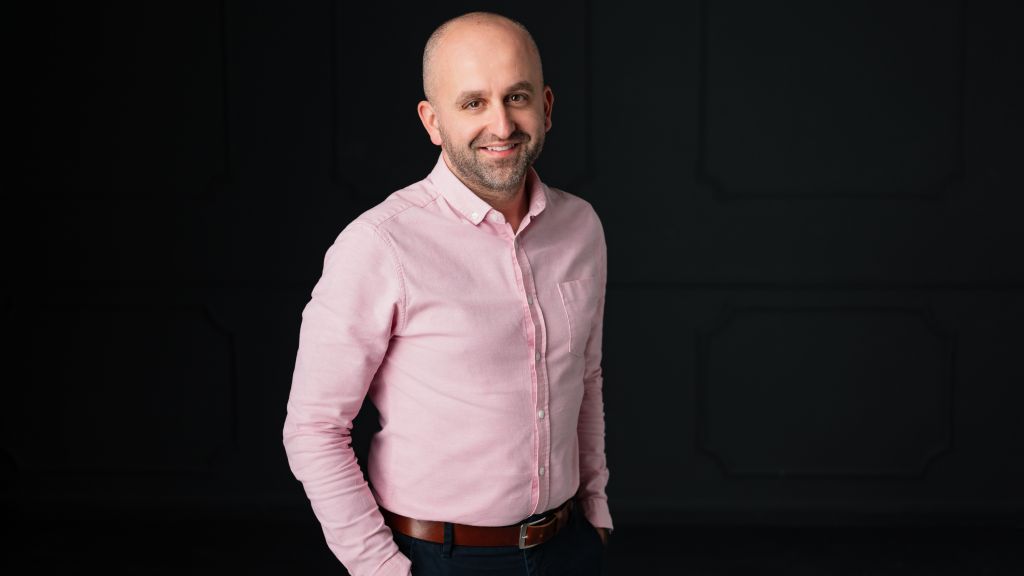
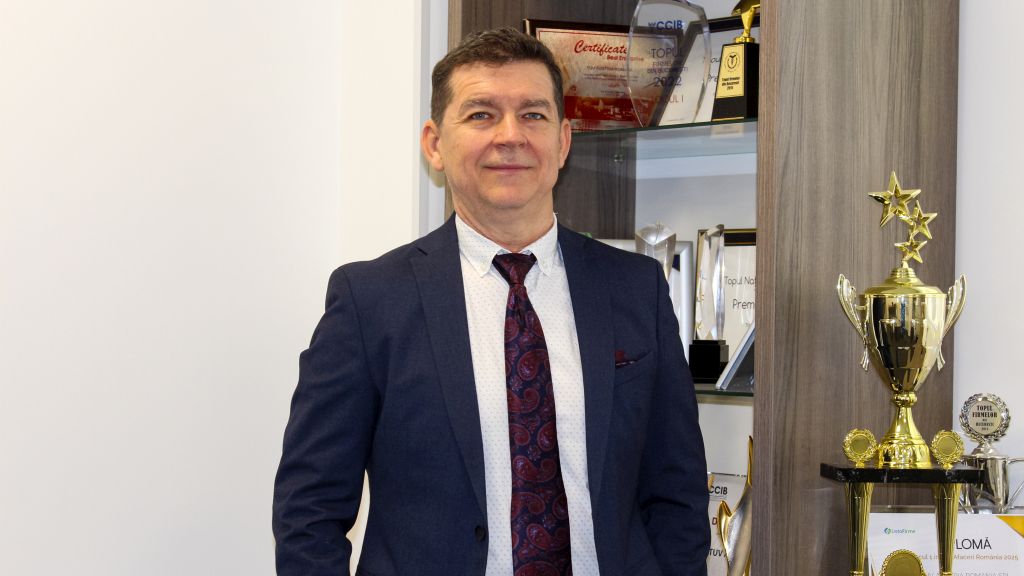
Q: You lead TUV AUSTRIA ROMANIA for almost 20 years in a market where safety, quality and compliance are increasingly critical. What motivated you personally to join this sector, and how did your prior experiences prepare you for this leadership role?
Mr. DORU FULGA: I’ve always been driven by the idea that safety and quality are not just regulatory obligations, they’re foundations of trust and progress. My background in industrial engineering and exposure to international projects showed me how certification and inspection can actually enable business growth and protect people and the environment. Joining TUV AUSTRIA was a natural step toward contributing to that mission on a larger scale.
Q: The Romanian economy has grown in parallel with rising awareness of certification, inspection and testing services. How has TUV AUSTRIA ROMANIA evolved its business model since its founding in 2006 to meet changing market needs?
Mr. DORU FULGA: When we started, the focus was primarily on ISO management systems and industrial inspections. Over time, we’ve diversified into training, product certification, functional safety, cybersecurity and energy efficiency. Today, TUV AUSTRIA ROMANIA operates as an integrated service provider, combining technical expertise with digital tools, and aligning our local offering with the broader TUV AUSTRIA Group’s innovation roadmap.
Q: In a regulatory environment shaped by EU directives, global standards and national norms, what are the major challenges for inspection and certification firms in Romania today - and how is your organization responding?
Mr. DORU FULGA: One challenge is the continuous change in legislation and harmonized standards. Another is maintaining impartiality in an increasingly competitive and price-driven market. We address these by investing in staff competence, participating in European technical committees, and ensuring that our internal systems exceed the accreditation requirements. Our focus remains on integrity, transparency, and competence - values that clients recognize and respect.
Q: Digitalization, remote audits, IoT and data analytics are transforming the certification and inspection field. How are you leveraging these trends to stay ahead of competition and better serve your clients?
Mr. DORU FULGA: Digitalization has become part of our DNA. We’ve implemented digital platforms for audit planning, remote inspections and secure document exchange. The TUV AUSTRIA Group has also developed smart data tools for predictive maintenance, risk assessment and online training. These innovations allow us to be faster, more transparent and more accessible - without compromising technical rigor.
Q: Sustainability (ESG) is a growing concern for all industries. How do the services of your firm support clients in their sustainability and ESG journeys (for example through environmental management, energy audits, safety certifications)?
Mr. DORU FULGA: Sustainability is one of our strongest development directions. We assist organizations with ISO 14001 and ISO 50001 implementation, energy efficiency assessments and carbon footprint evaluations. Through our training and consultancy network, we help companies move beyond compliance - to measurable performance improvement and long-term environmental and social impact.
Q: Talent and expertise are central also for your business sector. What strategies do you use to attract, develop and retain top-tier professionals in Romania?
Mr. DORU FULGA: We invest heavily in continuous learning and international exposure. Our experts regularly collaborate in European projects and group-wide initiatives, and we encourage cross-certification between technical domains. We also promote a culture of autonomy and trust - people join us because they want to make a difference, and they stay because their expertise is valued.
Q: Client trust is at the heart of your business. How do you build and maintain trust in a context where clients often view certification as a commodity, and how do you differentiate TUV AUSTRIA from competitors?
Mr. DORU FULGA: Trust is built through competence, impartiality and long-term relationships. We don’t just issue certificates; we help organizations understand how to continuously improve. Being part of a 150-year-old international group gives clients the assurance of consistency and independence. Our differentiator lies in our ability to combine global expertise with local understanding.
Q: For many clients, certification is still seen as reactive or compliance driven. How do you shift that conversation toward proactive value creation, i.e.: certification and inspection as enablers of business performance and competitiveness?
Mr. DORU FULGA: We emphasize that certification is not a cost but an investment. When properly integrated, management systems increase efficiency, reduce risk and enhance reputation. We support clients with performance dashboards, training and benchmarking, showing that compliance and competitiveness go hand in hand. The companies that treat certification strategically tend to outperform those that treat it as a checklist.
Q: In your view, how would you characterize the Romanian market’s maturity stage compared to the EU countries? What are its strengths, and what gaps remain?
Mr. DORU FULGA: Romania has made impressive progress in terms of awareness and adoption of international standards. However, many SMEs still view certification mainly as a contractual requirement rather than a management tool. The strength of the Romanian market lies in its adaptability and openness to new technologies; the next step is embedding quality and sustainability into everyday business culture.
Q: Looking ahead to the next 5-10 years: which technological, regulatory or market-driven disruptors do you expect to most impact the certification sector in Romania, and how are you preparing for them?
Mr. DORU FULGA: Digital transformation, ESG regulations and artificial intelligence will reshape the entire conformity-assessment ecosystem. We’re preparing by integrating AI-assisted risk analysis, expanding our remote-service capabilities, and developing training modules for emerging standards in cybersecurity, hydrogen, and renewable energy. The future of certification will be faster, smarter and more connected - and we’re ready for it.
You can also find the full interview in the document below: