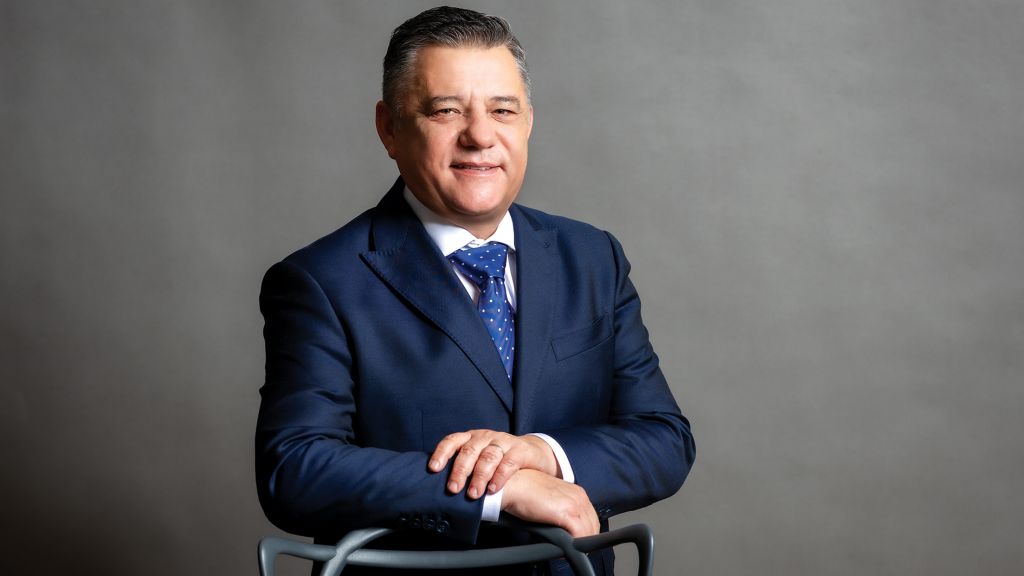
Q: Your company, IGNA INSTAL, has grown significantly in recent years, becoming one of the key players in Romania’s installations sector. How did your journey lead you to your current position?
Mr. DOREL GUTU: Organically – exclusively organically, I would say. We did not start out with marketing capabilities or a focus on visibility, but with a clear ambition to build a strong team. Over the past ten years, our priority has been to develop a cohesive organization capable of delivering high-quality projects, on time and with efficient use of resources. We did not pursue media exposure; instead, we focused on refining our operational processes and attracting people who share the same core values.
It may have been an unconventional path in an industry where marketing often appears essential for recognition. However, performance and professionalism alone propelled us into a leading position. Between building credibility and investing in promotion, we unintentionally chose credibility – a choice that ultimately delivered the recognition we enjoy today.
Q: In the context of Romania’s construction and infrastructure market, what have been the most significant shifts in demand for complex installations, and how have you adapted your business model accordingly?
Mr. DOREL GUTU: Initially, our objective was to develop in a balanced manner across the two main installation disciplines – mechanical and electrical – allowing us to access complex projects across a wide range of construction types. Over time, however, we realized that this advantage was no longer sufficient. As the market evolved, competitors specialized in specific disciplines began participating in fully integrated projects that included all types of installations.
We quickly recognized this shift and took a decisive step forward – one that we believe positions us, in the long term, among companies truly capable of delivering integrated solutions. We expanded our capabilities by adding BMS and T&C (Testing and Commissioning) departments, establishing a technical department focused on optimization and techno-economic analysis, and most recently creating a maintenance department. Together, these developments have significantly strengthened and diversified our service portfolio.
This year marks 10 years since the founding of IGNA INSTAL, a milestone that also prompted us to define a new strategy aligned with current and future market needs. Few people know that more than 70% of our team has been working together in this structure for over 20 years, providing us with deeply consolidated expertise – and a source of pride reflected in every project we deliver.
Q: Installation projects often require close integration with civil construction works, coordination across multiple disciplines, and strict adherence to deadlines. How do you manage project complexity, quality assurance, and client expectations?
Mr. DOREL GUTU: Project management is a universal discipline, applicable across industries. When applied correctly, there are no fundamental differences between managing construction projects and installation projects – unless one of the parties lacks sufficient experience. In our case, managing complexity has been relatively straightforward, regardless of project scale, because we carefully select our projects and fully understand all critical parameters in advance, both from our perspective and from that of the client.
The main challenge, however, remains quality. There is often a gap between the budgets the market can realistically sustain and the level of quality clients expect. In the past, we absorbed this gap by committing to high standards even at reduced margins. It remains to be seen whether this approach will continue to be sustainable in an industry increasingly burdened by taxes and regulatory costs. We believe that maintaining a balance between quality standards, project scope, and investment budgets will be essential to meeting client expectations and preserving the trust we have built over time.
Q: Skilled labor and technical expertise are critical in your industry. What challenges do you face in recruiting and retaining high-quality technicians, specialists, and engineers, and how do you address them?
Mr. DOREL GUTU: For us, people have always represented the most important investment. IGNA INSTAL was built step by step through the careful selection of professionals who wanted to be part of the team and contribute to its performance. Even during challenging periods, when project volumes did not fully justify staffing levels, we chose to recruit whenever we identified valuable and available talent, firmly believing that a company’s true value lies first and foremost in the experience and commitment of its people.
As our name gained recognition in the market, recruitment became more organic. We noticed a natural “magnetism” between our team and industry specialists, many of whom came from niche environments where they had refined their expertise, but later sought the stability of a company that brings together know-how across all installation disciplines. We take pride in this diversity and in the fact that people choose to stay with us – finding not just a workplace, but an environment where they can fully leverage their knowledge and passion.
Q: Sustainability and energy efficiency are becoming central elements in building installations. How do you integrate green technologies, low-carbon systems, and smart building solutions into your offering?
Mr. DOREL GUTU: We are genuinely prepared for this new market trajectory. By developing dedicated departments, we have consolidated within the company all the services required to deliver excellence in green technologies. Moreover, this year we entered into a partnership with one of the promoters of these solutions and brought a top-level designer into our team, which firmly positions us within the sustainability segment.
These initiatives are not merely declarative; they reflect our ambition to build the image of an innovative company shaped by the future and guided by environmental responsibility.
Q: Digitalization is transforming the installations sector – through BIM, IoT, remote monitoring of HVAC systems, and predictive maintenance. How is your company embracing these digital trends, and how do you see their impact on future client requirements?
Mr. DOREL GUTU: Our company is actively adopting these digital trends by integrating modern solutions into ongoing projects, enabling more accurate planning and more efficient resource management. Remote monitoring of HVAC systems and predictive maintenance are already part of our service portfolio, contributing to cost reduction and increased system reliability.
We believe the impact on future client requirements will be significant, as clients will increasingly demand high levels of integration and proactive services focused on anticipating issues and optimizing the performance of their installations.
Q: Financial discipline and risk management are critical in a project-based business with large clients and, at times, public-sector contracts. How do you remain profitable in an environment of tight margins?
Mr. DOREL GUTU: Our profitability is primarily driven by the prudence with which we select our projects. Before committing to any contract, we conduct detailed risk assessments across all dimensions and prefer to remain within a controlled risk zone whenever potential financial deviations are identified. While some projects may appear attractive, we have learned that long-term stability is far more valuable than short-term gains.
Public-sector projects represent a relatively small share of our annual turnover, precisely to limit exposure to financing delays. In recent years, profitability has become less about margin size and more about predictability and accumulated experience, which we apply to every new project. This approach has enabled us to remain profitable even under constrained margins, while strengthening both client confidence and the company’s long-term stability.
Q: What role do customer services and post-sales activities – such as maintenance contracts, system upgrades, and diagnostics – play in your business, and how do you build a service operation beyond one-off installations?
Mr. DOREL GUTU: For us, after-sales services are not merely an add-on, but an essential part of the company’s identity. Through maintenance, modernization, and regular diagnostics, we ensure that the solutions we deliver operate at optimal performance levels and achieve extended life cycles. This approach allows us to support our clients not only at the point of delivery, but throughout the entire lifecycle of their systems.
Beyond individual installation projects, we have developed a dedicated service operation supported by specialized teams and modern tools, transforming client relationships into long-term partnerships. Our objective is for every collaboration to be defined by professionalism, trust, and tangible results, so that clients perceive us not simply as an installations provider, but as a reliable, long-term partner.
Q: Looking ahead to the next 5–10 years, which market segments do you see offering the greatest growth opportunities for installation services – such as data centers, renewable energy systems, new developments, or the refurbishment of existing buildings?
Mr. DOREL GUTU: All these segments represent major areas of opportunity for the construction sector, and each holds distinct potential for our company. Data centers are undoubtedly the projects of the future – highly technological, capital-intensive, and governed by clearly defined performance standards. This is a segment that particularly attracts us, and one for which we are well prepared to deploy our expertise.
Renewable energy represents another strategic direction. While different from much of our past work, it is an area where we are taking decisive steps forward. We recognize the market’s growing demand for responsibility, innovation, and technical expertise, and our involvement in this segment is a natural response to today’s challenges.
The refurbishment of existing buildings, especially system modernization and retrofitting, is a field in which we have already been active for several years, with strong results. These projects are complex, often involving spatial constraints, phased execution, and the need to maintain energy and heating supply without disrupting building occupants. Adapting to existing conditions frequently requires design adjustments, but our team is well equipped to manage these challenges, supported by specialists capable of addressing any scenario.
We intentionally let new construction projects last, as this is the segment most closely aligned with our core experience, albeit with more limited regional exposure in recent years. In new developments, we operate in a familiar environment where we can fully leverage our accumulated expertise and our team’s capacity to deliver complete, integrated solutions tailored to current requirements. It is a segment characterized by clearer procedures, greater planning predictability, and strong opportunities to demonstrate efficiency and quality.
Q: Finally, what advice would you offer to young professionals or entrepreneurs looking to build a company in Romania’s building services and installations sector? Which core values and leadership qualities do you consider essential for success?
Mr. DOREL GUTU: First and foremost, I encourage young professionals to clearly define what they truly want from this field and to commit to learning before claiming specialist status. It is important not to skip stages in professional development and to align expectations with both experience level and the value one can bring to the industry. Through perseverance, consistent dedication, and exposure to diverse projects, they can build solid and long-term careers.
For entrepreneurs, the advice remains the same: patience, consistency, and respect for each stage of growth. A company is not built overnight, but through credibility, the development of a cohesive team, and the adoption of clear values – integrity, responsibility, and vision. These are the foundations that can transform an idea into a sustainable and respected business.
Authentic leadership should be detached from the immediate financial outcomes that many aspire to, without realizing that reaching them involves a complex, often challenging journey requiring patience, vision, and perseverance. True leadership is built on a clear vision and the ability to inspire a team; when empathy is added, trust and collaboration develop naturally.