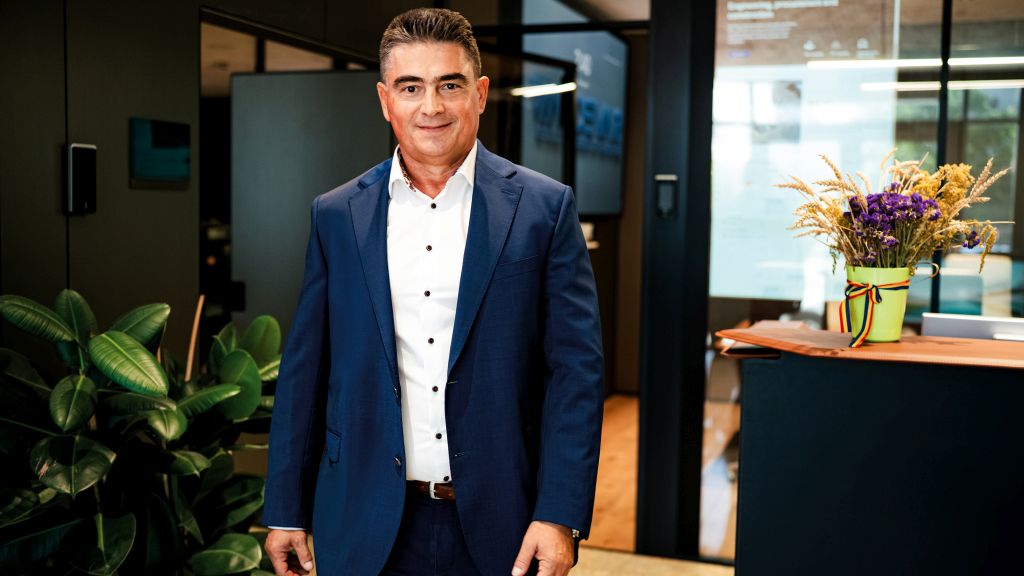
Q: WALDEVAR has built strong expertise in designing, executing, and maintaining photovoltaic parks. How would you describe the company’s strategic positioning within Romania’s fast-growing renewable energy sector?
Mr. CHRISTIAN LEONTE: WALDEVAR’s positioning is built around the concept of durable sustainability. It is what we build, but also how we build it. In a market where many players scale quickly and then struggle with the delivery, we’ve chosen to grow through execution quality, operational discipline, and long-term partnerships. Our advantage comes from combining strong engineering with the ability to deliver at scale, predictably, and to stay close to assets through maintenance and performance optimization.
Q: The Romanian solar market has accelerated significantly. What trends - technological, regulatory, or financial - are currently shaping demand for photovoltaic projects?
Mr. CHRISTIAN LEONTE: Demand is being shaped by three major forces:
- Technological: higher-eficiency modules, better inverters, advanced monitoring and control, and the fast rise of storage as a tool for predictability and grid balancing
- Regulatory: permitting discipline, grid code evolution, and frameworks that increasingly reward bankable projects with robust technical documentation and compliance.
- Financial: the maturity of corporate PPAs,the success of the CfD program, structured project finance, and mature investors who look beyond CAPEX to lifetime performance, O&M quality, and overall appetite for clean energy projects.
Q: Your company covers the full EPC cycle: design, construction, and maintenance. What differentiates your engineering and execution capabilities from other players in the market?
Mr. CHRISTIAN LEONTE: Two things: engineering depth and fast and large-scale execution. We design with realization and operation in mind, manage interfaces tightly, and bring a culture where “done” means “done right.” Our model is built on scalable and reliable delivery, strong QA/QC, and supported by teams that understand that every site condition—soil, access, grid requirements, logistics—must be solved systematically. We cultivate partnerships with leaders in their fields, and we are proud to share this philosophy with many Tier1 companies.
Q: Grid access remains one of the biggest bottlenecks for renewable developers. How do these challenges affect project timelines, and what solutions or partnerships help you navigate them?
Mr. CHRISTIAN LEONTE: Grid constraints are often the critical path. They can add months, to years, not because of the time consumed during construction phase, but because connection studies, approvals, reinforcement works, and actual commissioning time dictate reality.
Our approach is to work proactively and bring intelligent solutions to life. Where it makes sense, we explore phased commissioning, technical solutions that support grid stability, and partnerships that shorten interface friction. It’s a lot about anticipating, not reacting.
Q: Solar technology is evolving rapidly. How do innovations such as bifacial panels, smart inverters, energy storage, or AI-based monitoring influence your project portfolio?
Mr. CHRISTIAN LEONTE: These innovations are changing portfolios from “volumes” to performance-driven energy infrastructure.
- Bifacial + trackers can materially increase yield when site conditions support it.
- Smart inverters and specifically grid forming inverters are key to grid services and compliance.
- Storage is becoming central – both behind-the-meter and stand alone utility-scale – to manage volatility and constraints.
- AI-based monitoring and analytics shift O&M from reactive to predictive, improving availability and lowering downtime.
For us, innovation must is pragmatic: it has to solve a real problem, be deployable quickly, and create measurable value. This is why we invest in strong R&D and in-house solutions, like our own SCADA system.
Q: WALDEVAR has executed projects of various scales. Which project types - utility-scale, industrial rooftops, off-grid systems - are driving the most growth today?
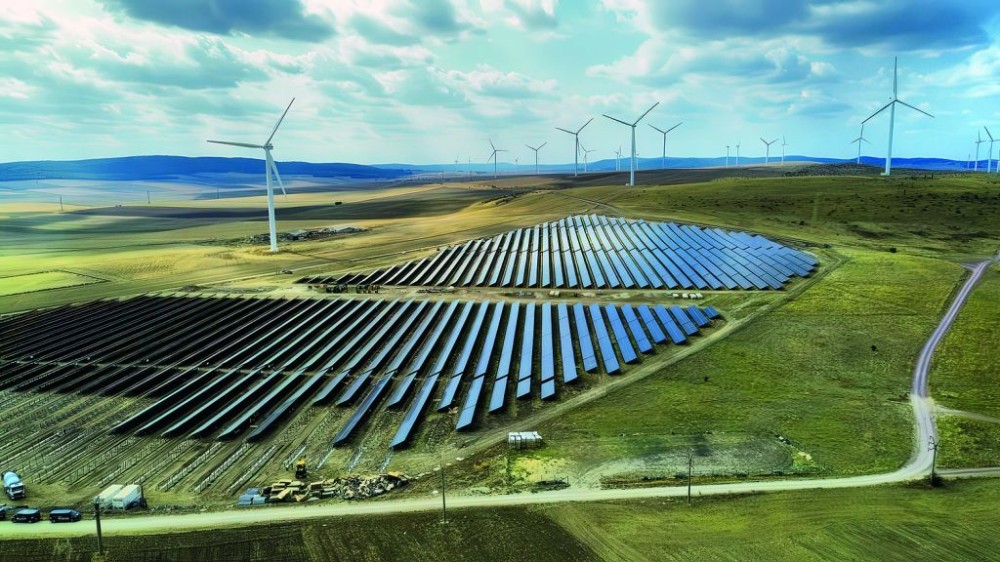
Mr. CHRISTIAN LEONTE: Utility-scale PV plants remain a major growth engine, both in Romania and abroad, in Europe and the rest of the world. We have invested heavily in Floating PV, that is the next fastest growing utility scale PV market, by building the only Floating Structure factory in Europe, one important strategic investment.
Q: Sustainability is integral to renewable energy - but it also involves internal processes. What ESG principles guide WALDEVAR’s operations, procurement, and workforce practices?
Mr. CHRISTIAN LEONTE: ESG starts internally. Safety and workforce development mean for us a culture where professionalism, training, and accountability are non-negotiable. Responsible procurement is based on supplier standards, traceability where possible, and selecting partners aligned with quality and compliance expectations. Community and stakeholder respect reflect in predictable delivery, transparent communication, and minimizing disruption. Operational integrity is shown in discipline in execution, because quality is an important ESG topic.
Q: Looking to the next decade, how do you envision WALDEVAR’s growth - both in Romania and potentially in regional or European markets?
Mr. CHRISTIAN LEONTE: We see growth in two dimensions: scale and capability. Scale means more and larger projects, more markets, stronger O&M footprint. Capability means more integrated solutions: PV + storage + intelligent energy management, and more product innovation that can become independent business units.
Internationally, we expand where there is solar potential and legislative stability, with a partnership-led approach: Central & Eastern Europe, selected Mediterranean and Middle East markets, and strategic opportunities beyond—always with the condition that we can maintain our execution standards.
Q: As CEO, what leadership principles guide you in managing a highly technical organization and driving innovation in a fast-evolving energy market?
Mr. CHRISTIAN LEONTE: I am guided by curiosity, systems thinking, and discipline. Above all comes integrity and long-term thinking, because success becomes fragile if it isn’t consolidated through culture, trust, and consistent delivery.
Q: You are known for your passion for retro and classic cars. How did this passion begin, and what does the heritage of automotive engineering represent for you personally? How do you balance these two worlds, and what lessons from classic cars resonate with your vision for the future?
Mr. CHRISTIAN LEONTE: The passion started as a child with admiration for beauty and mechanical excellence, engineering you can see, understand, and learn to respect. Classic cars represent craftsmanship, patience, and the idea that performance isn’t only about speed; it’s about how well something is built and maintained over time.
Balancing the two worlds is natural as both demand attention to detail and an attention for fundamentals. A classic car teaches you that shortcuts always show up later, exactly the same in energy projects. This reflects my belief that the future belongs to those who can combine innovation with durability.
You can also find the full interview in the document below: